🔥 CYBER MONDAY 24H: 60% off all prices on the site! Only until midnight. Use code CYBERMONDAY25 👉🏼


Milano, MI, Italia
Residential - Room
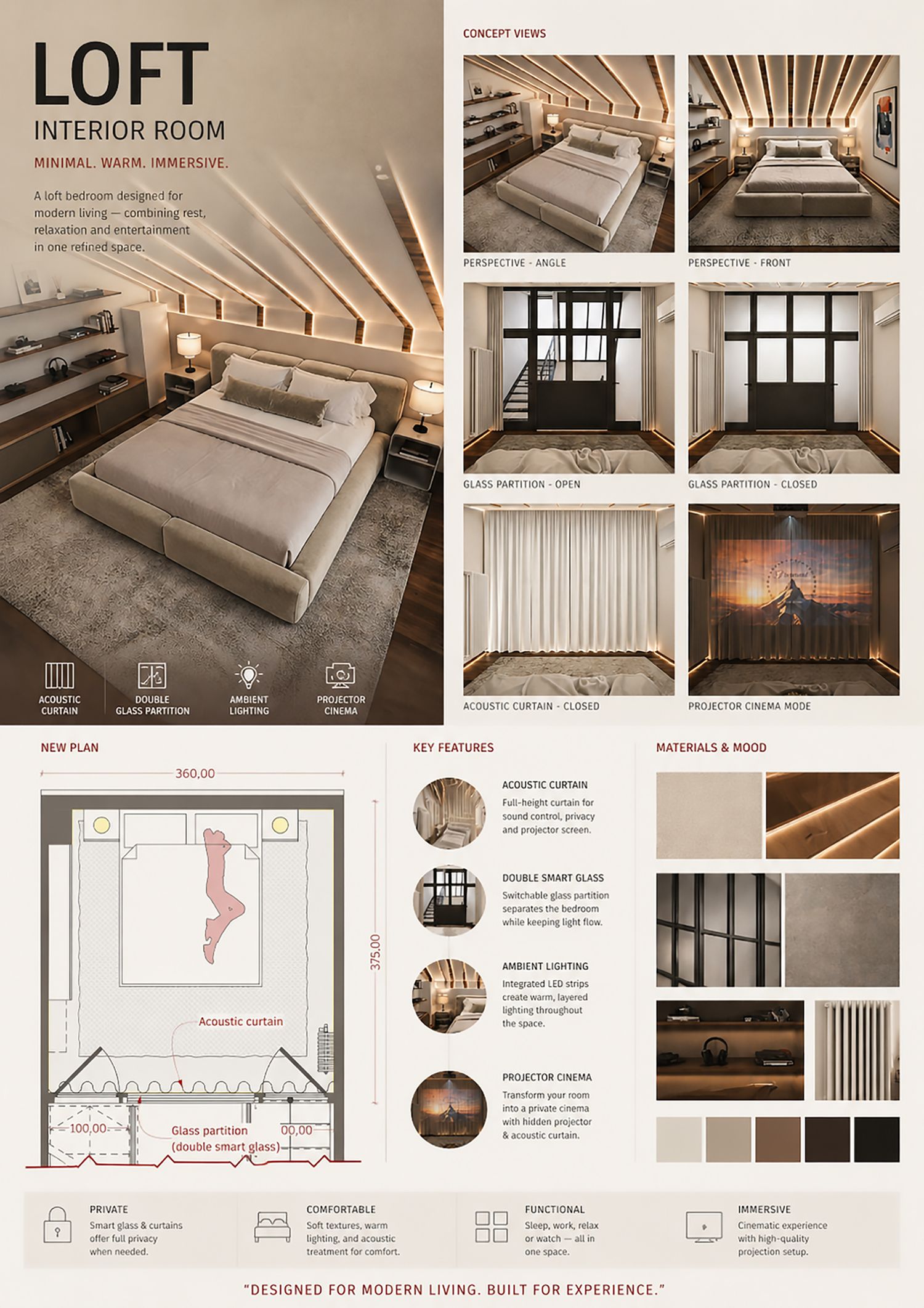
The project transforms a previously fragmented attic interior into a cohesive, contemporary living environment defined by a refined industrial language and a strong emphasis on light, material honesty, and spatial fluidity.
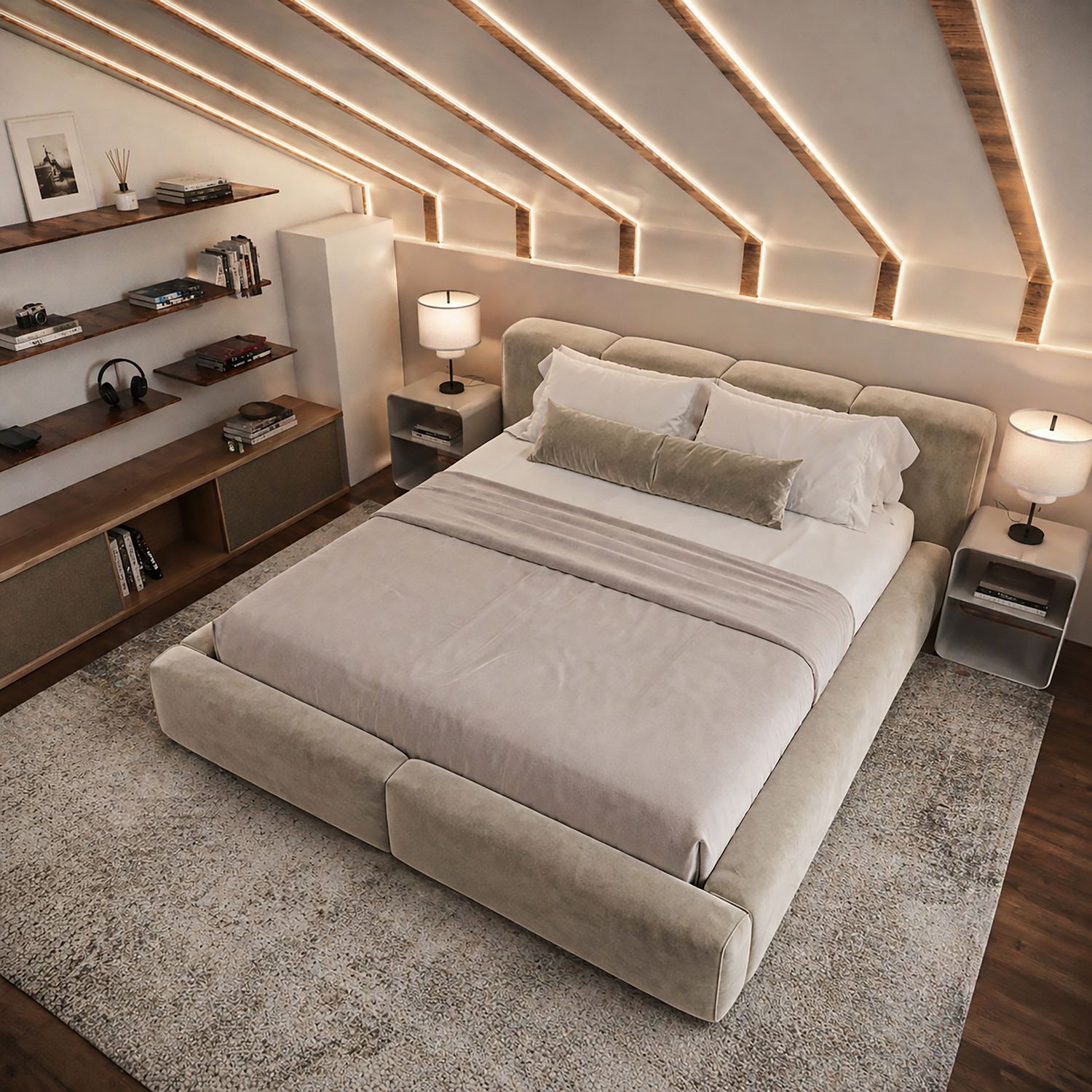
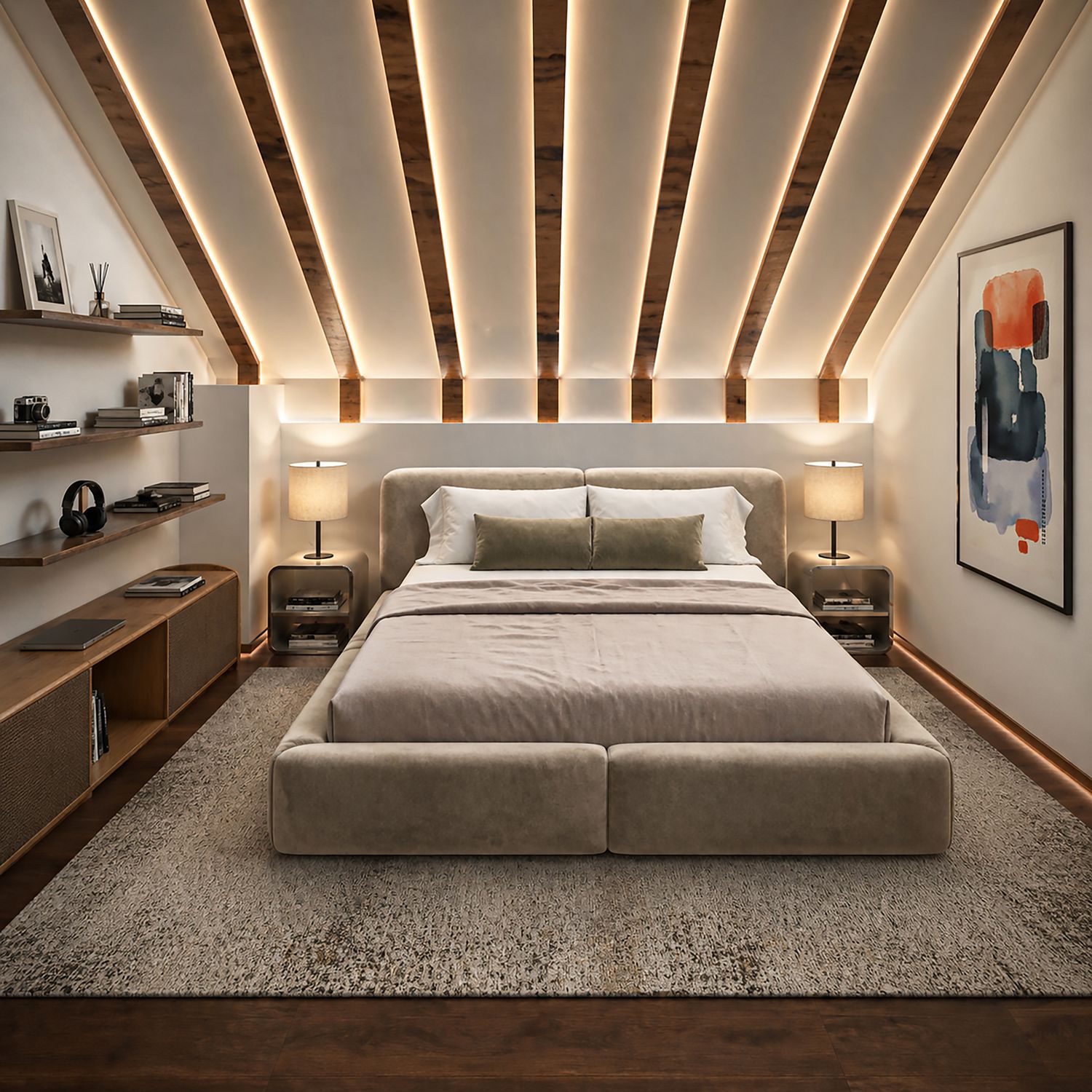
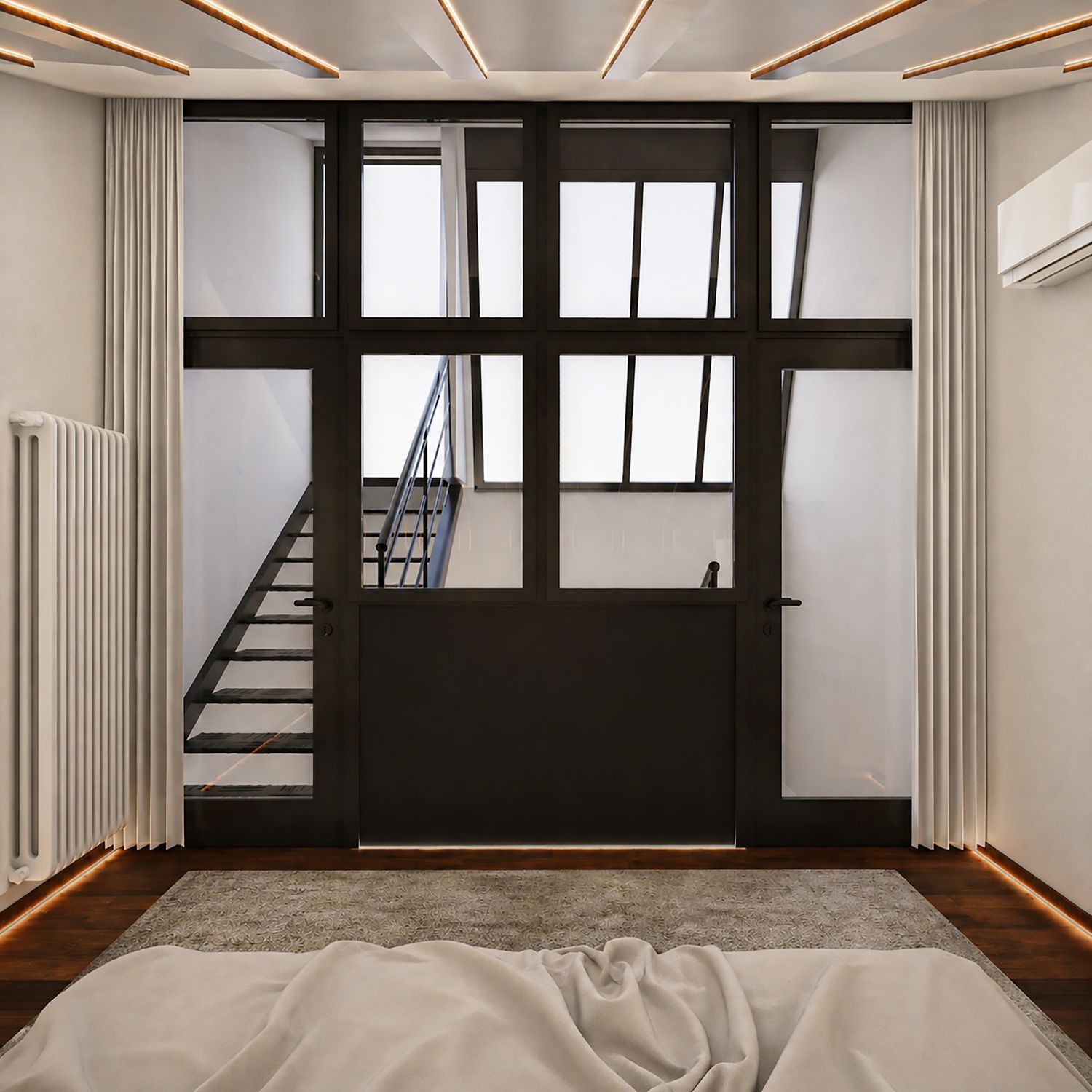
At the core of the renovation is the decision to unify the entire space into a single, visually continuous volume. The pitched roof geometry, once a constraint, is reinterpreted as the main architectural feature. Linear recessed lighting is integrated between exposed non-structural ribs, accentuating the rhythm of the lights planes and visually elongating the space. These concealed LED lights are carefully detailed to wash both ceiling and wall surfaces with a warm, indirect glow, eliminating harsh light sources and creating a calm, ambient atmosphere throughout.
Material selection reinforces the industrial character while maintaining a sense of warmth suitable for residential use. Natural wood elements—visible in shelving, ceiling lights, and flooring—are paired with soft neutral textiles and matte finishes. This balance prevents the space from feeling overly raw, instead achieving a refined industrial aesthetic that feels both modern and livable.
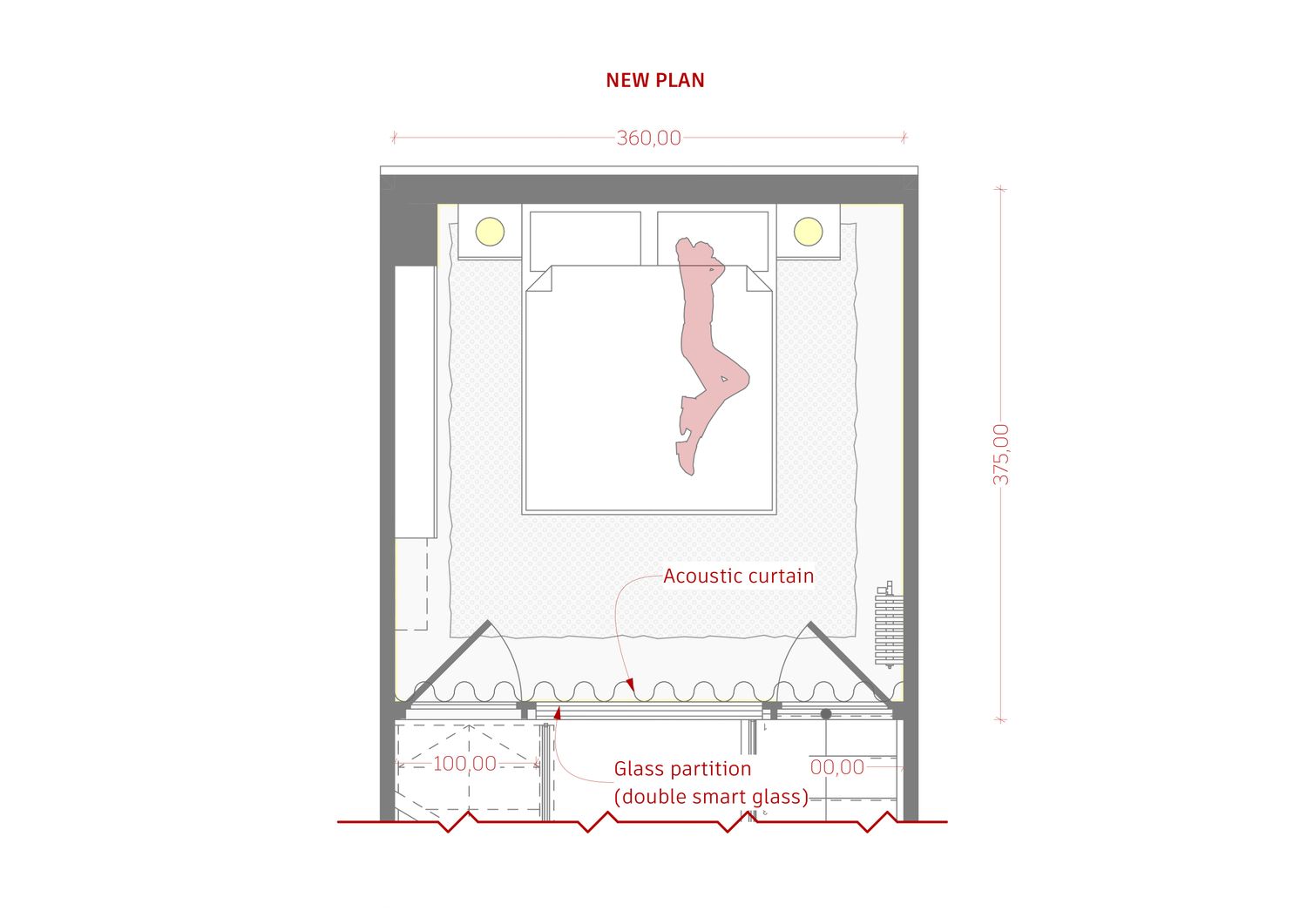
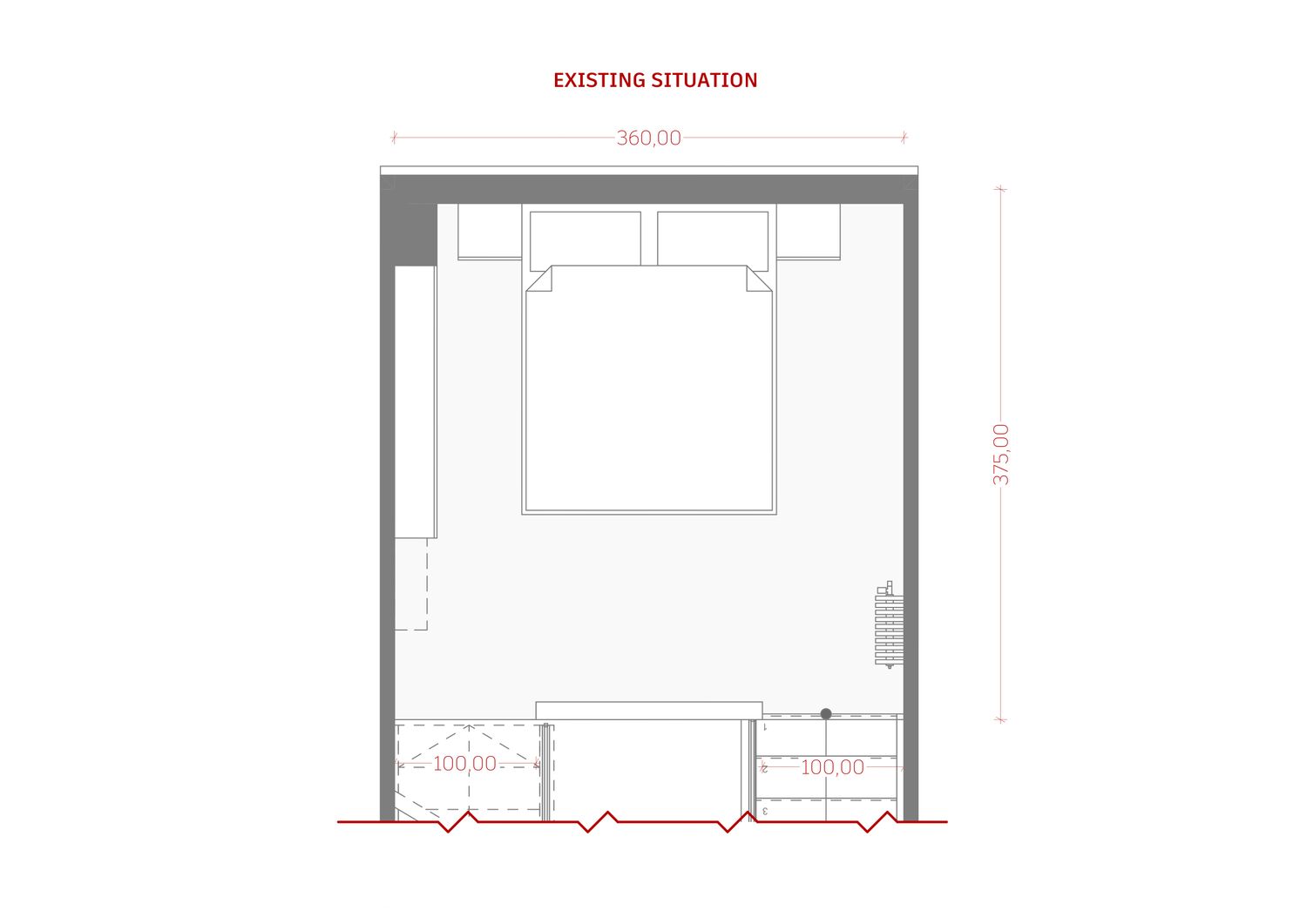
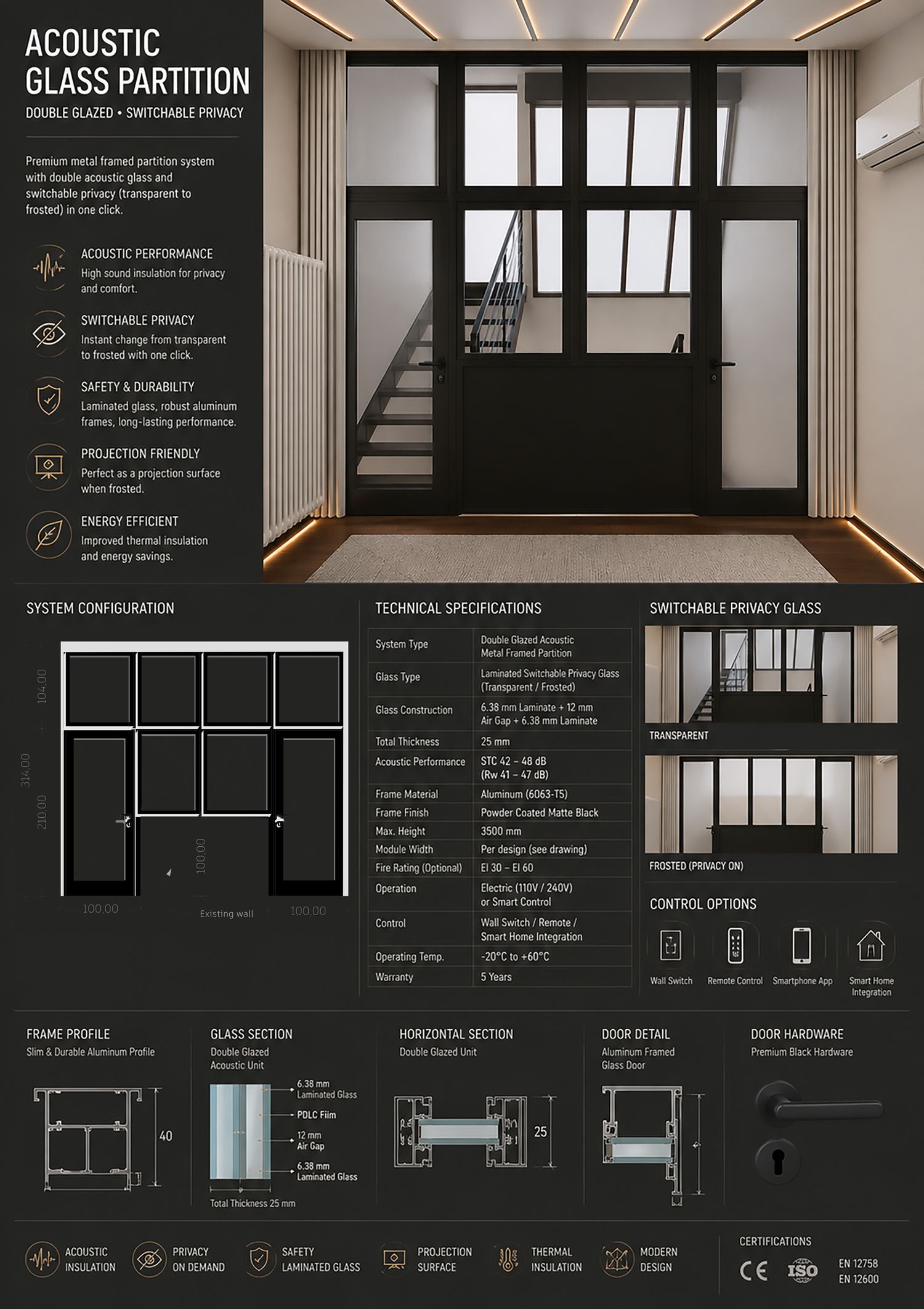
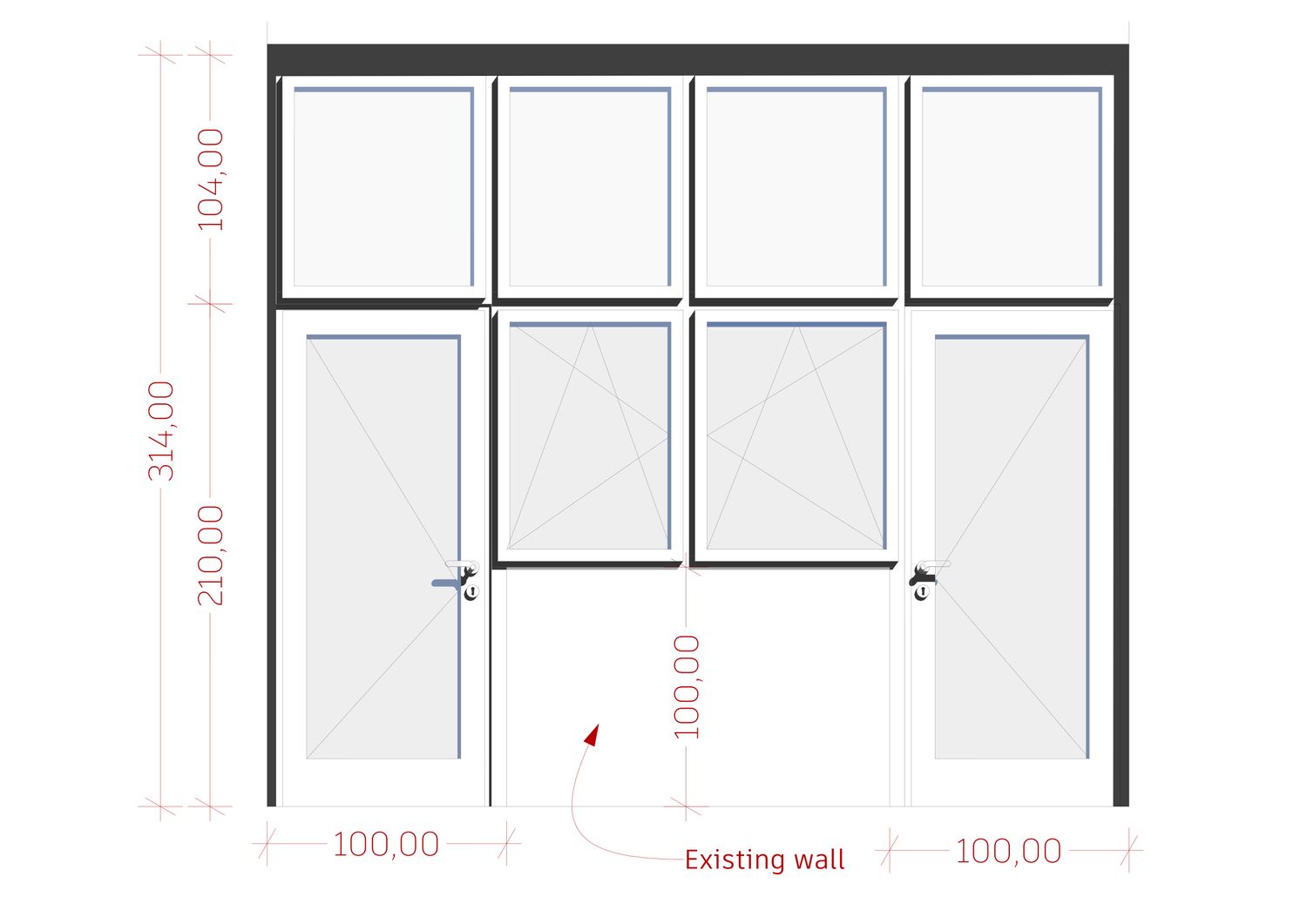
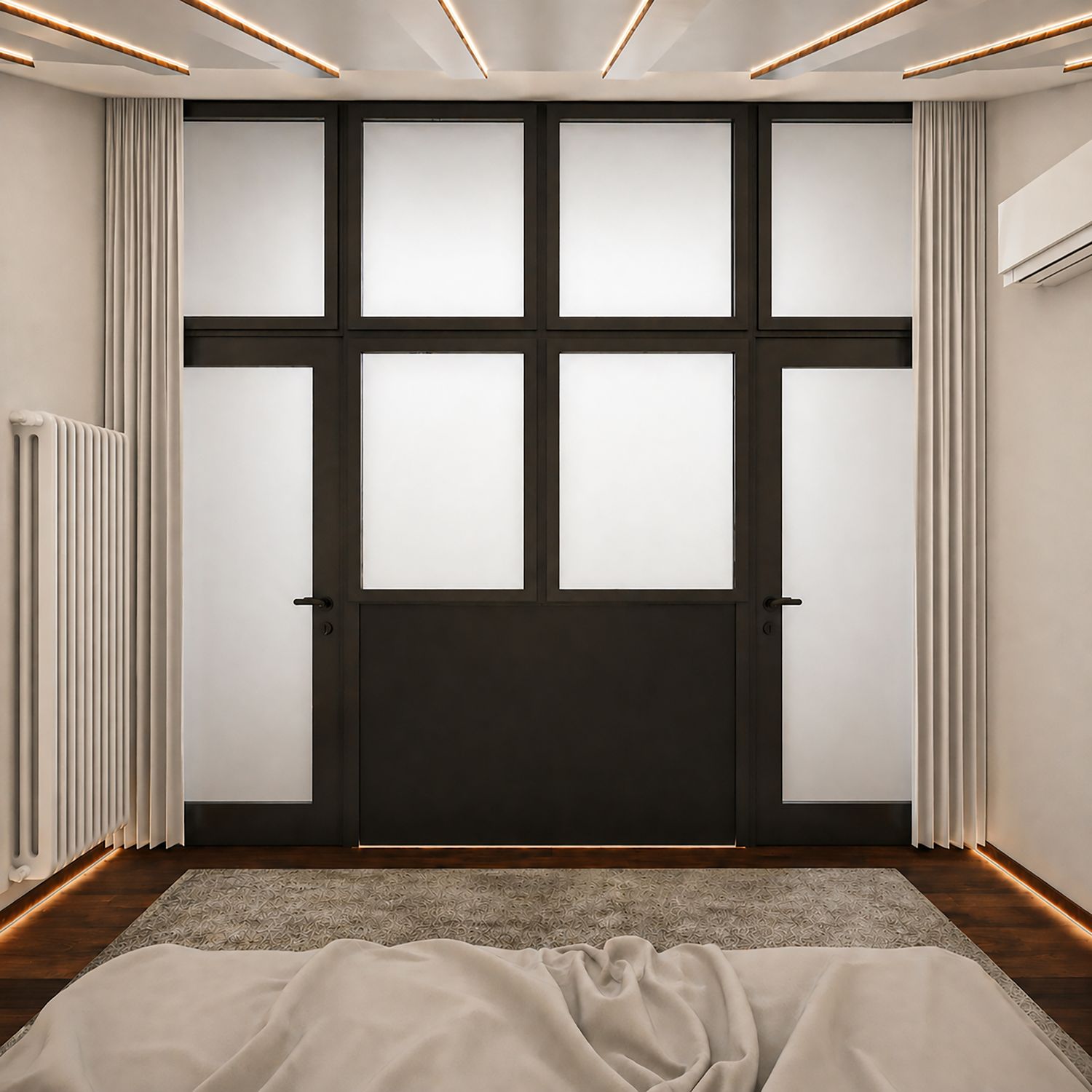
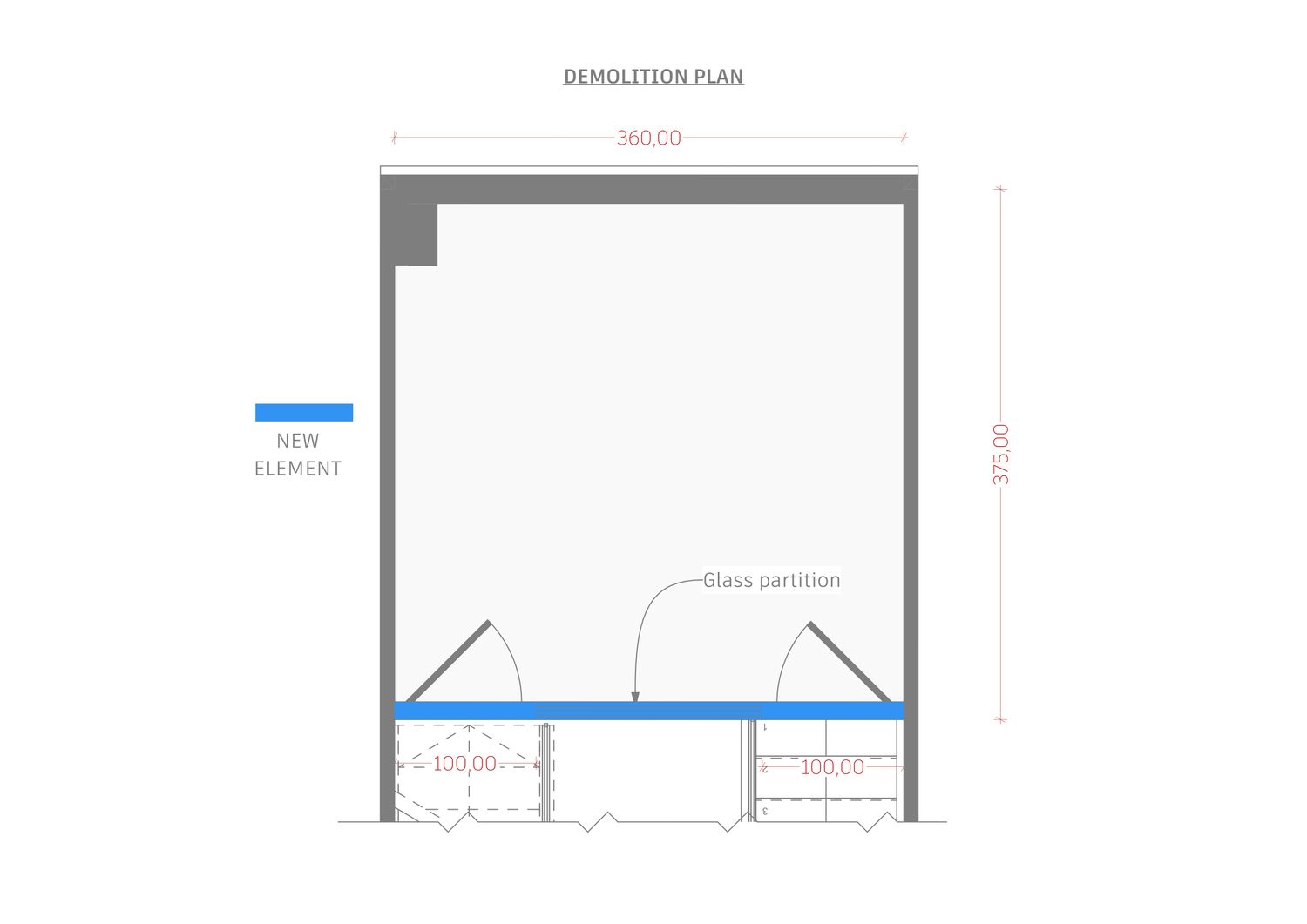
A key intervention is the introduction of a full-height glass partition that separates the sleeping area from the adjacent circulation zone. This partition is constructed with double-layered acoustic glass, ensuring sound insulation without sacrificing visual continuity. The glazing incorporates dual function: a translucent mode that allows diffused light to pass through, and a frosted condition that increases privacy when needed. The dark, steel-like framing of the partition subtly references industrial architecture while providing strong geometric definition within the space.
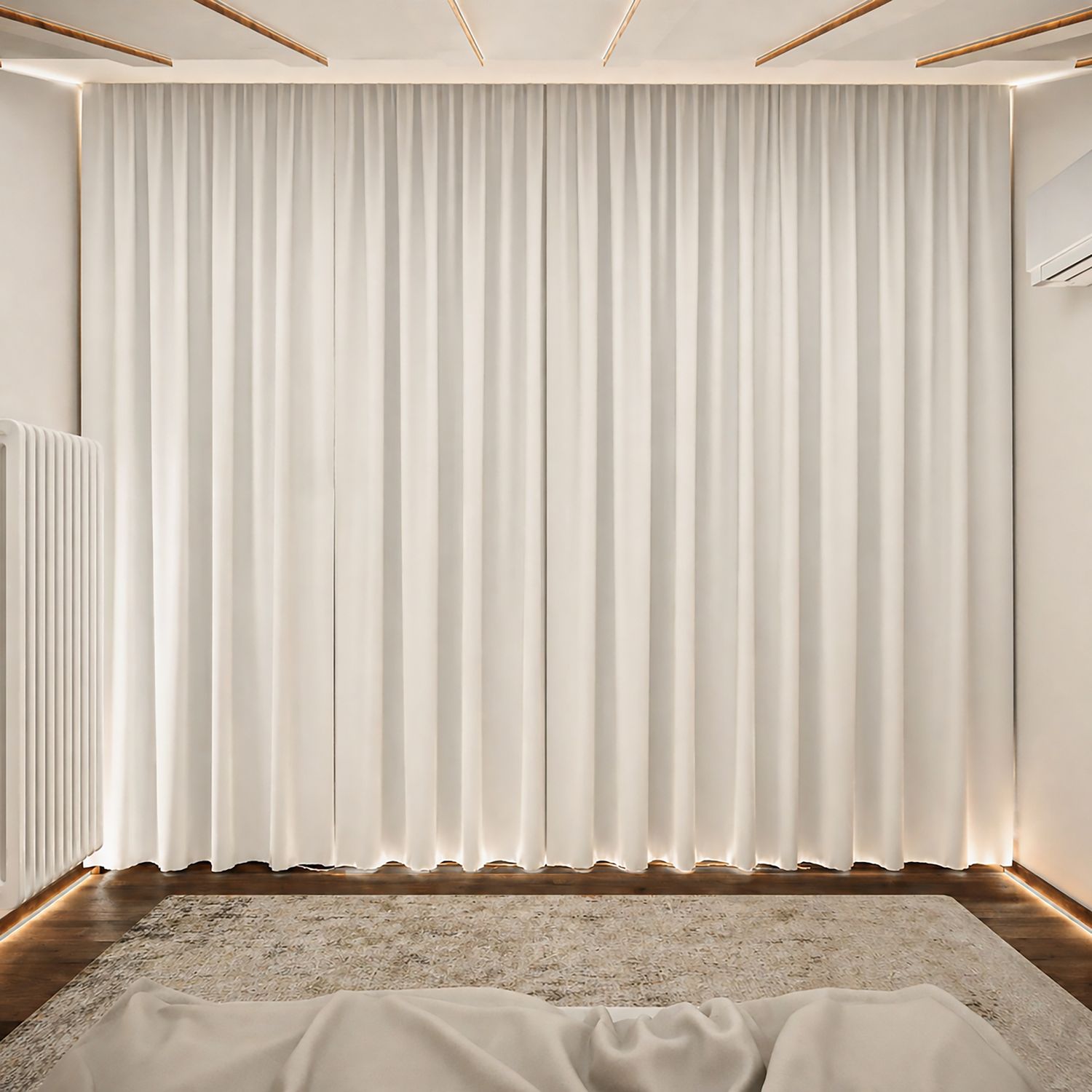
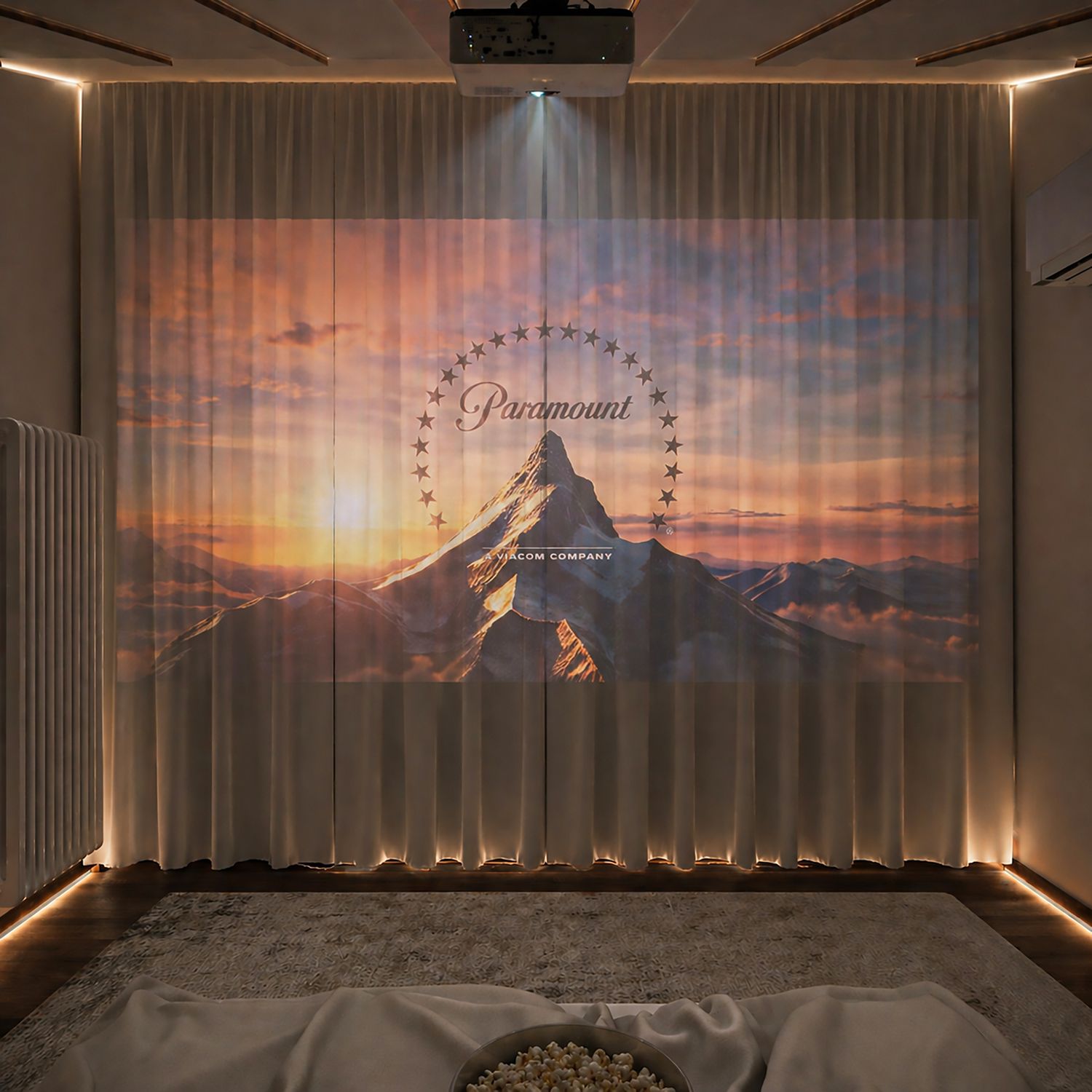
To further enhance flexibility and privacy, an acoustic curtain is installed along the glass wall. When closed, it acts as an additional sound and visual barrier, softening the space and improving comfort. The curtain reveals its secondary function also—it becomes a projection surface, effectively transforming the bedroom into a compact home cinema for movie nights. This dual-use element reflects the project’s broader intent: maximizing functionality without introducing visual clutter.
The lighting strategy extends beyond the ceiling into vertical surfaces and floor junctions. Hidden lights lines are integrated at wall bases and within joinery details, creating a floating effect for key elements such as the bed platform and storage units. This layered lighting approach enhances depth perception and reinforces the architectural composition, especially during evening hours.
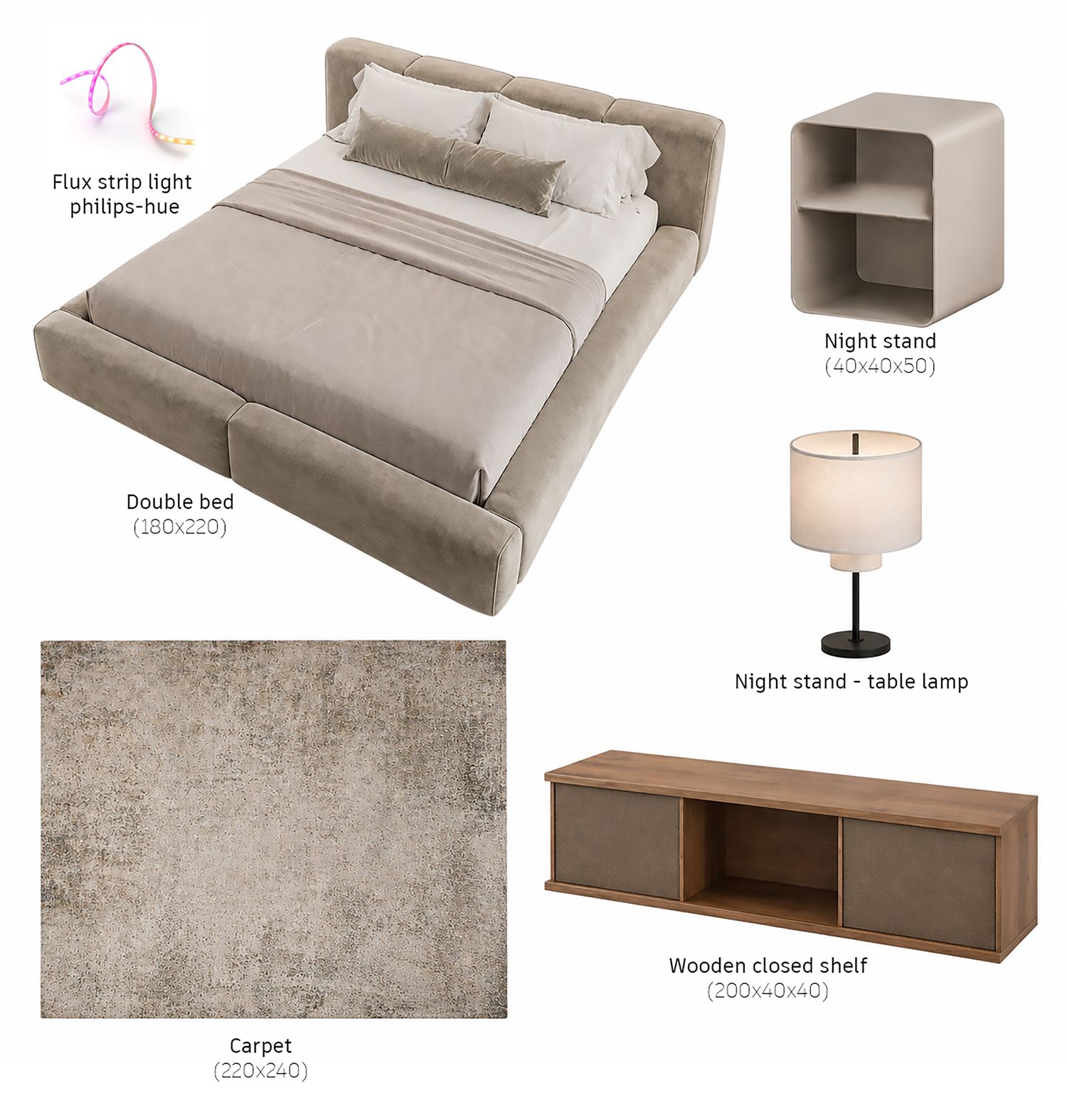
Furniture is deliberately low-profile and softly contoured, allowing the architectural envelope to remain dominant. Built-in shelving follows the geometry of the roof, optimizing storage while maintaining clean lines. The bed, centrally positioned, anchors the composition and aligns with the symmetry of the ceiling lighting above.
Overall, the project is conceived as a seamless blend of industrial clarity and residential comfort. Through careful integration of light, acoustics, and adaptable light, the space evolves into a bright, flexible environment that supports both everyday living and more intimate, atmospheric experiences.