🔥 CYBER MONDAY 24H: 60% off all prices on the site! Only until midnight. Use code CYBERMONDAY25 👉🏼


Tusa, Metropolitan City of Messina, Italy
Residential - Apartment
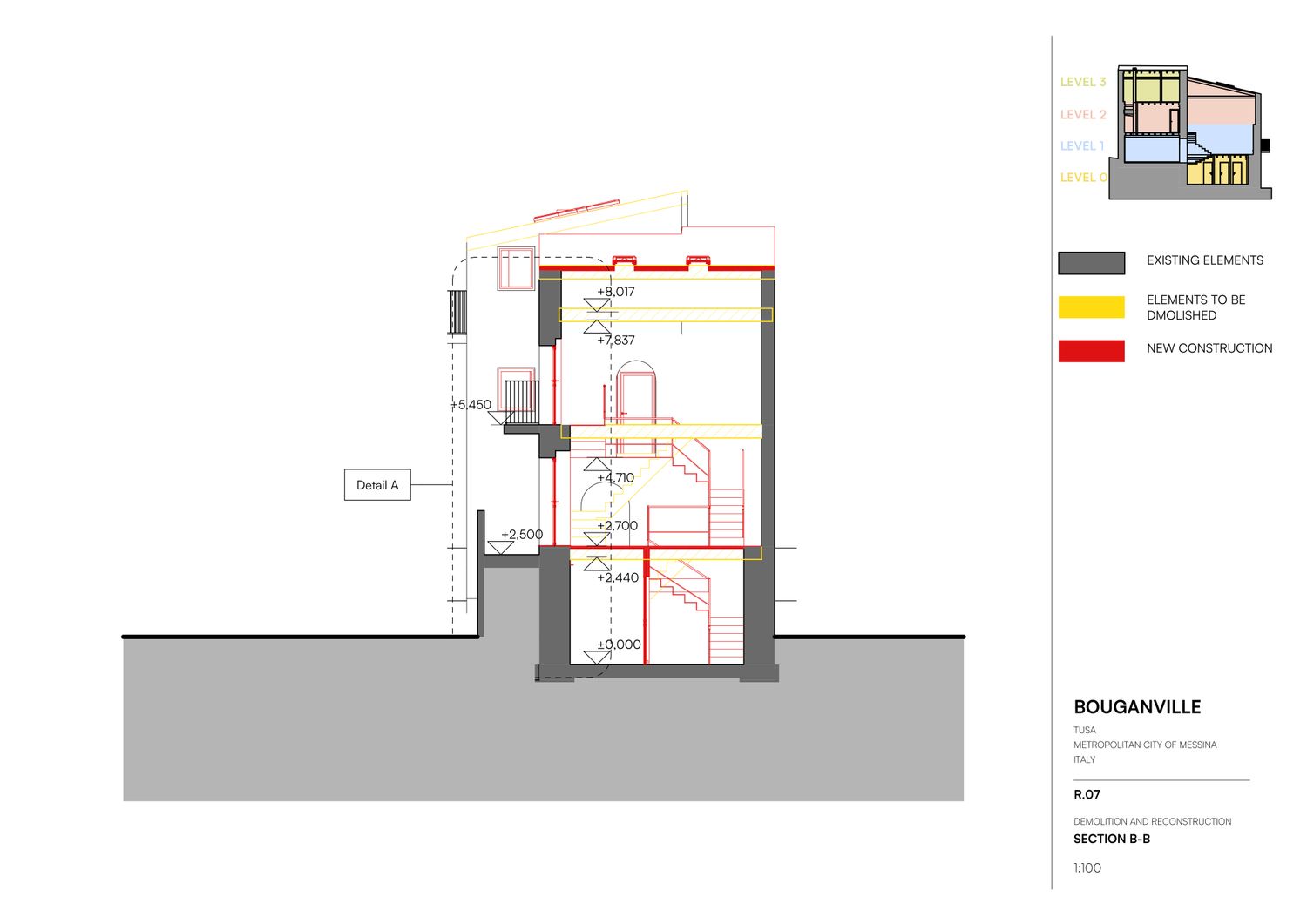
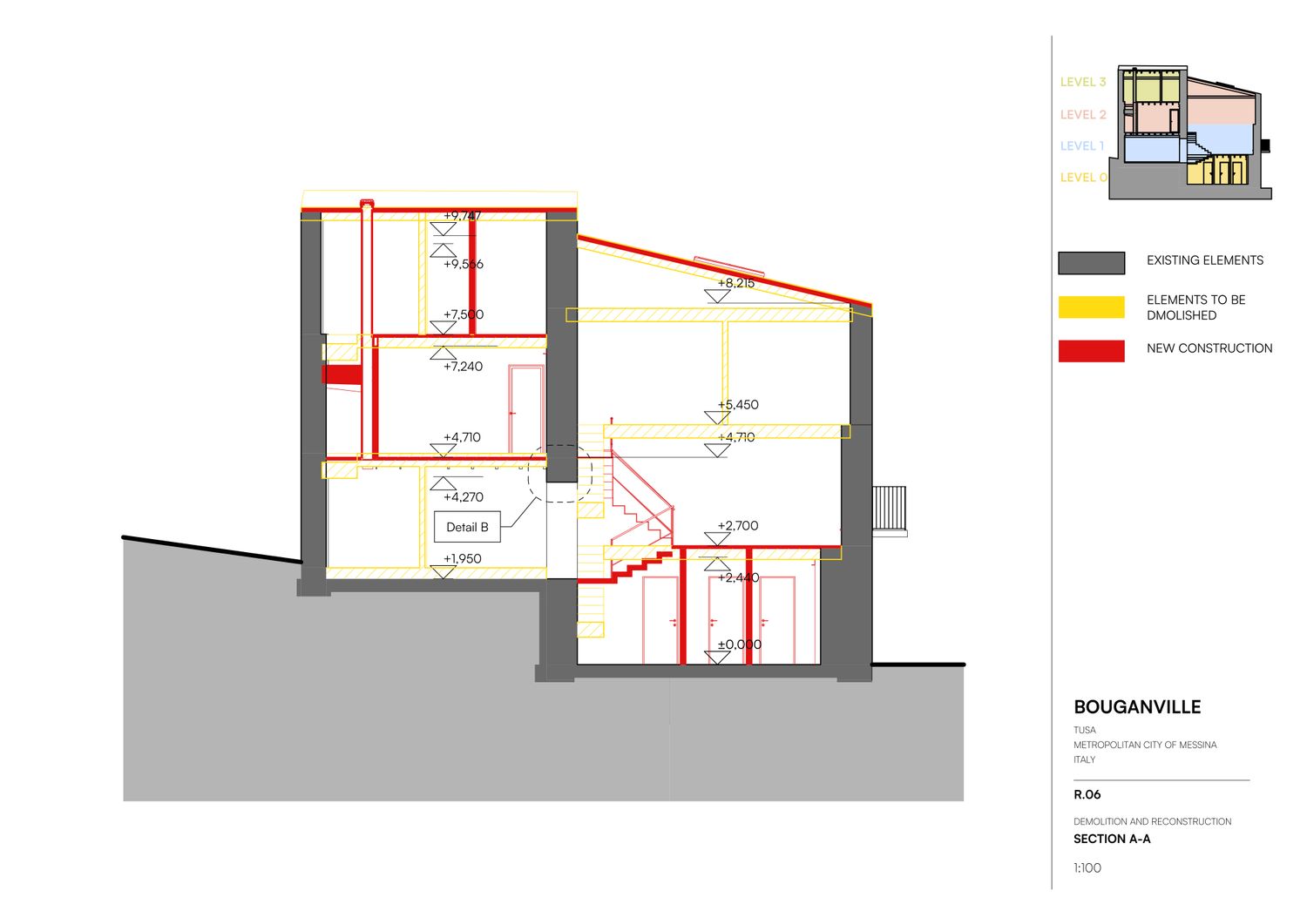
This proposal turns constraint into advantage: two historic stone houses become one coherent home through precise, internal interventions that protect the external heritage and amplify the atmosphere of the existing stone fabric.
Spatial Concept — three clear layers
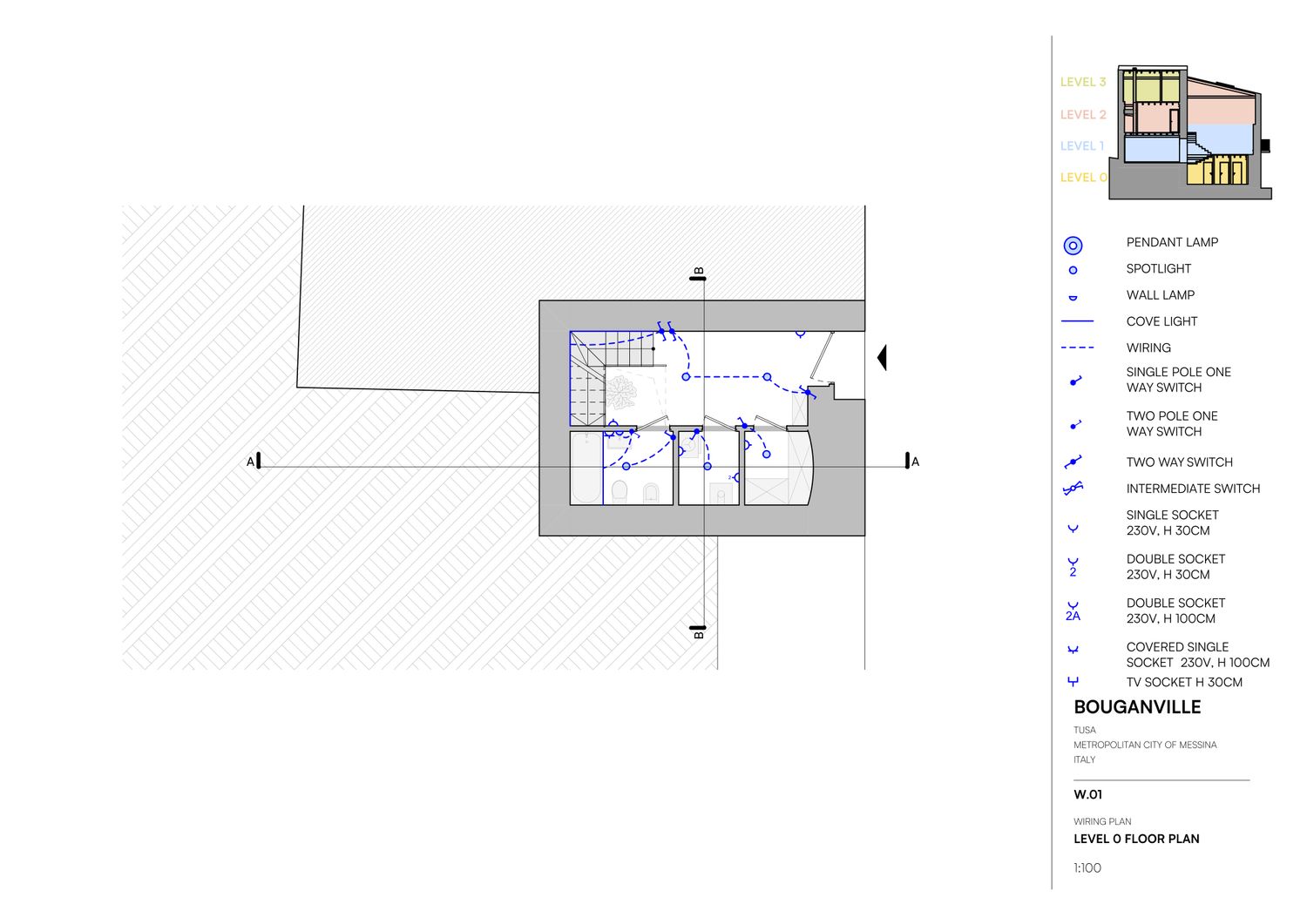
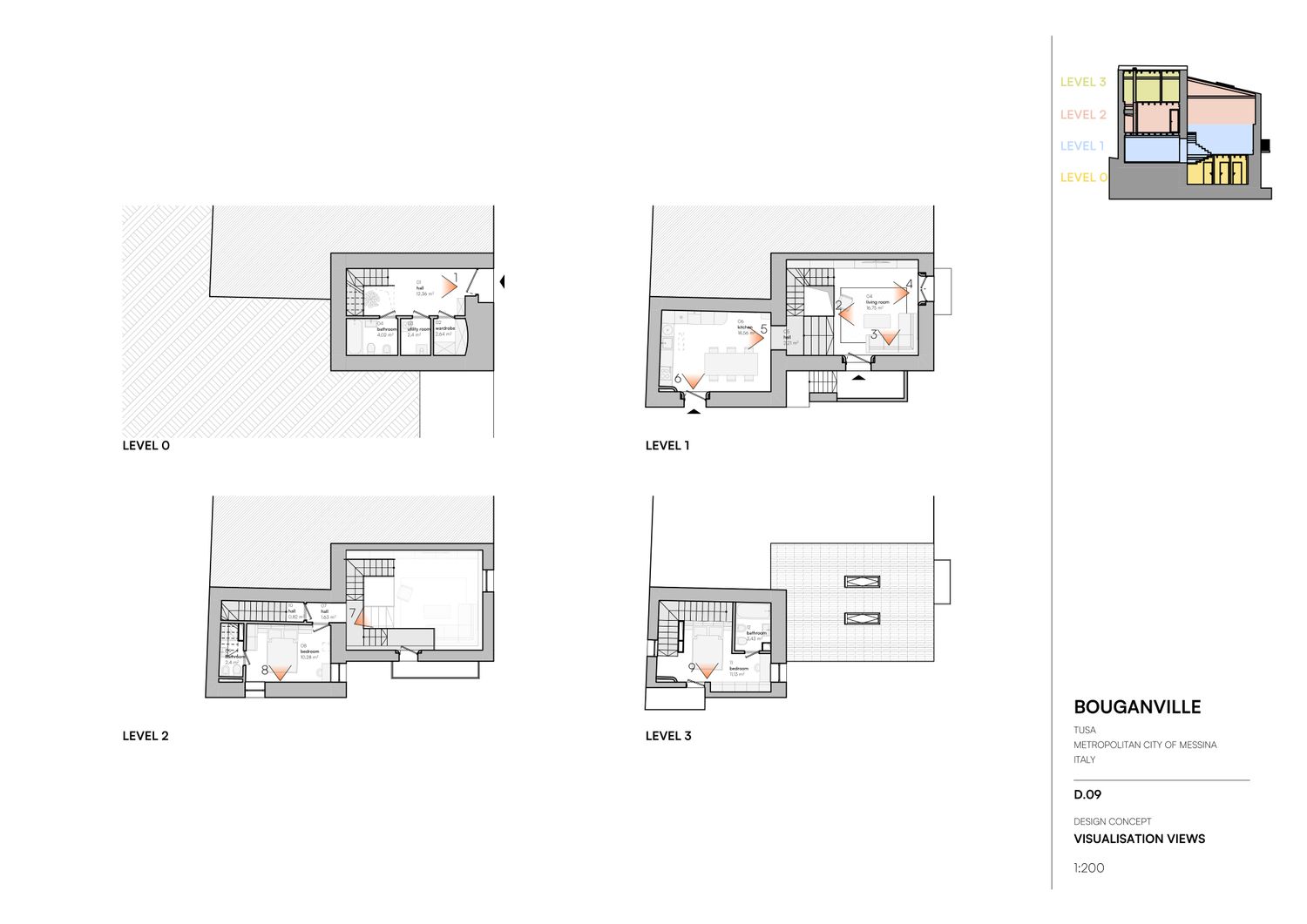
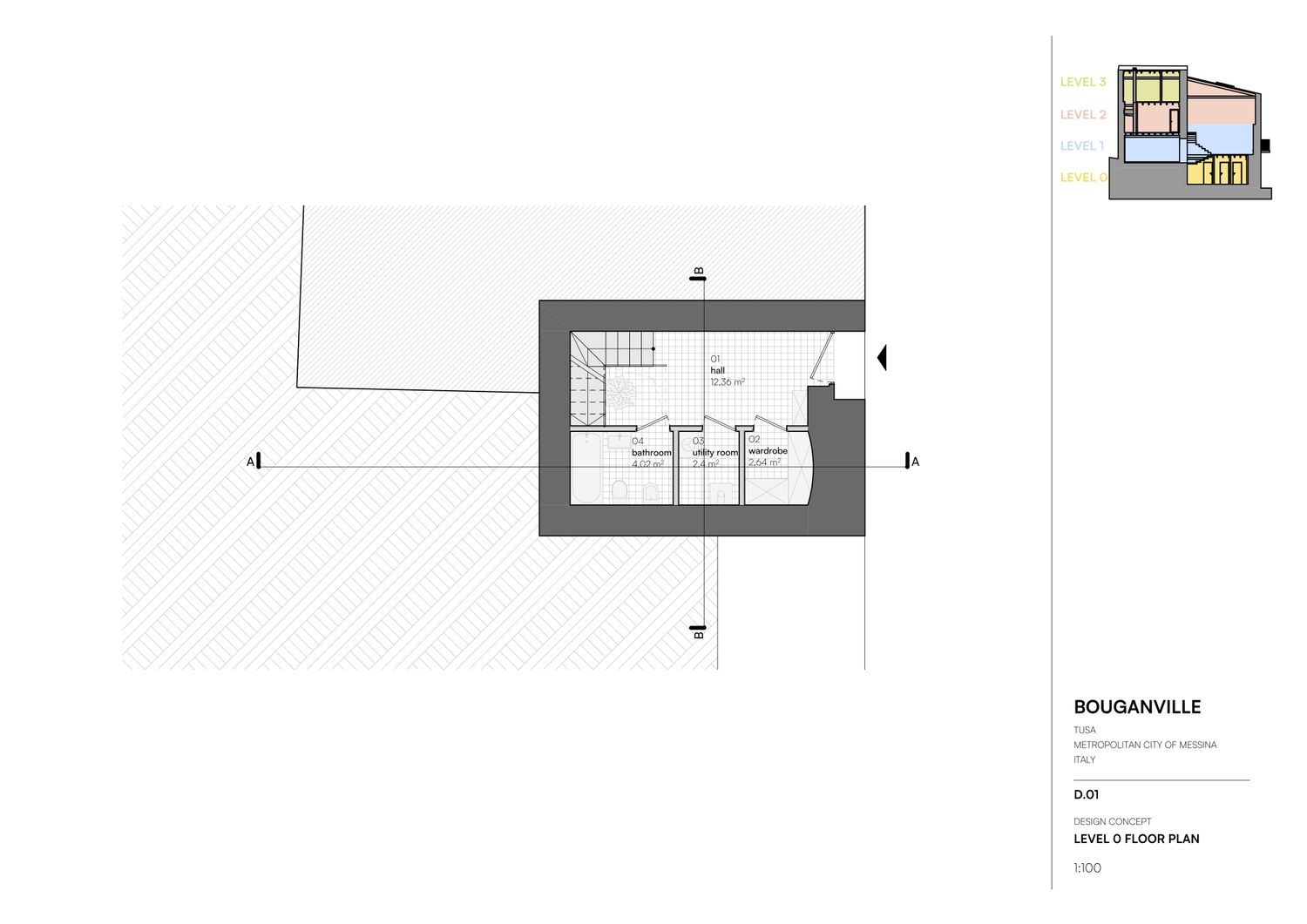
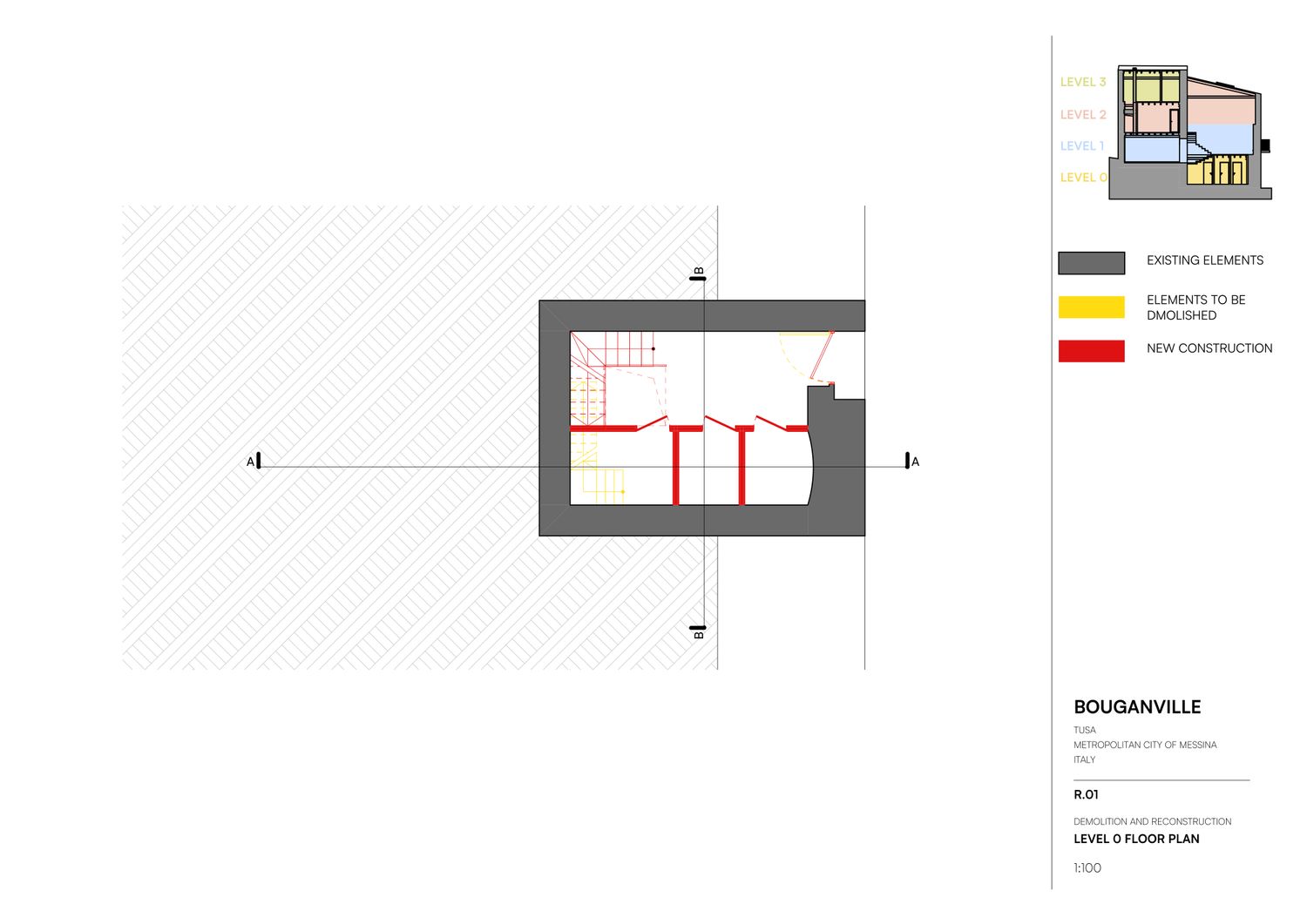
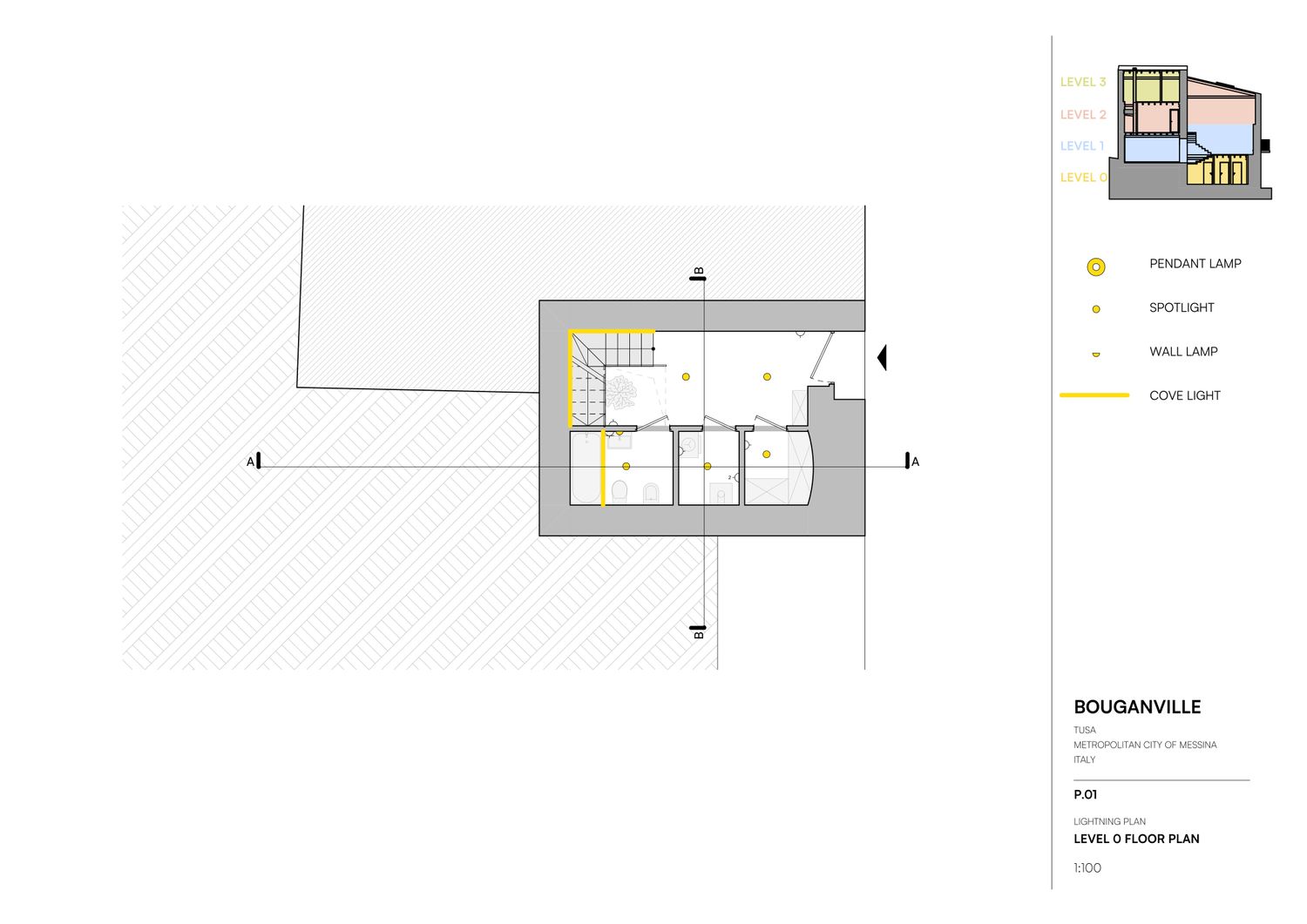
Level 0: Technical + Flexible Base
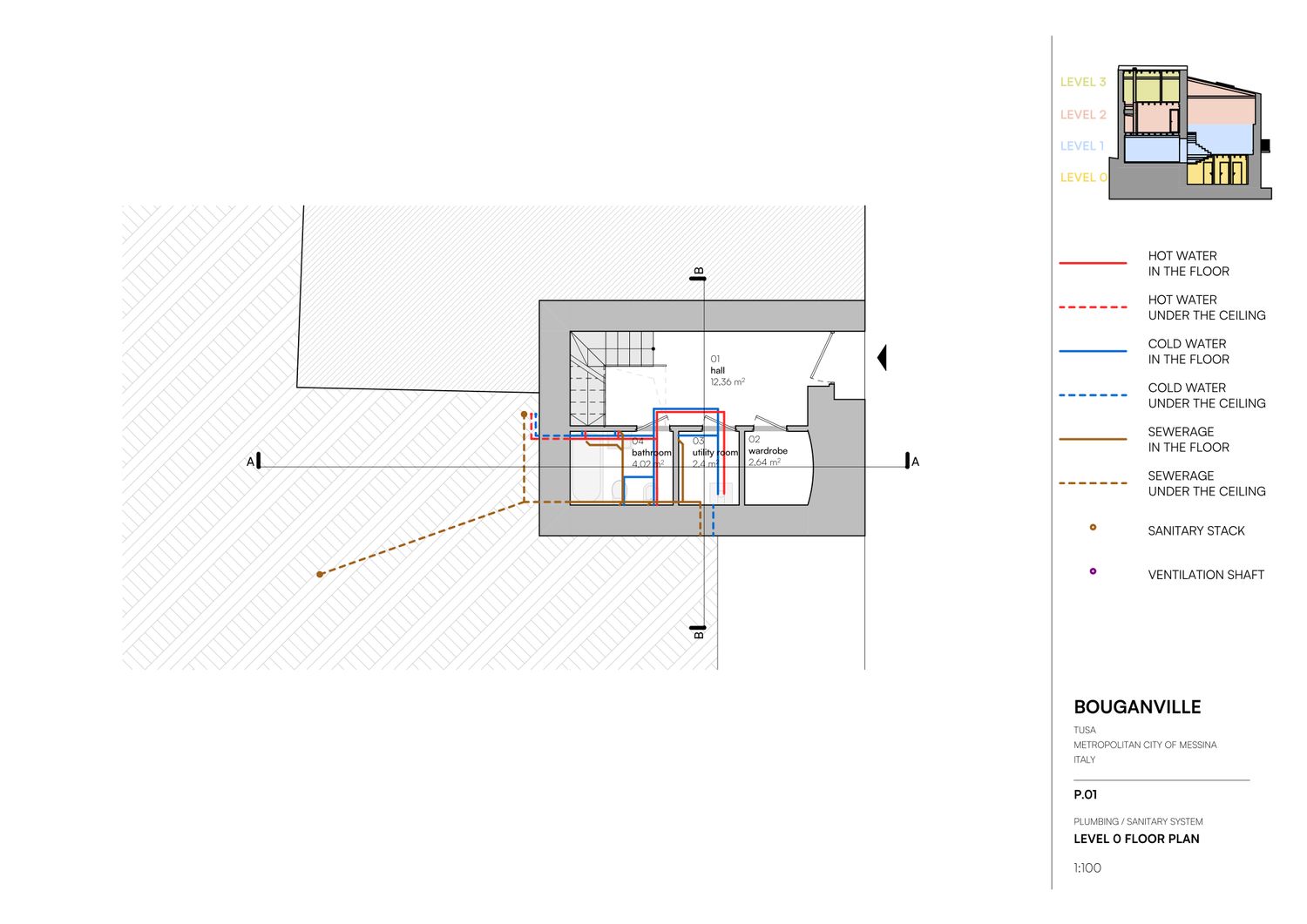
Designed as the “engine room” of the house, Level 0 concentrates installations and services while remaining adaptable over time—storage, workshop, guest overflow, or future program without structural changes. A guest-support bathroom at the level strengthens day-to-day comfort.
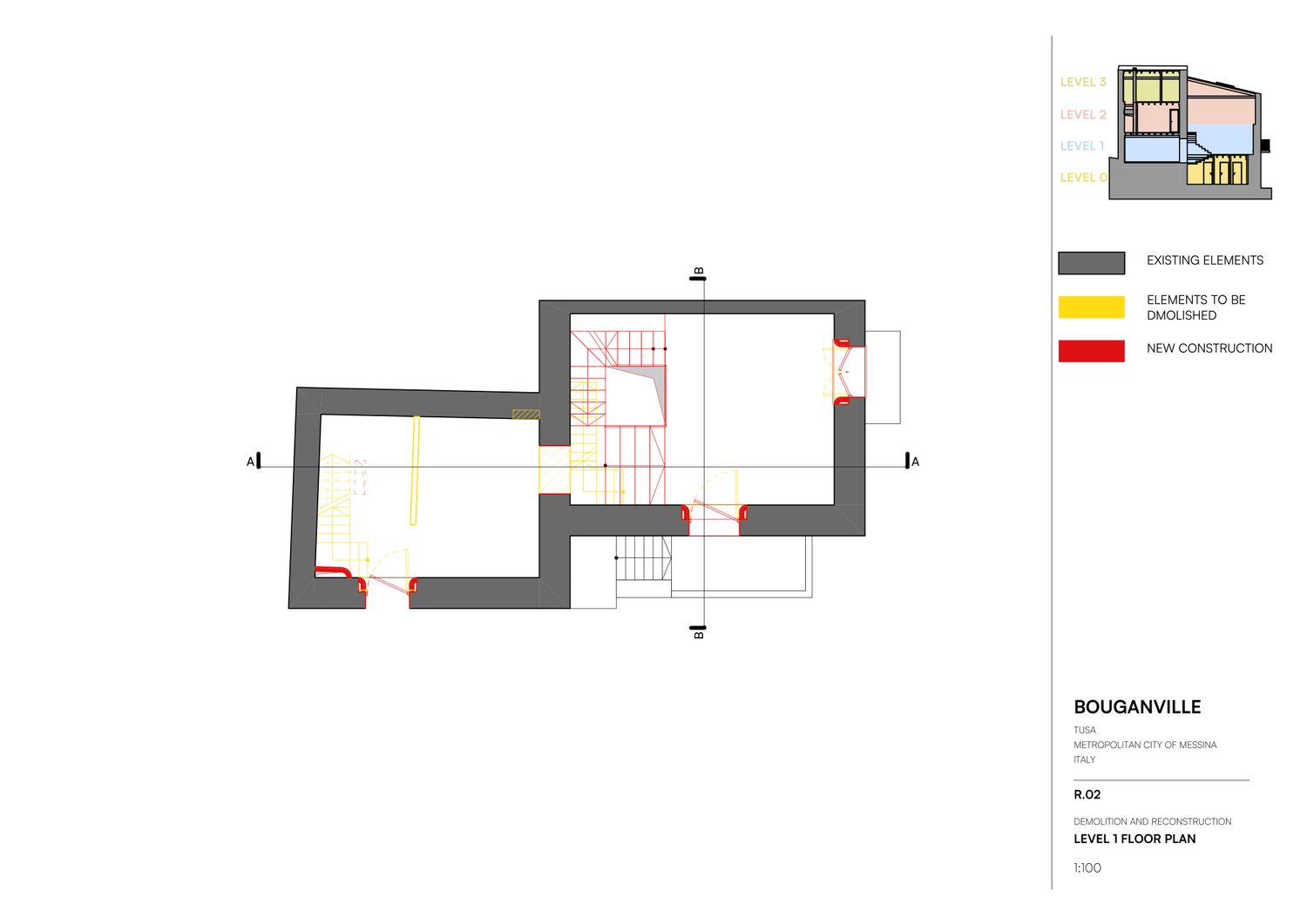
Level 1: Everyday Life
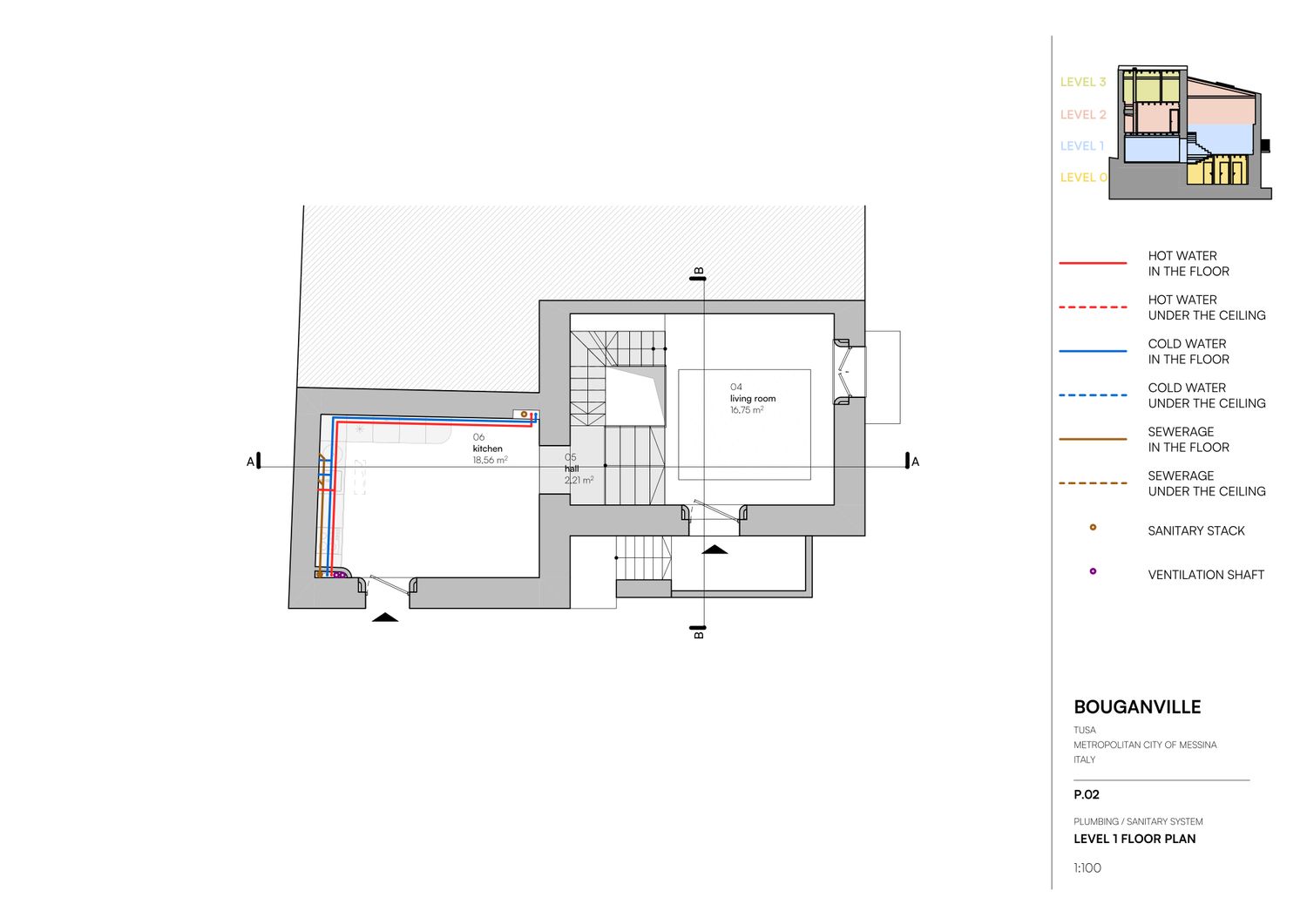
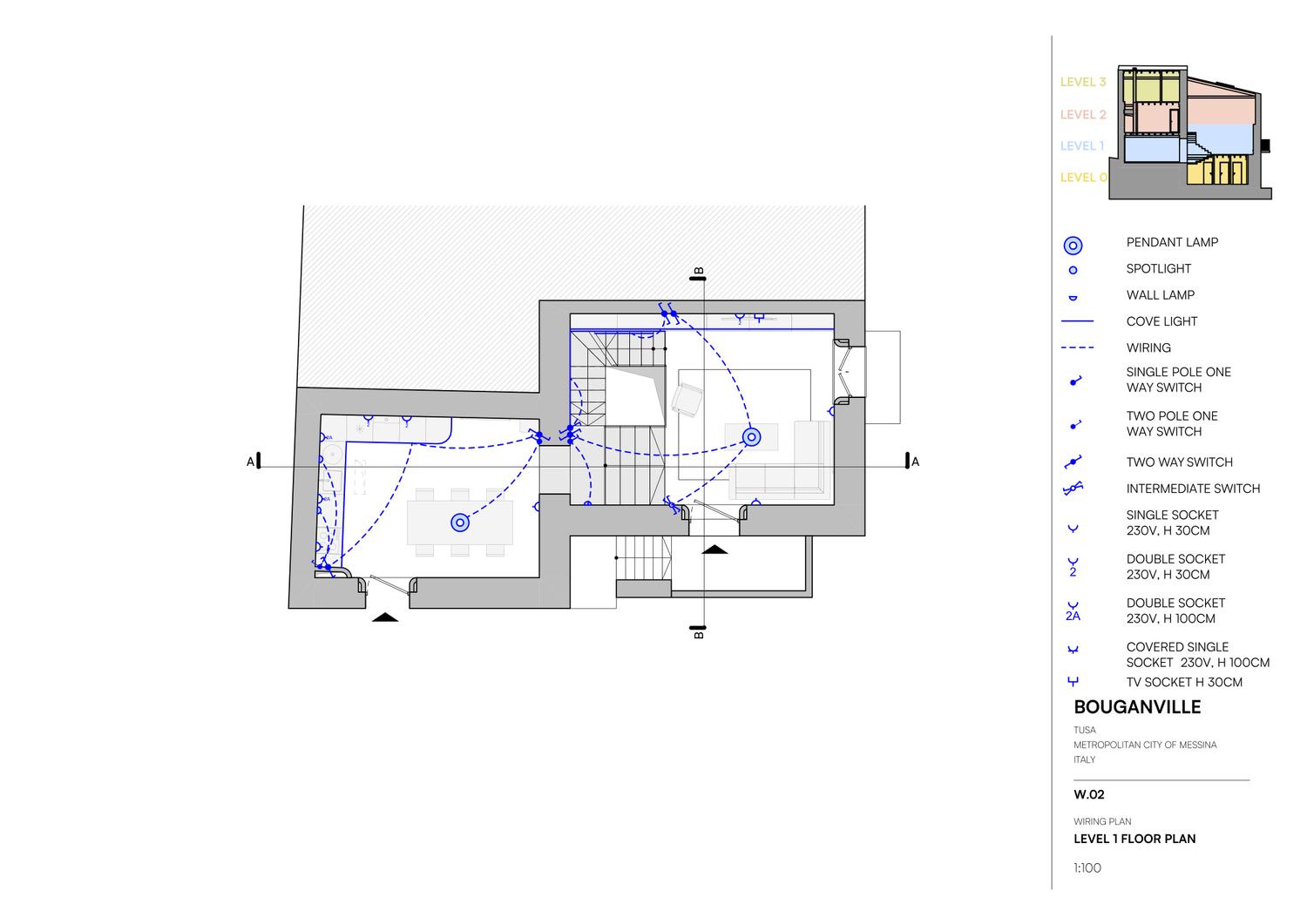
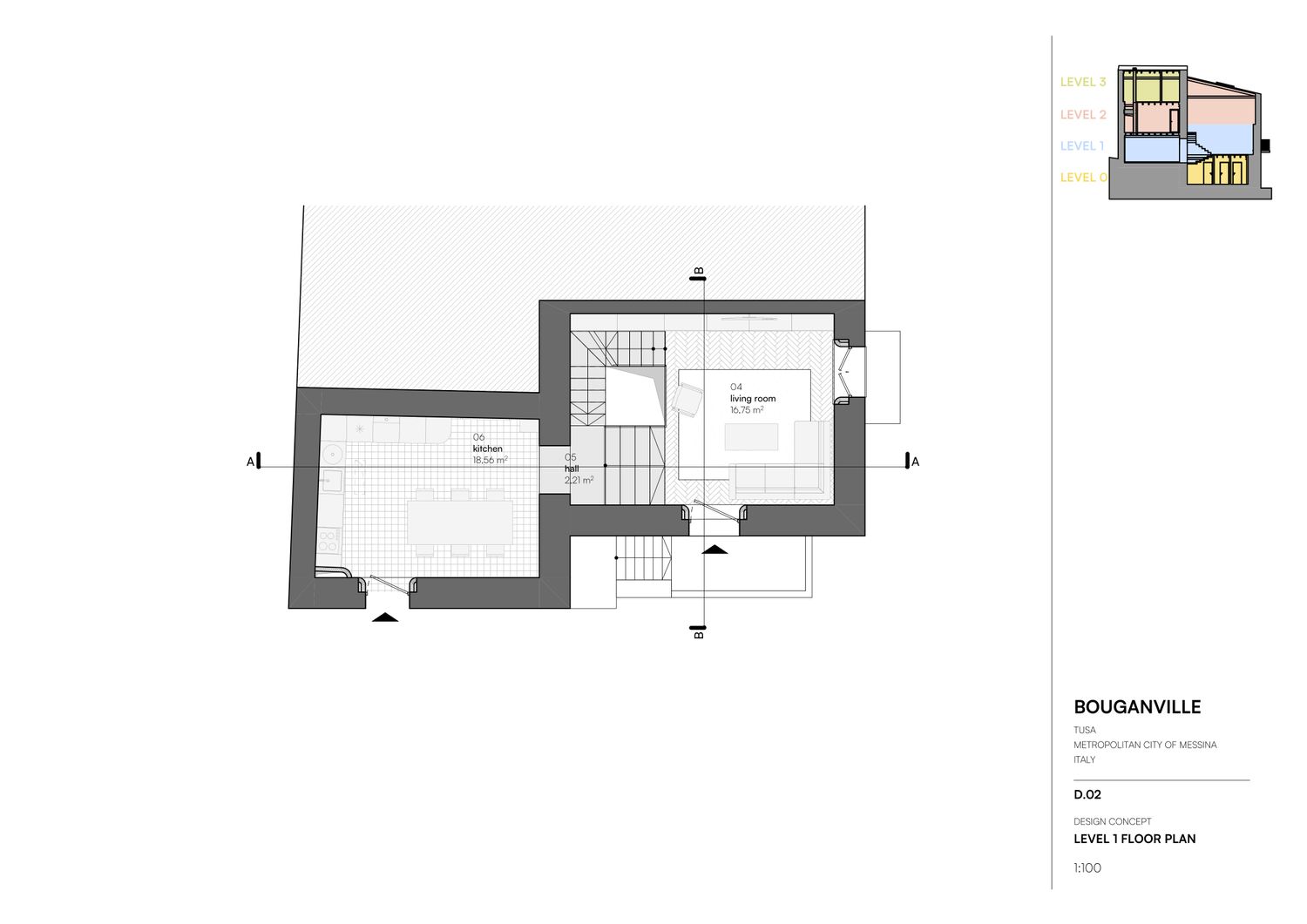
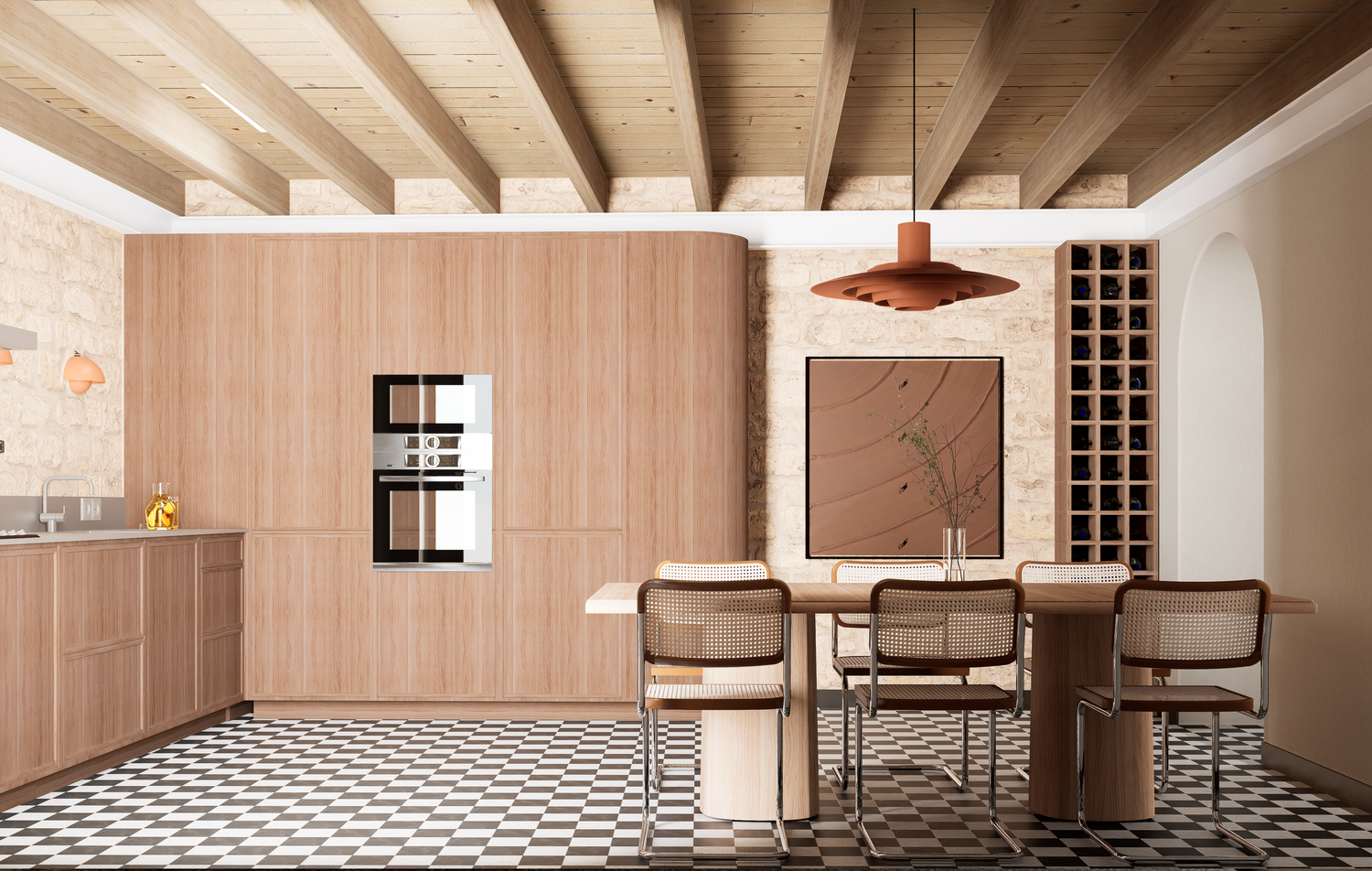
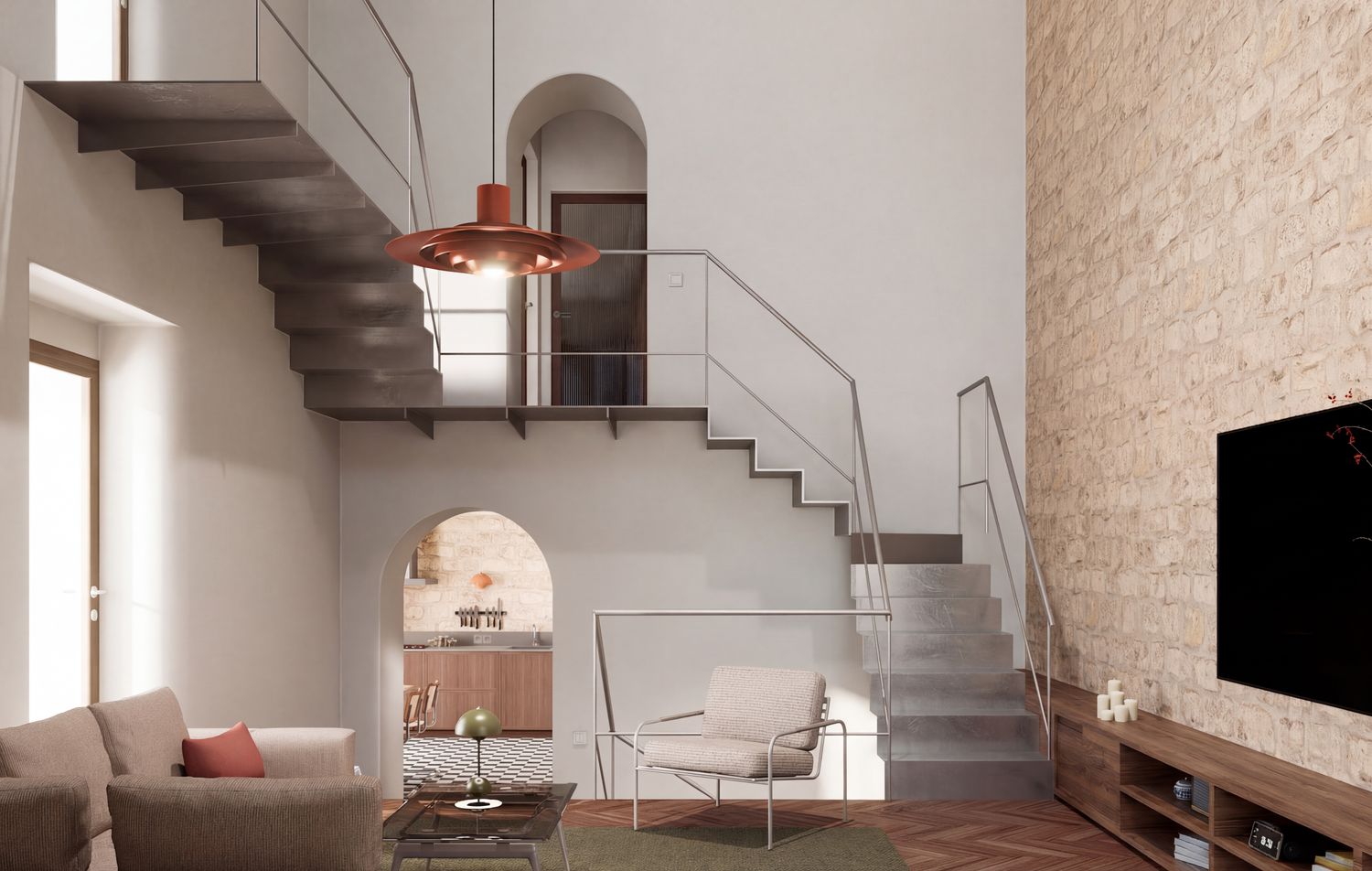
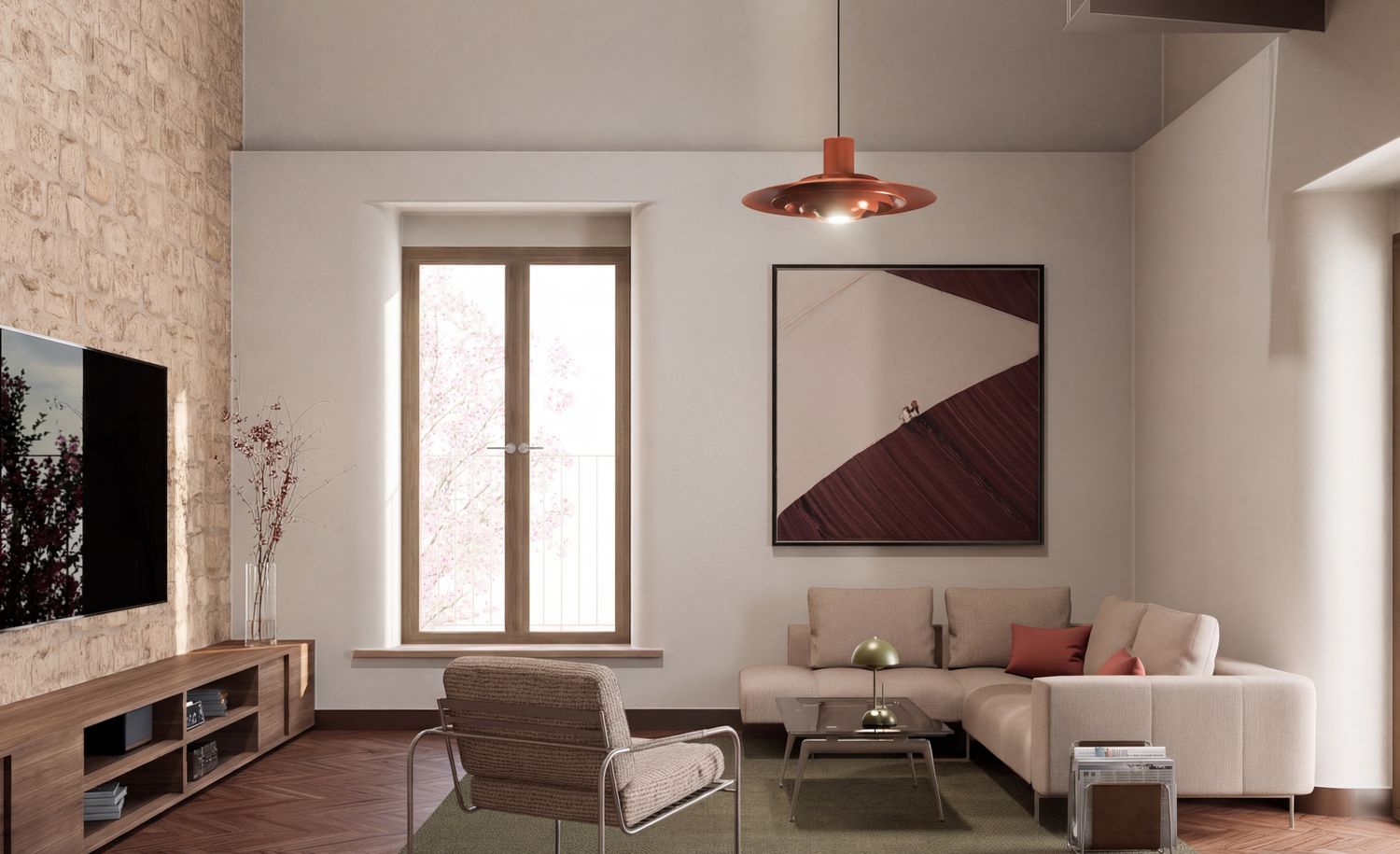
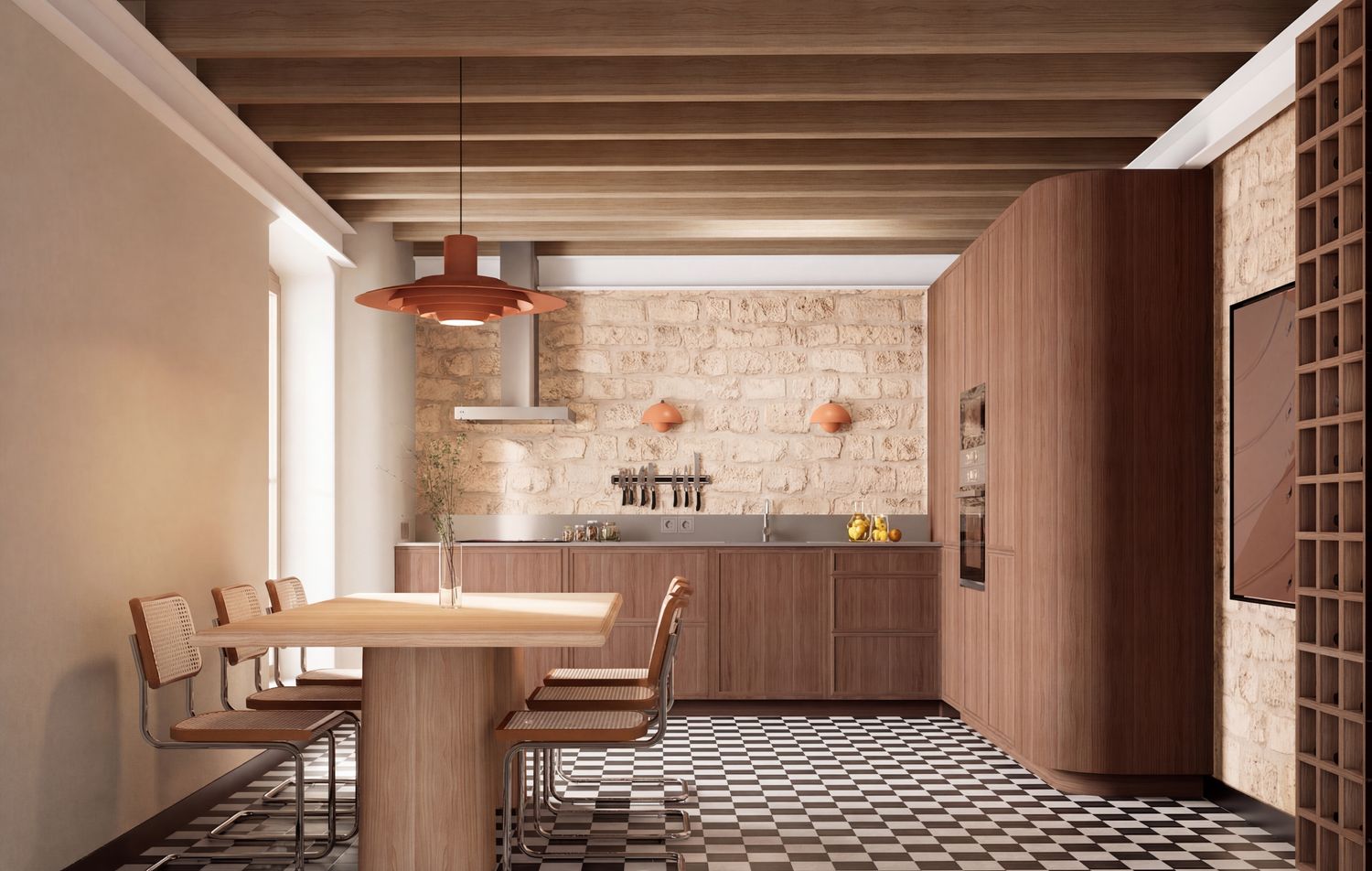
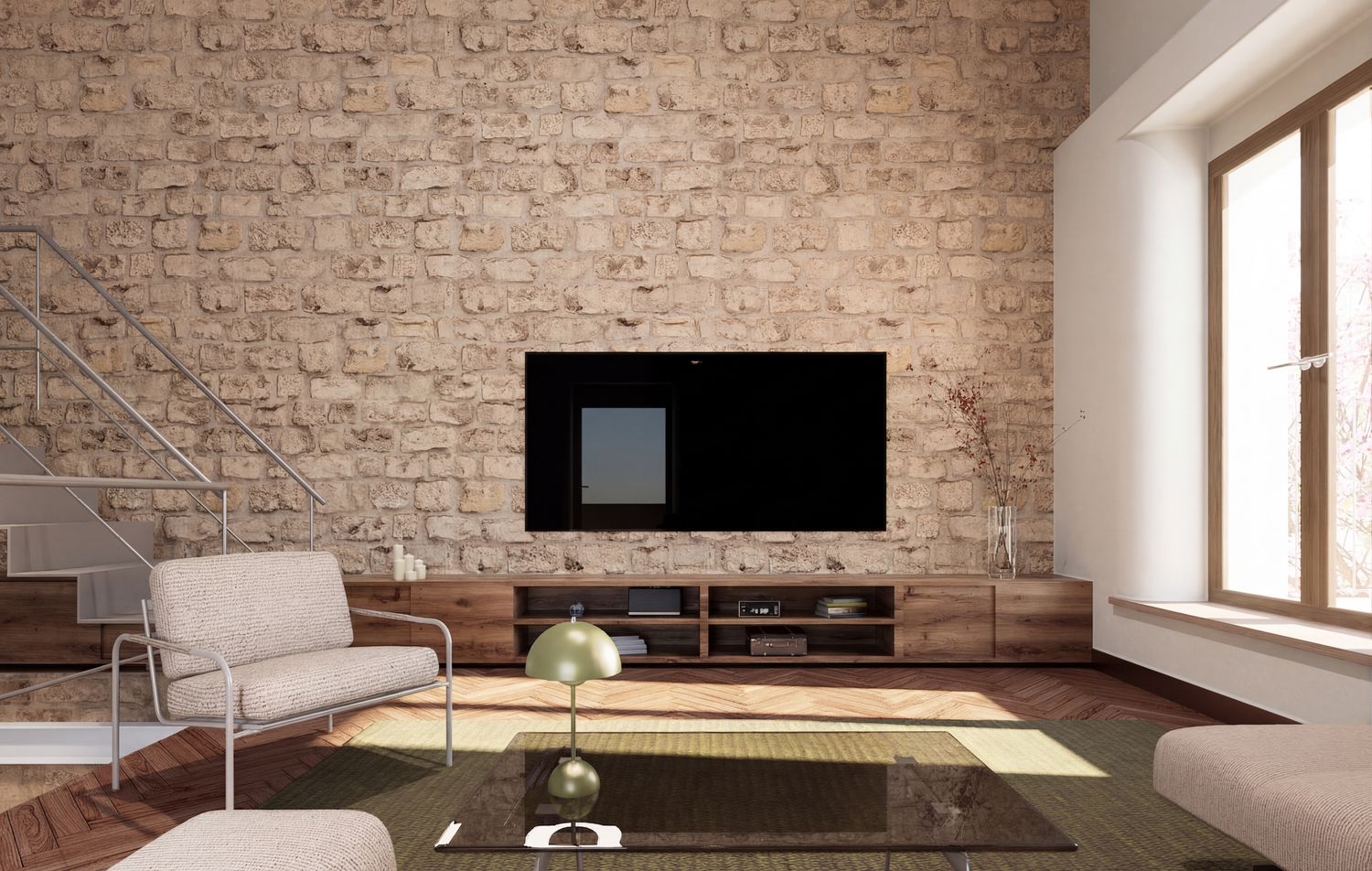
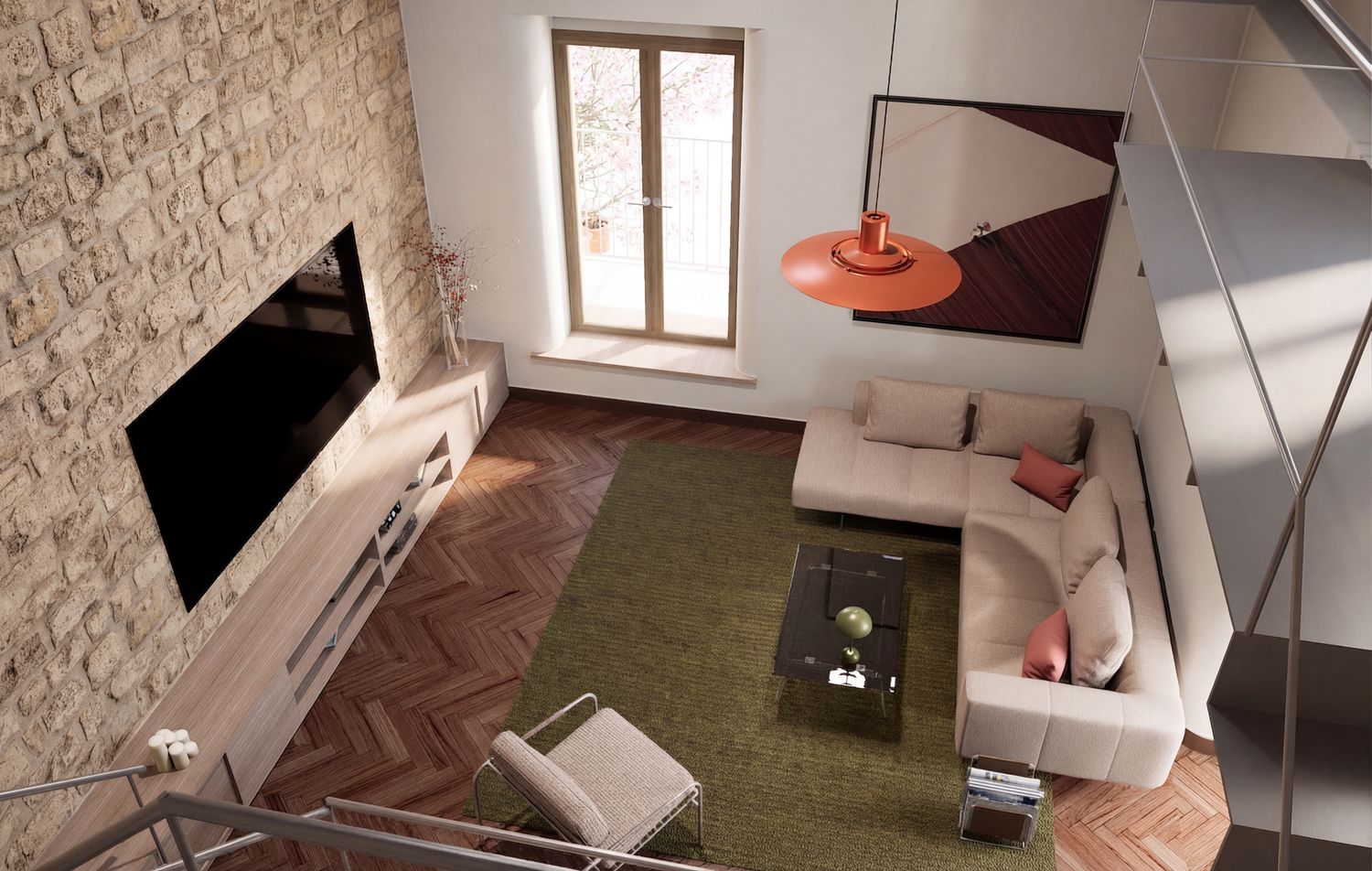
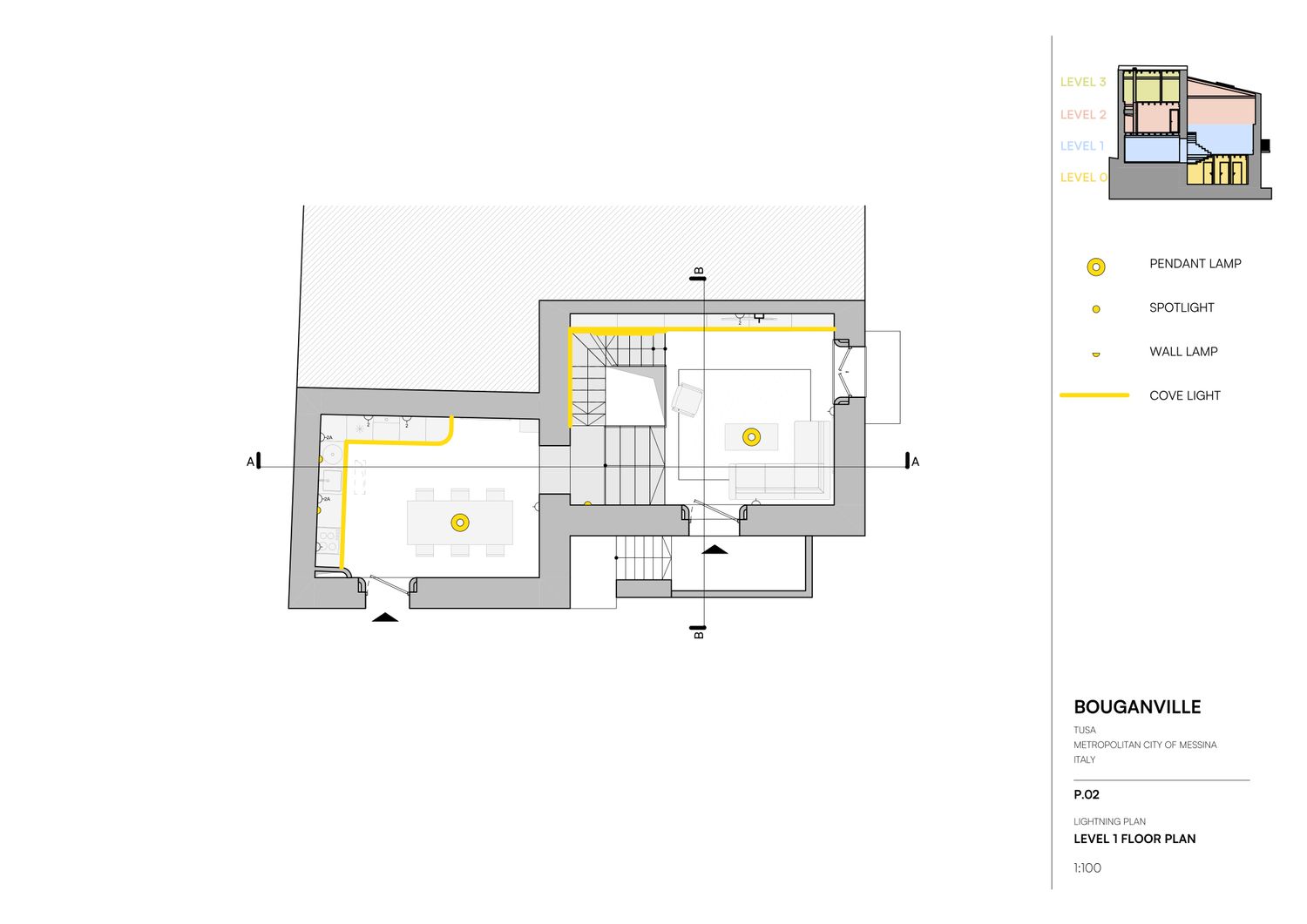
The kitchen and dining space form the social heart: generous, fully equipped, and organised around a large table for cooking, working, and gathering. The living room is placed where it performs best—higher, oriented toward the sea—arranged for conversation first, yet flexible enough for different lifestyles.
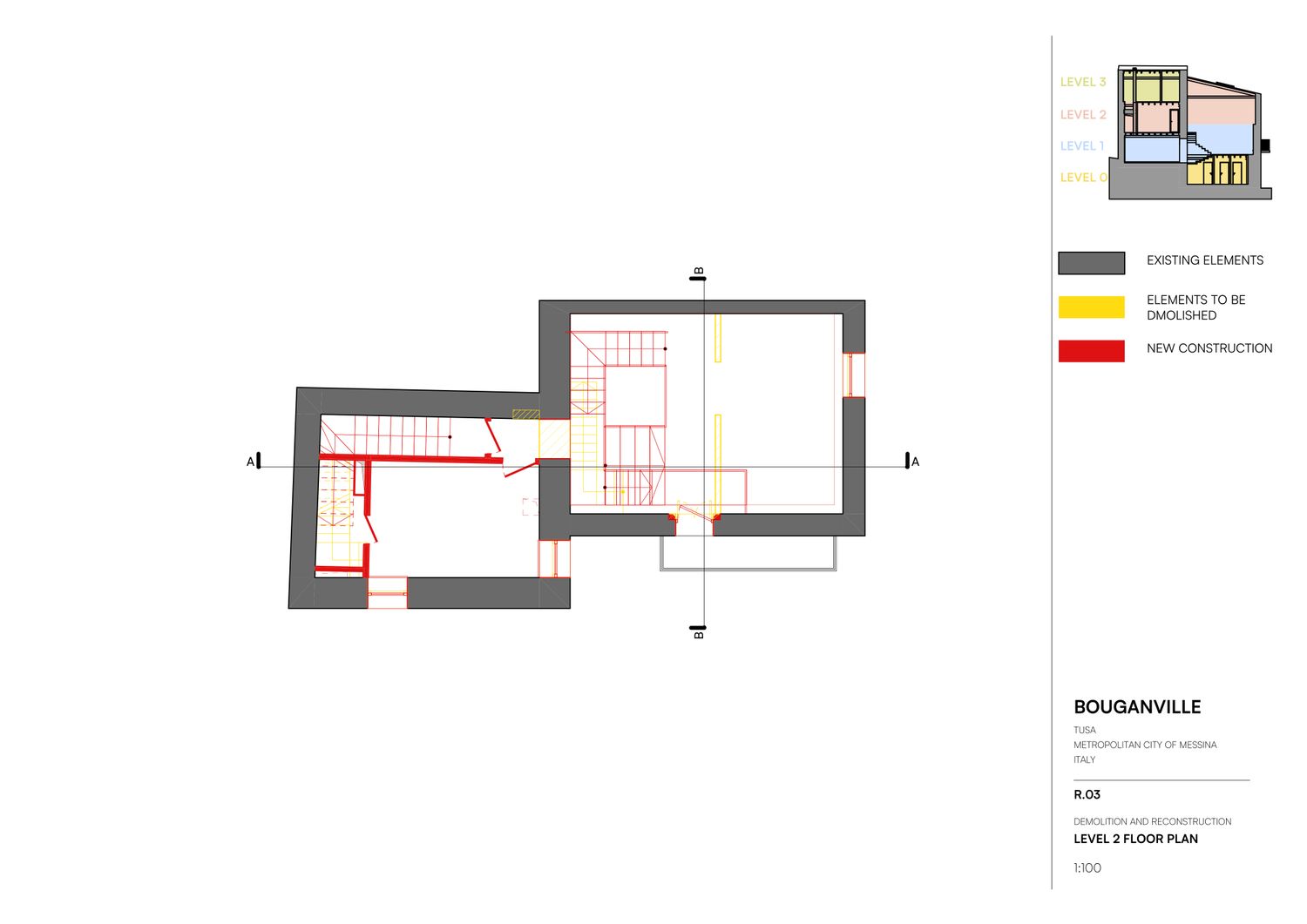
Levels 2–3: Private Suites
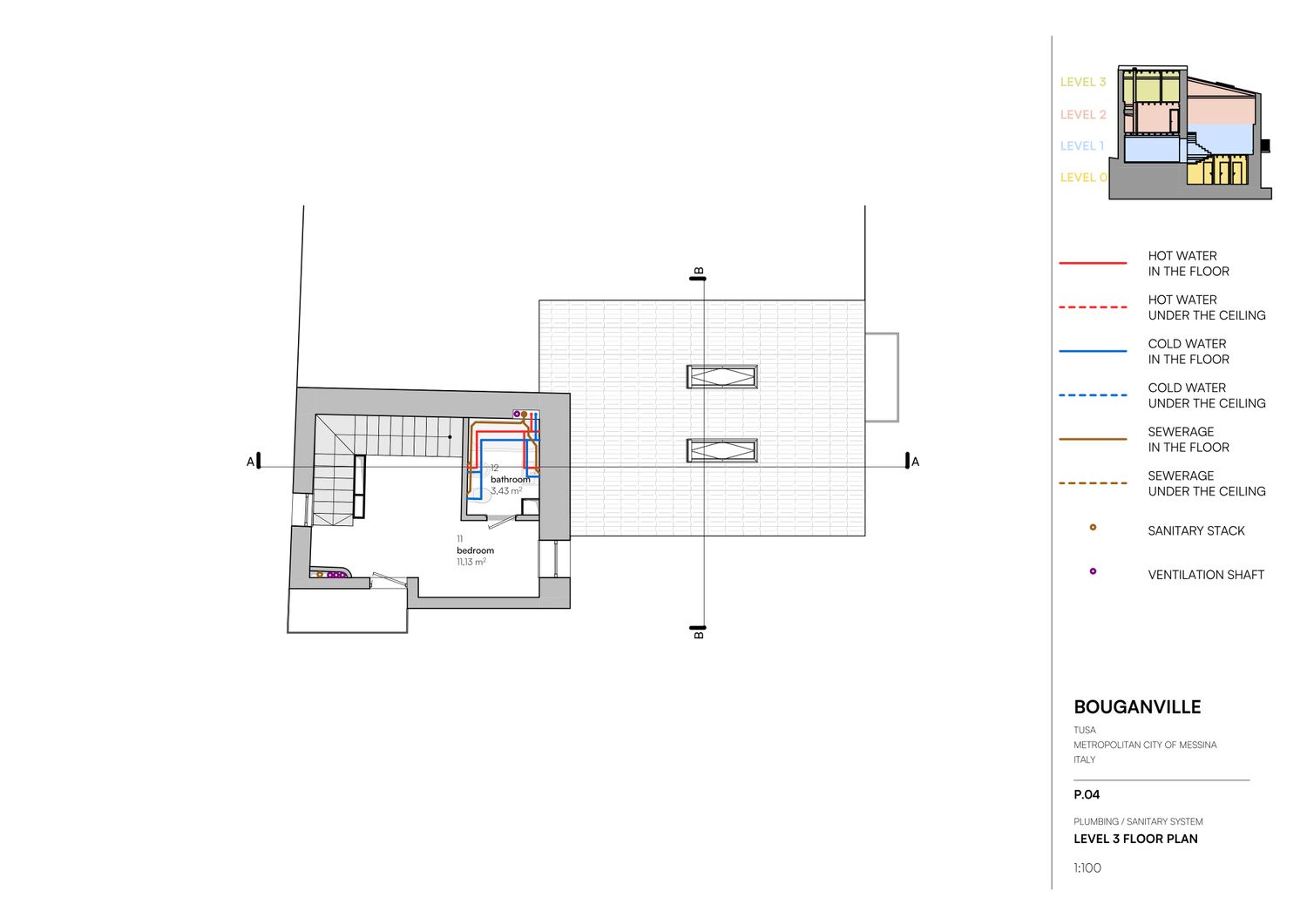
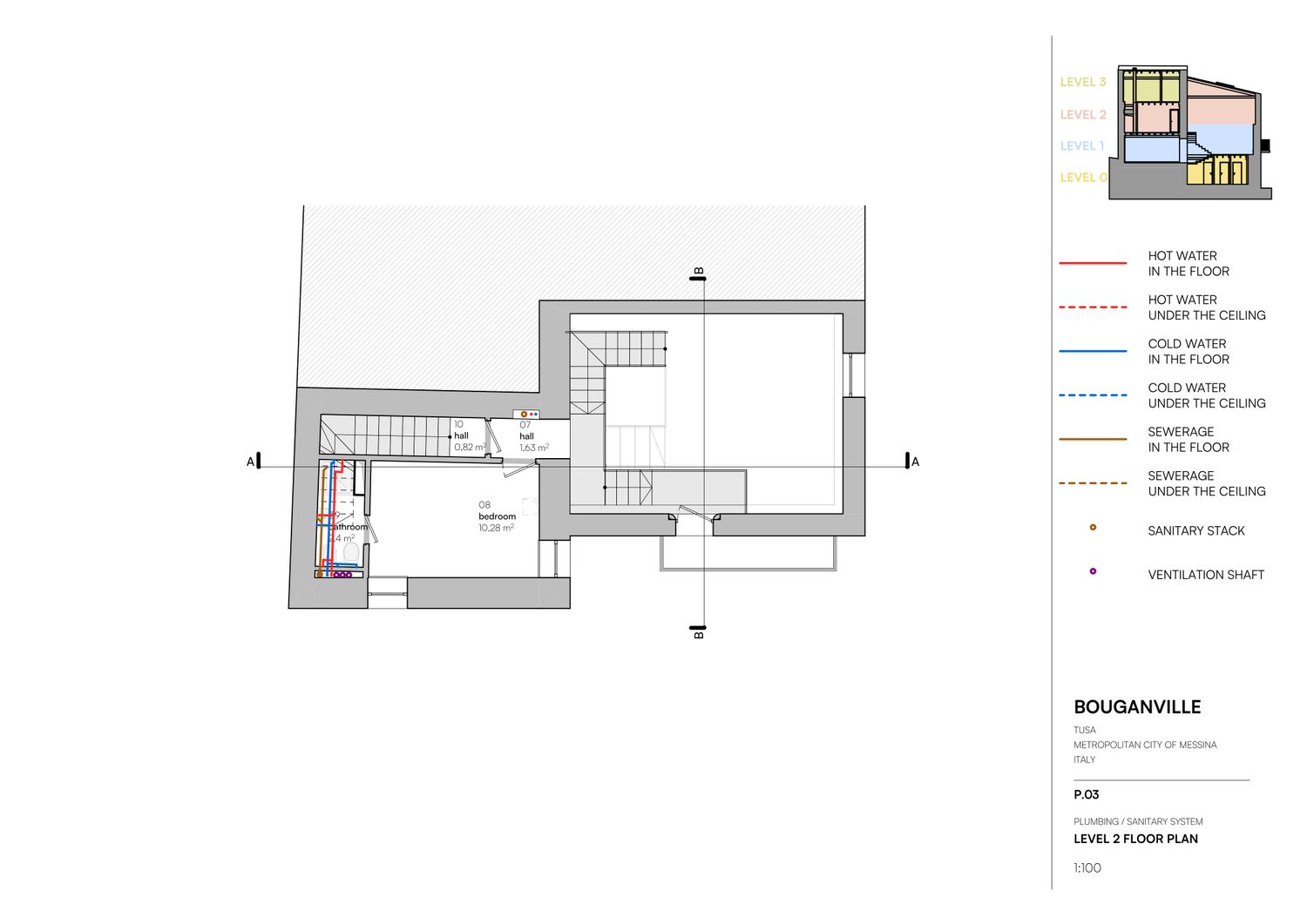
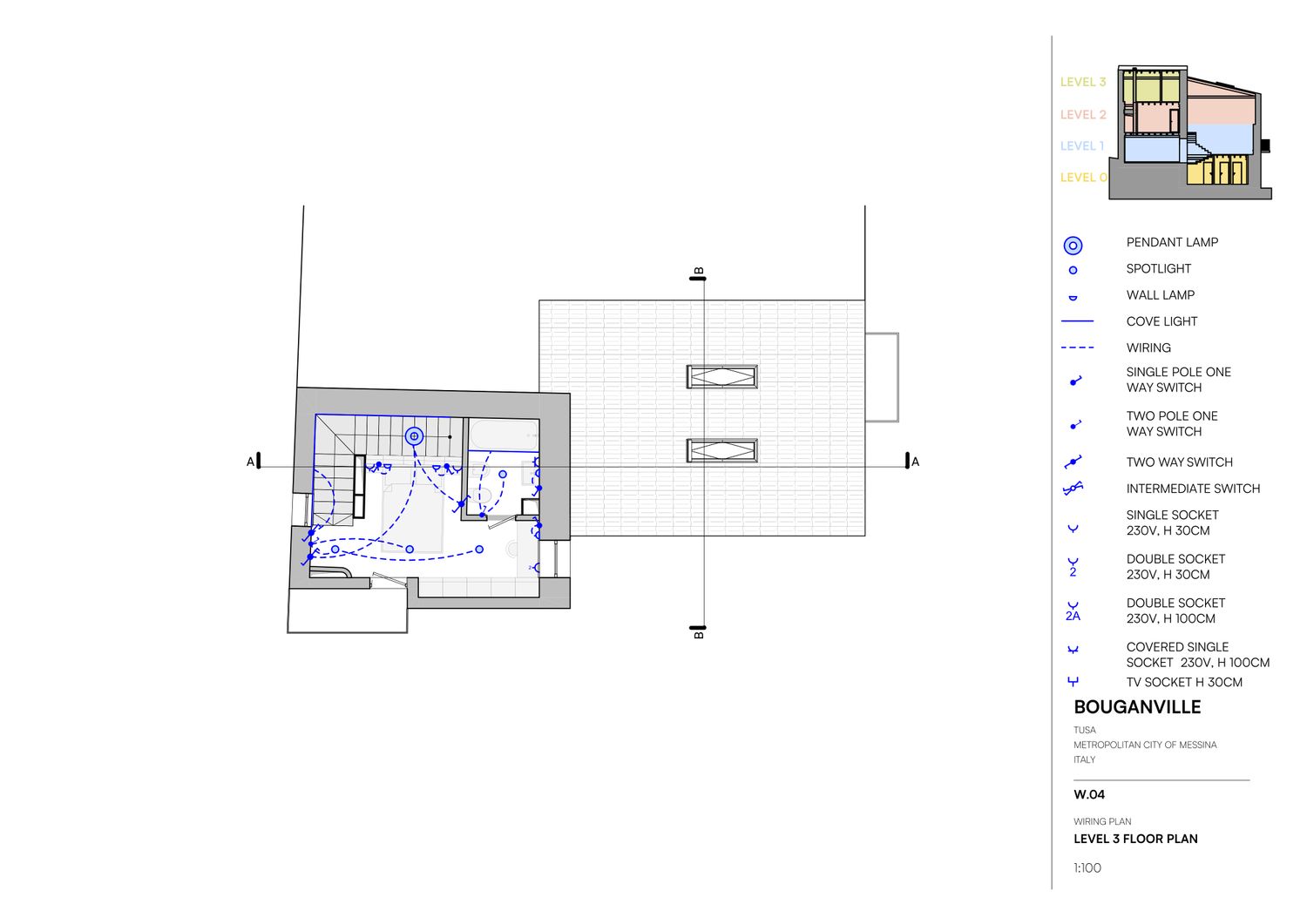
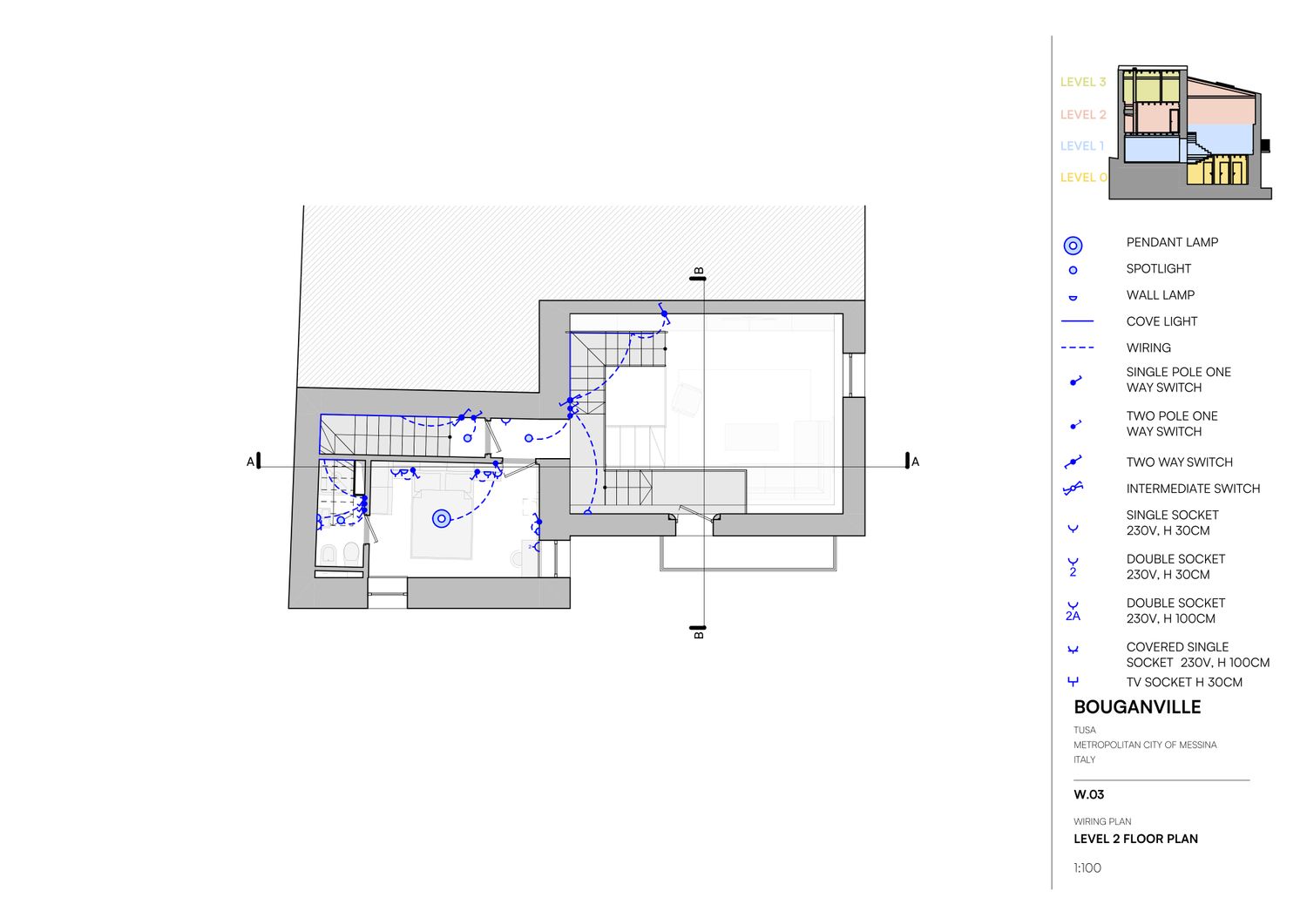
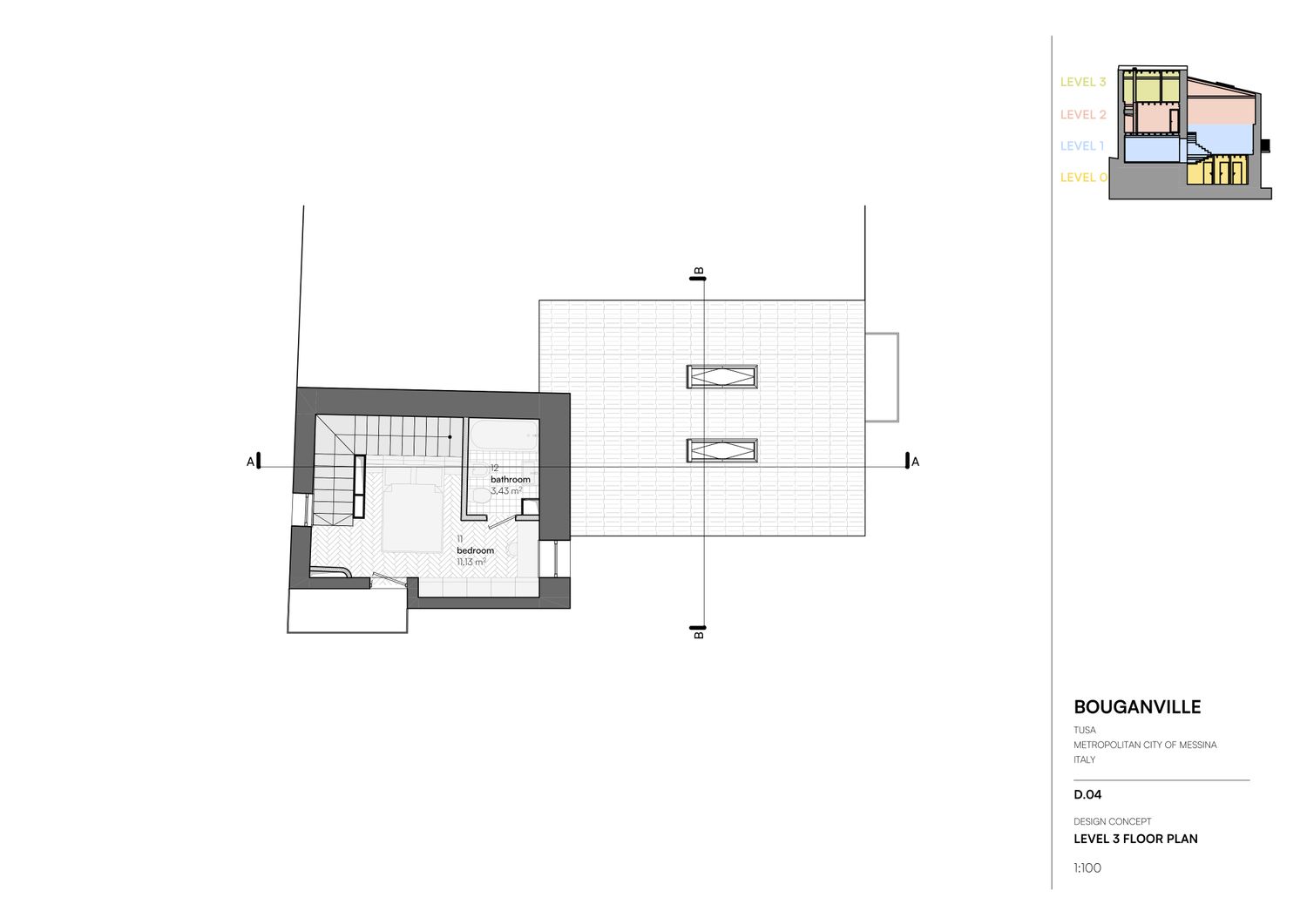
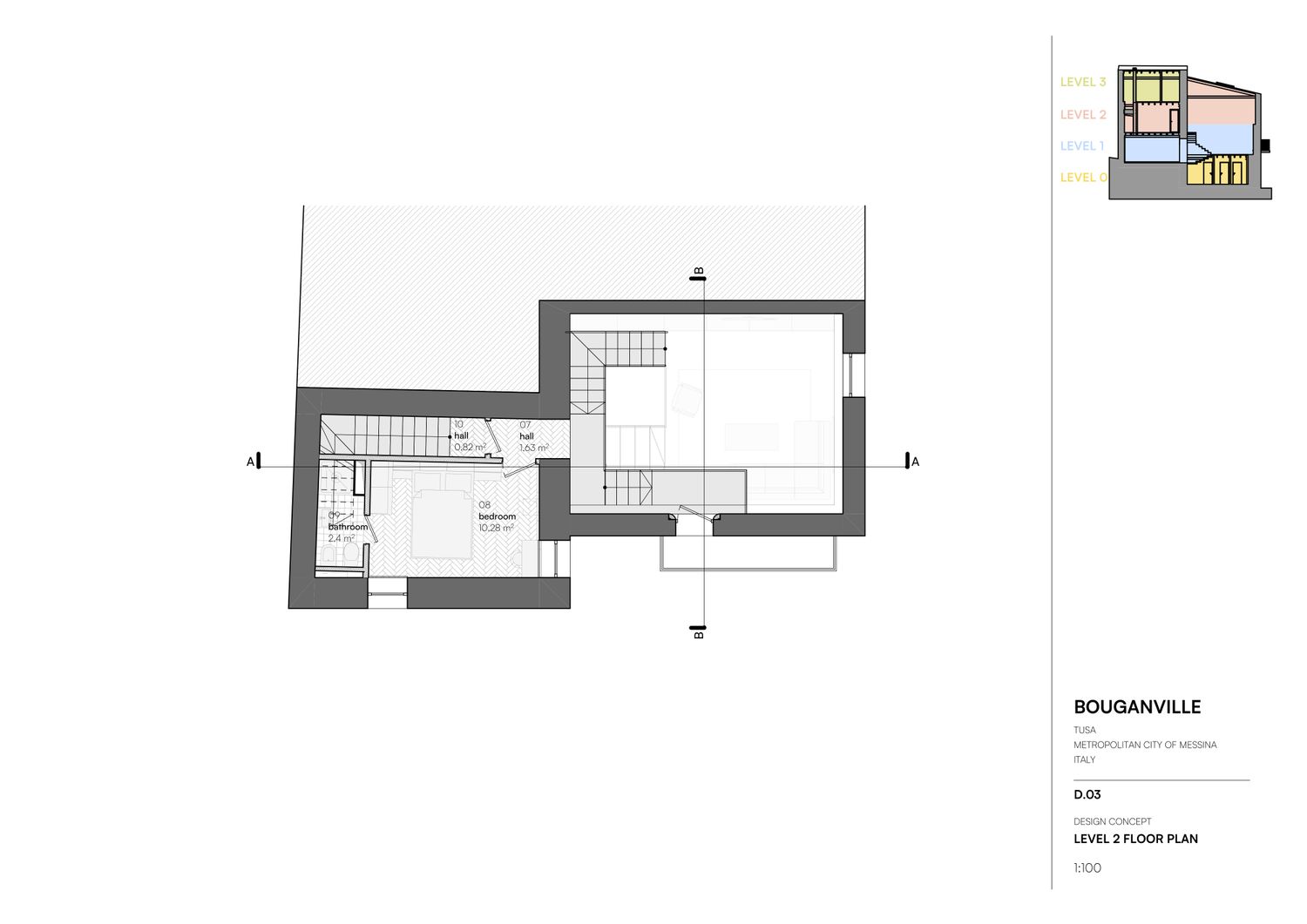
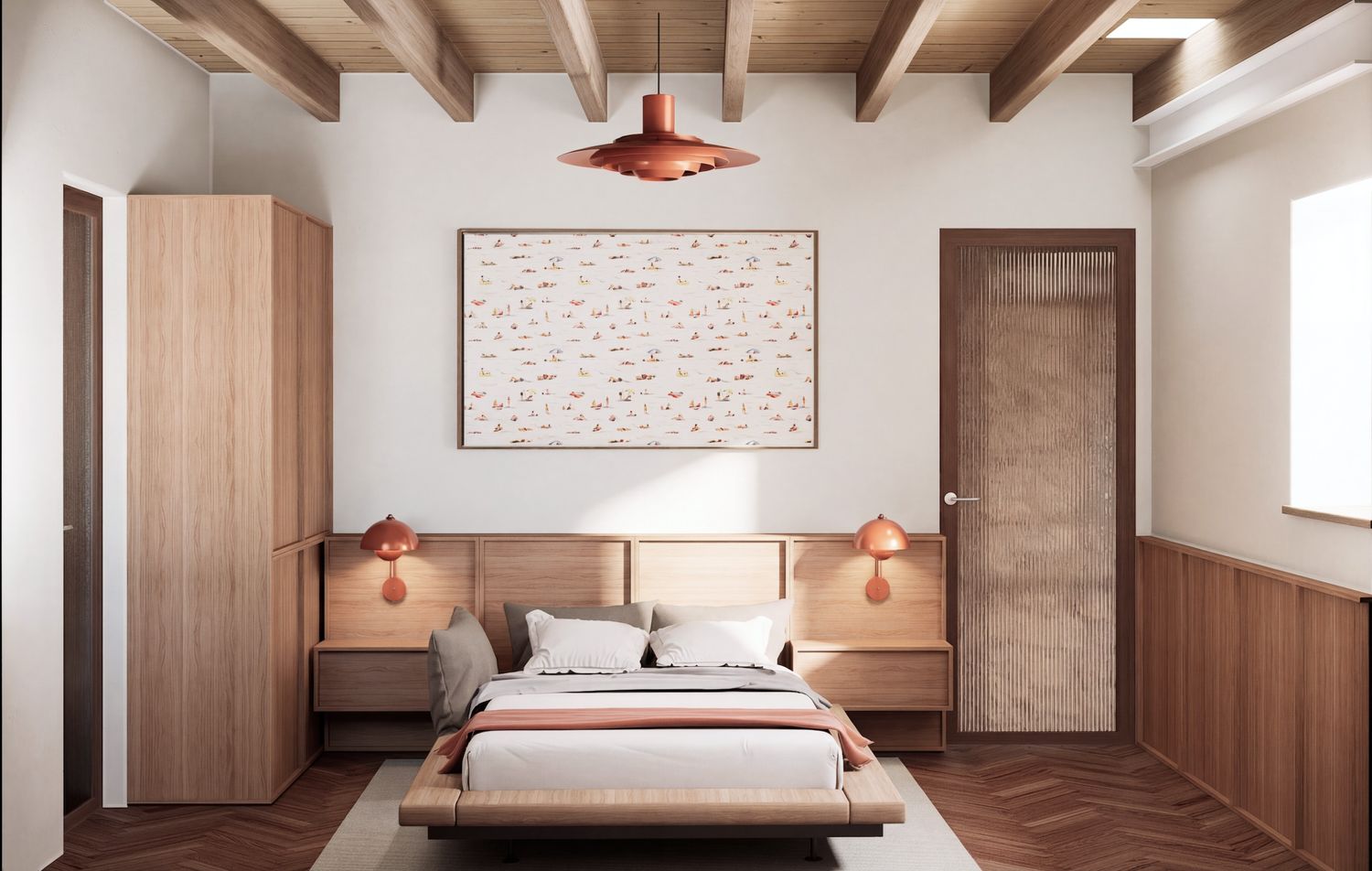
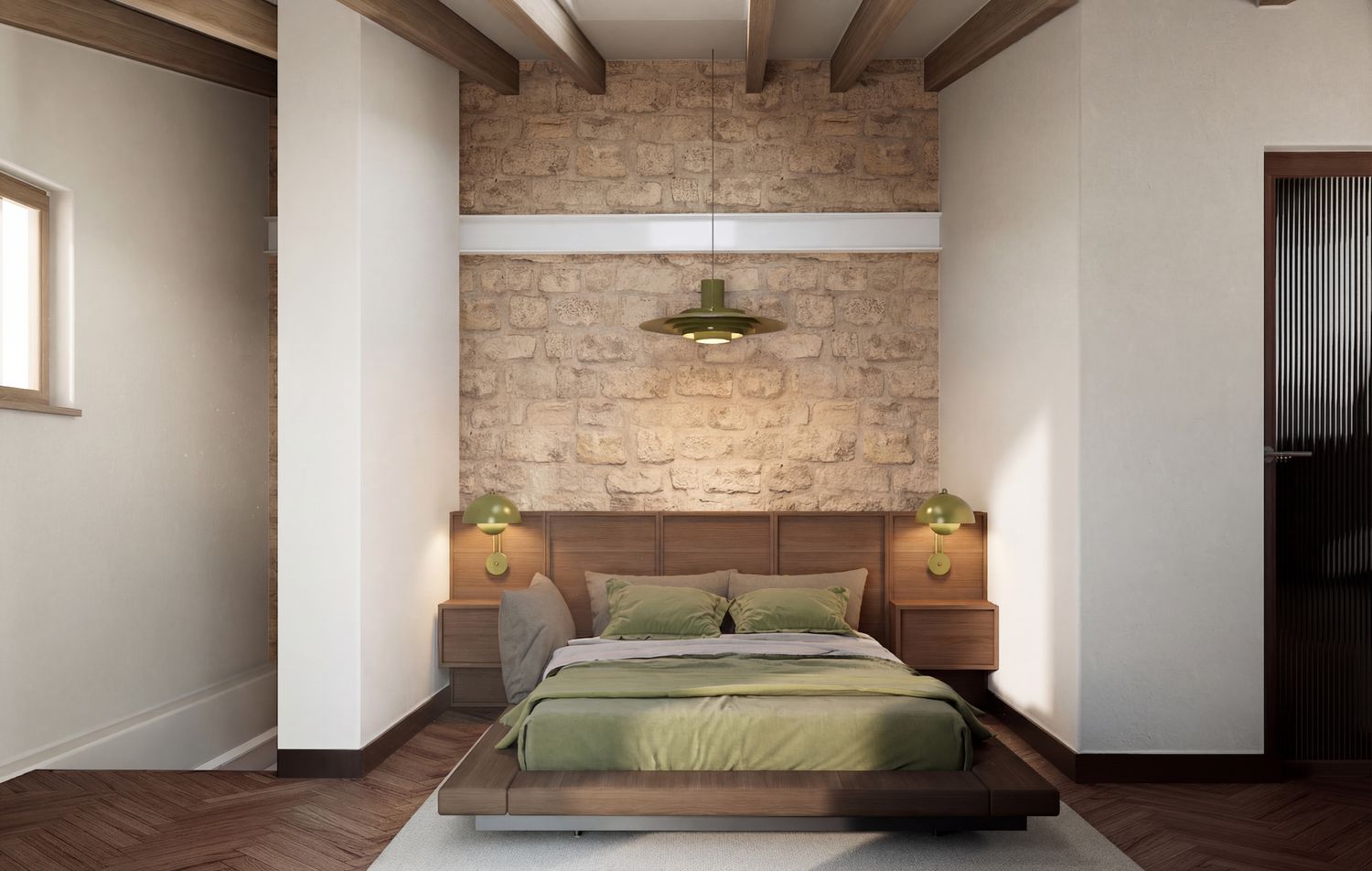
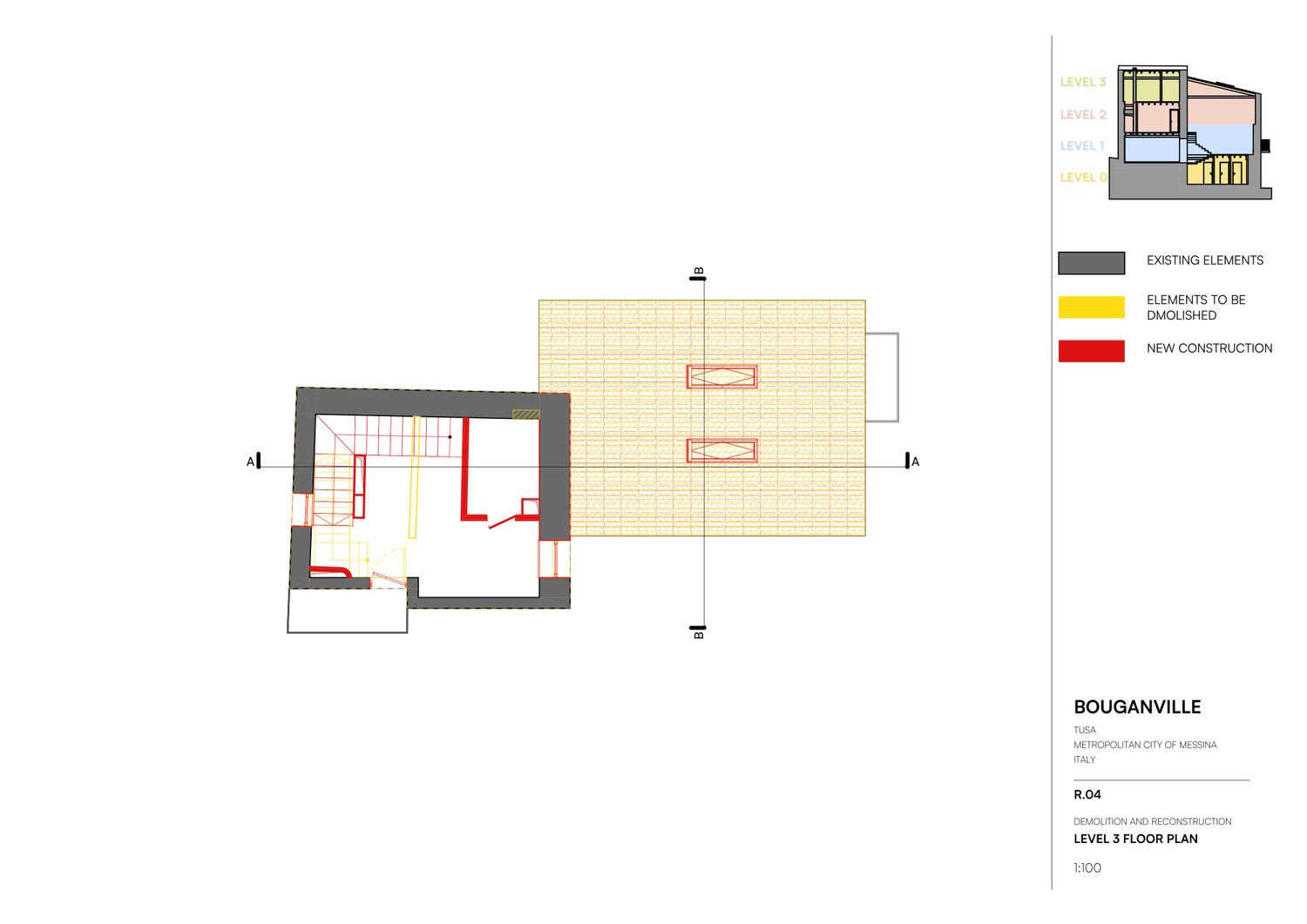
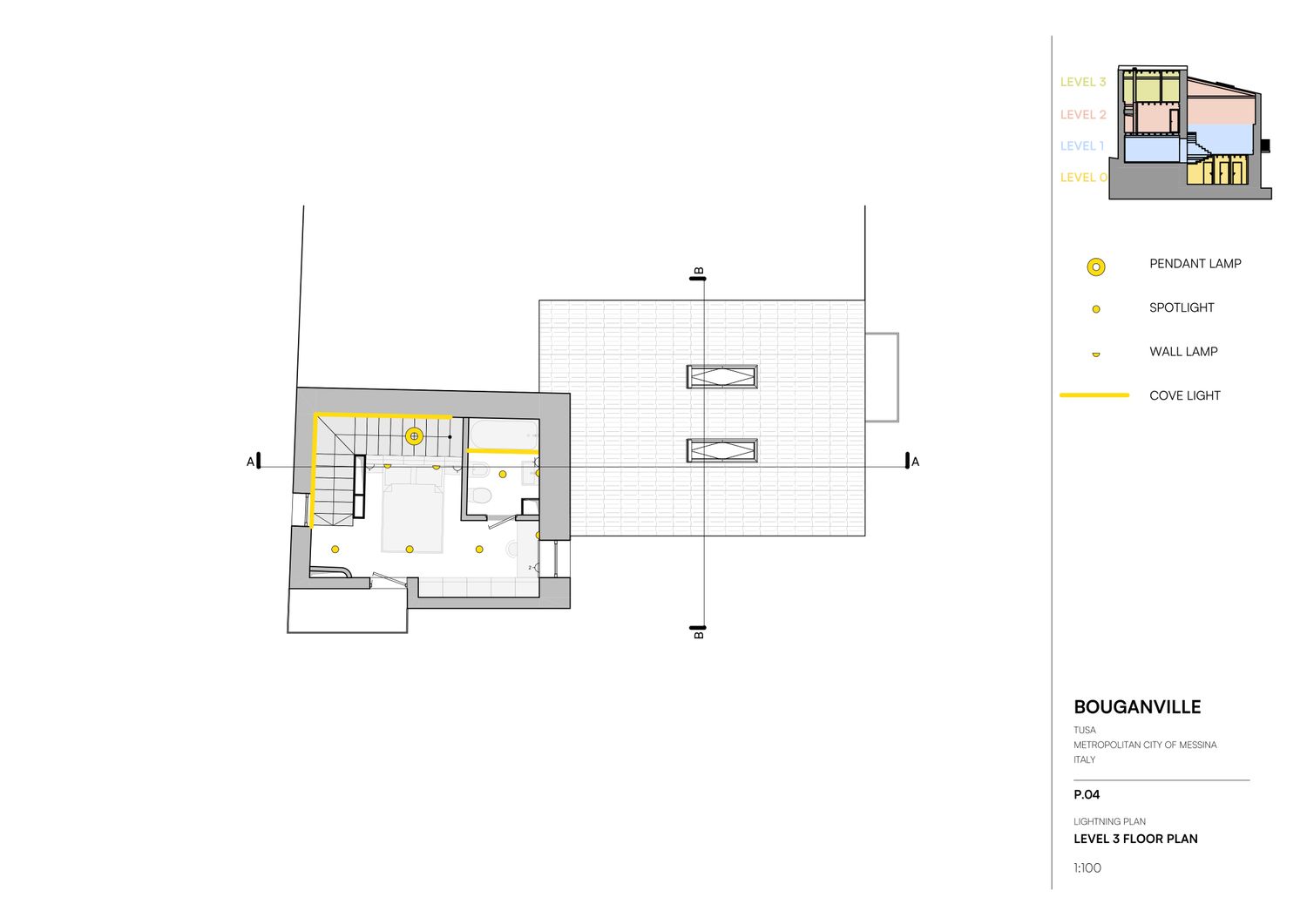
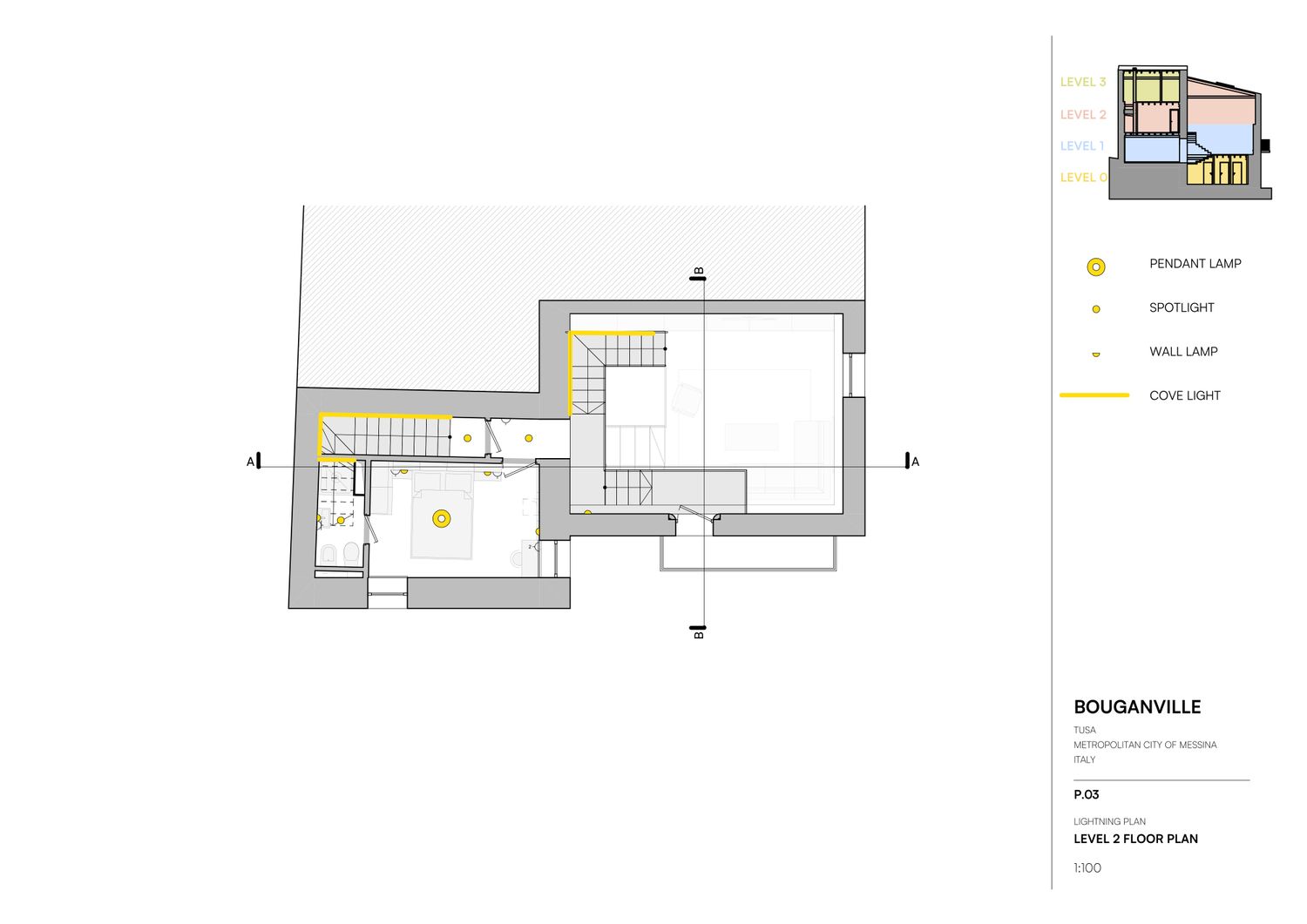
Sleeping areas are separated both vertically and laterally from daily life, ensuring real privacy. Each bedroom is conceived as an independent suite with its own bathroom. The master occupies the top level and opens to a sea-view balcony and skylight, paired with a more generous bathroom including a bathtub; the second suite is more compact but still fully equiped, with a bathroom and working space.
Circulation + Access
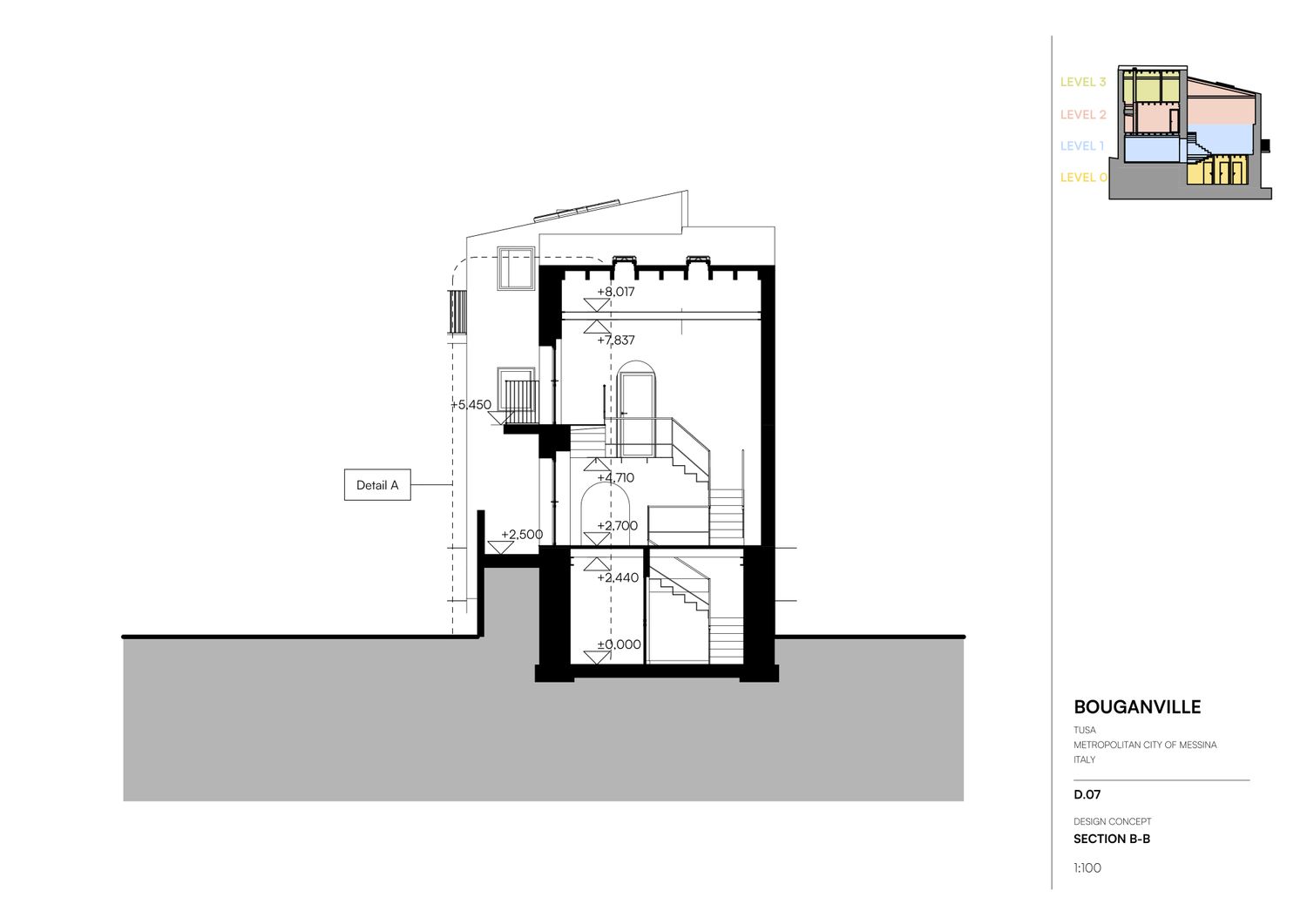
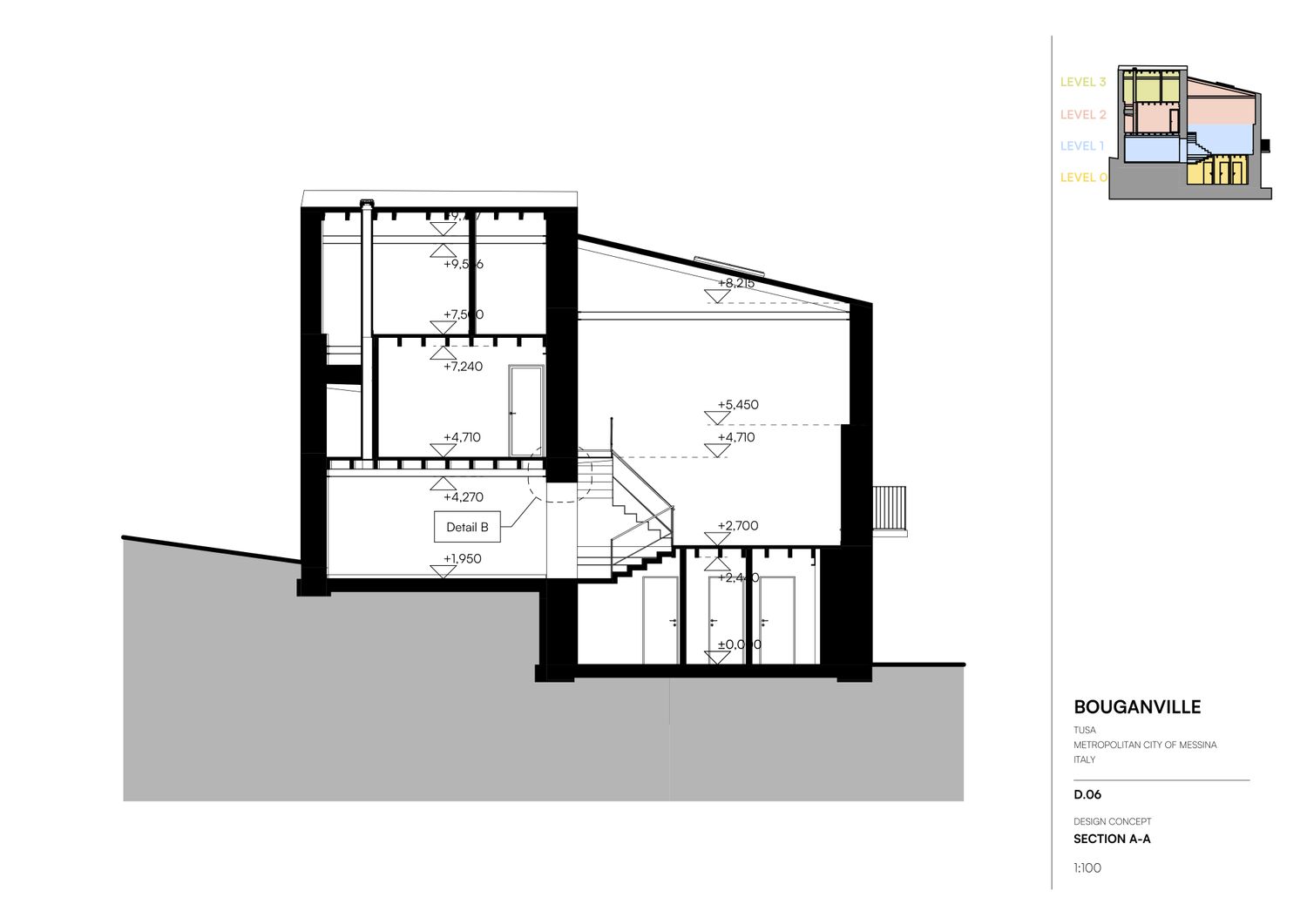
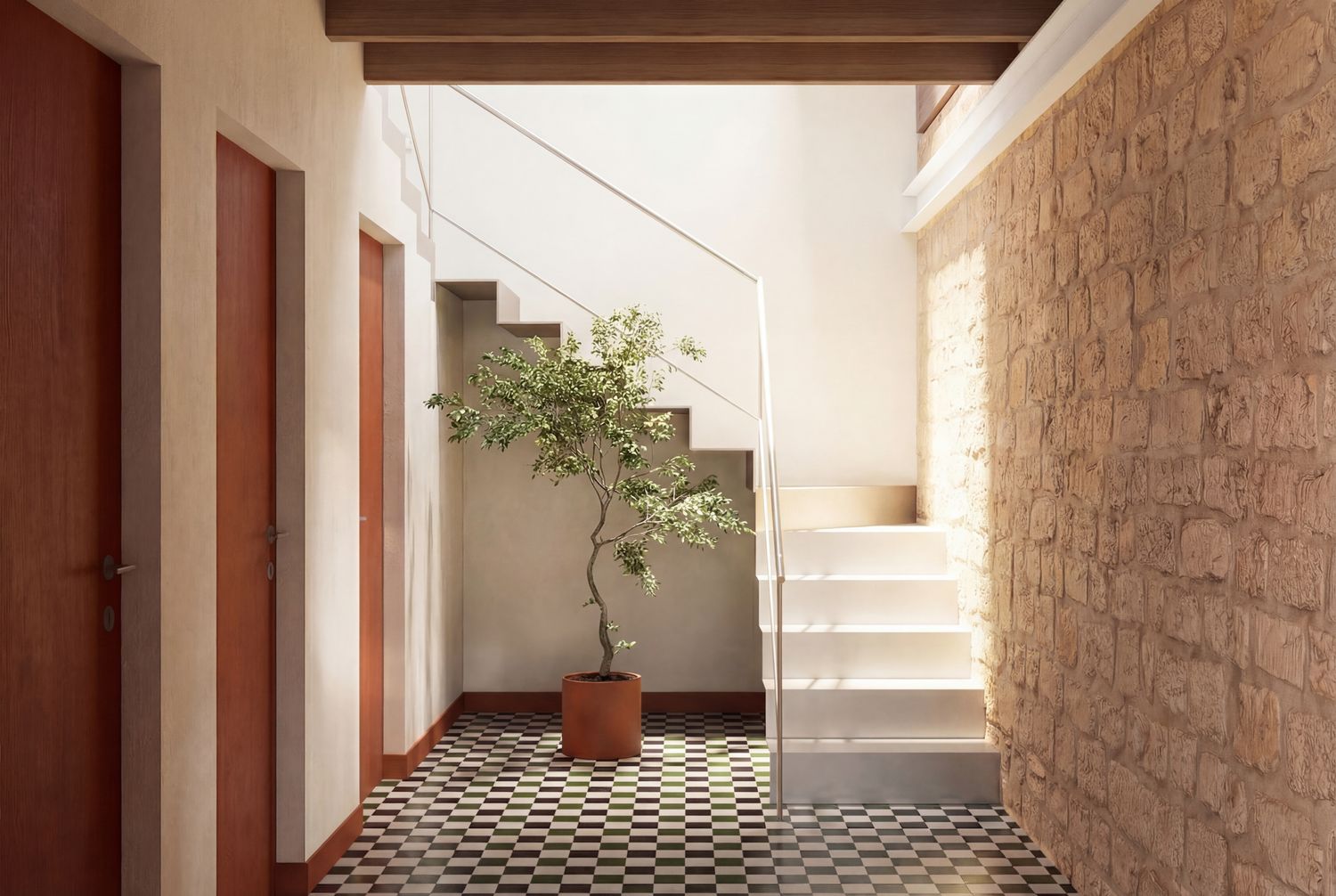
The home can be entered from multiple levels—kitchen, living space, or the technical base—making daily routines effortless (shopping, hosting, maintenance) and reducing unnecessary vertical travel. Inside, circulation is continuous and legible. Stairs are conceived as light, open structures with voids that keep long views and daylight moving through the section, while the private zone remains clearly defined.
Daylight Strategy — designed, not improvised
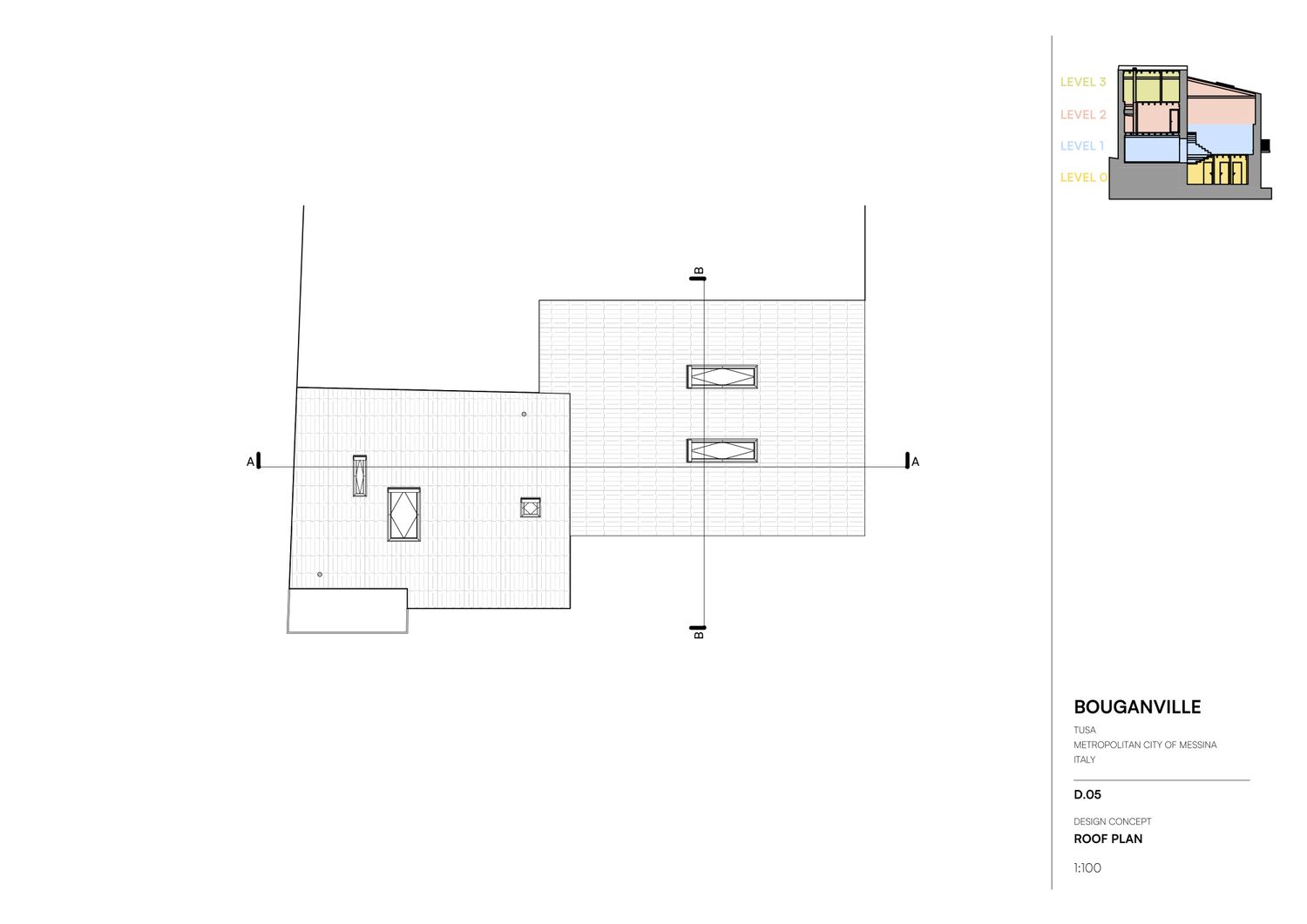
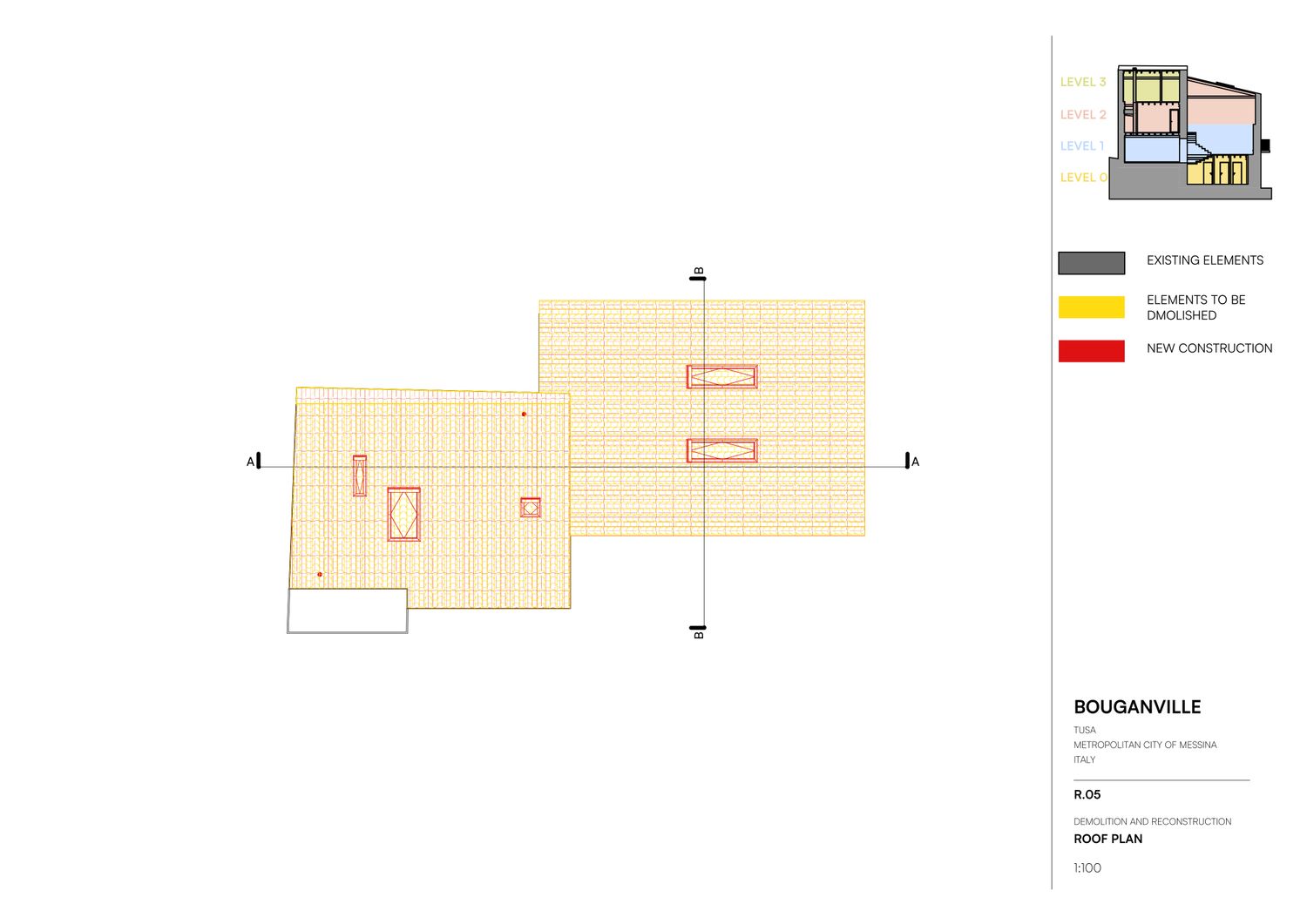
Light is treated as a primary architectural material. Roof skylights bring light to the rooms or feed controlled vertical shafts that bring daylight down to the lower kitchen and bedroom. Every existing opening is used deliberately: instead of altering façades, the interior layout aligns rooms, doors, and sightlines to extend light across multiple layers. Reeded-glass doors preserve privacy while allowing the house to glow from within.
Timeless Material Logic
The stone shell sets the tone; new elements are reduced to essentials and detailed with restraint. Wooden floor structures reinterpret traditional construction—stronger, quieter, and more durable—while maintaining continuity with local building logic. Colours and textures reference Sicilian tradition subtly, avoiding decorative noise so the historic fabric remains the protagonist.
Discreet Structural Integration
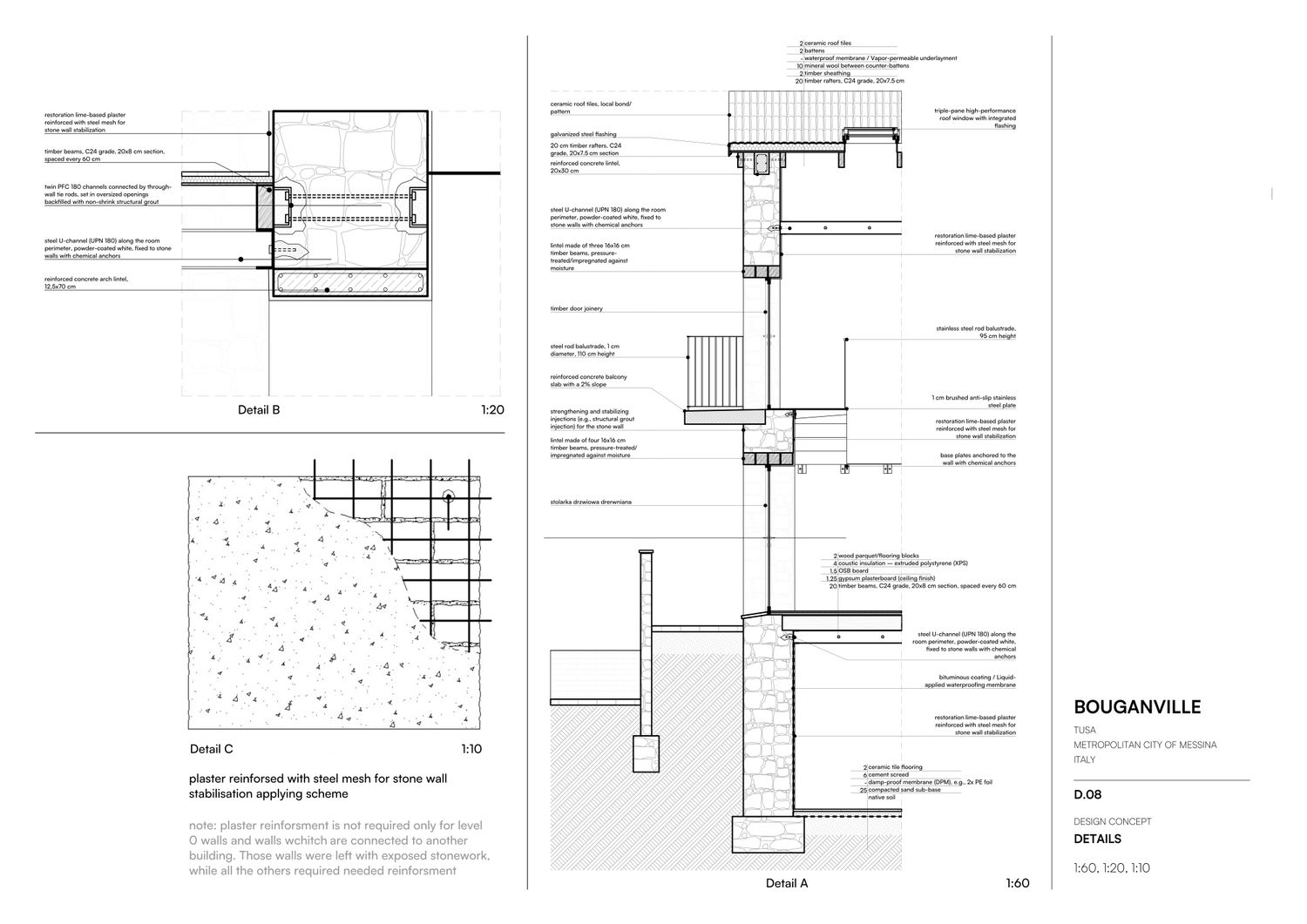
Reinforcement is embedded within the existing thickness: concealed double steel channels at key openings, reinforced internal plasters where needed, perimeter steel channels to stabilise and support new floor beams (chemical anchors), and masonry injections to improve cohesion—delivering seismic responsibility without compromising heritage character. Everything is analysed and designed to work as one mechanism.
In summary
A clear, efficient, and adaptable home—where every opening, level, and structural element is used to its maximum potential. The project’s strength is not in adding complexity, but in removing limitations: more light, better movement, stronger structure, and a calm, yet award-winning architectural identity.