🔥 CYBER MONDAY 24H: -60% su tutti i prezzi del sito! Solo fino a mezzanotte. Usa il codice CYBERMONDAY25 👉🏼

Lefkada, Greece
1 - 2
Nikolaos Arvanitis
Zathera Villa
An Architectural Dialogue Between Light, Earth, and Eternity
Rising from the terraced slopes of a quiet Ionian landscape, Zathera Villa is not
merely a residence — it is a sculptural reflection on time, memory, and the
elemental beauty of nature. Zathera embodies a philosophy of spatial purity and
reverence for the land, where architecture serves not as an imposition but as a
thoughtful, poetic continuation of the natural world.
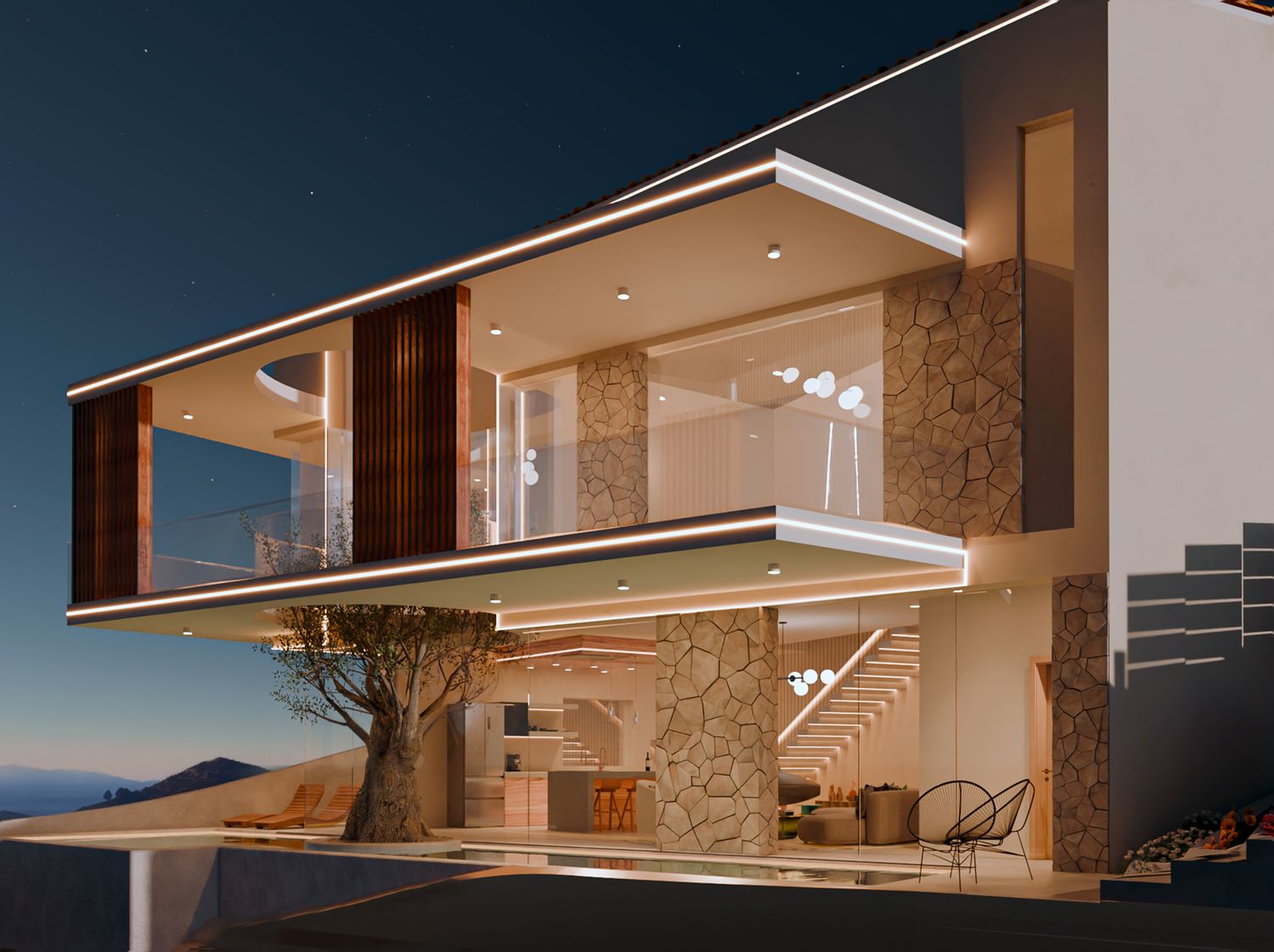
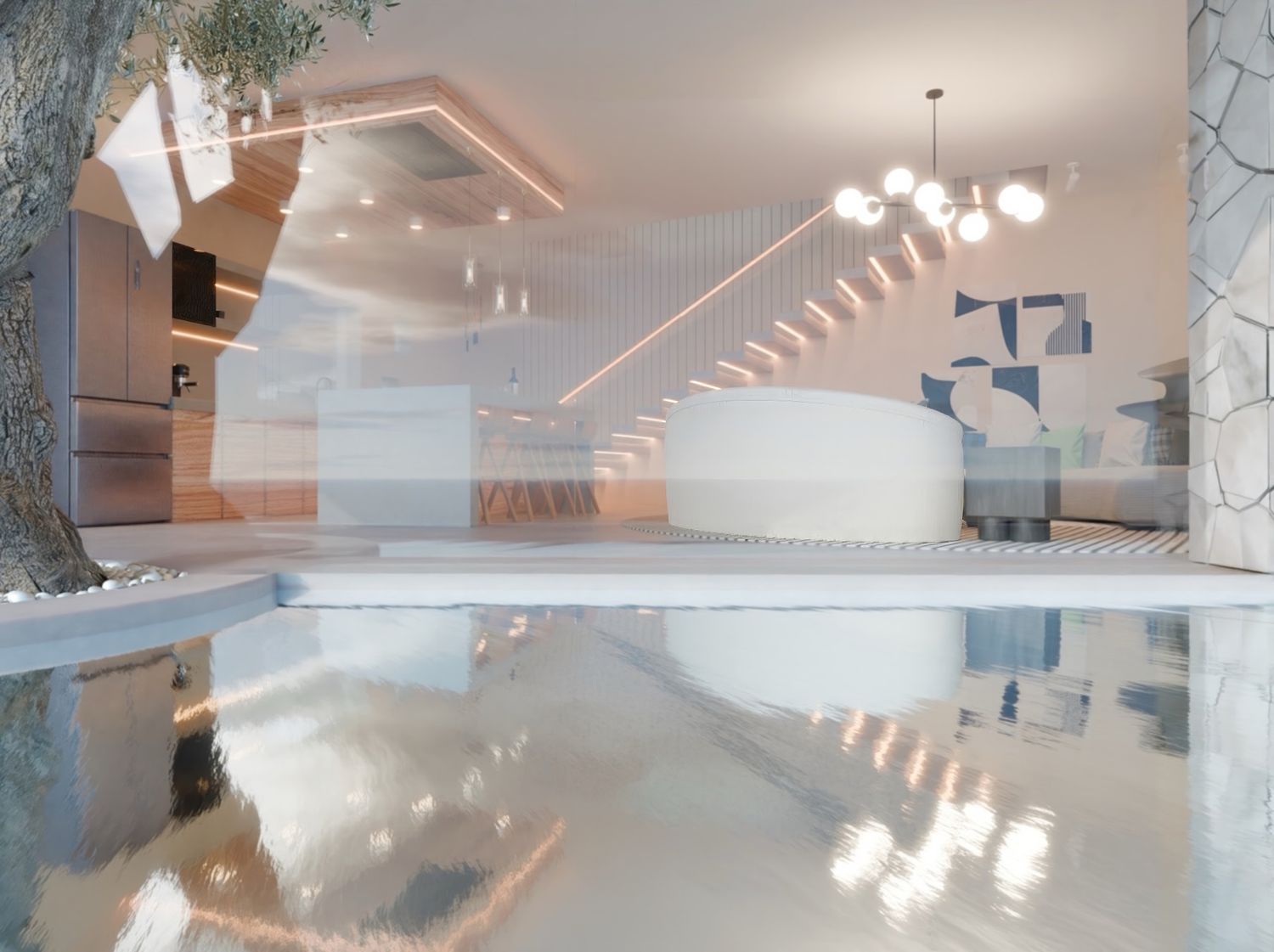
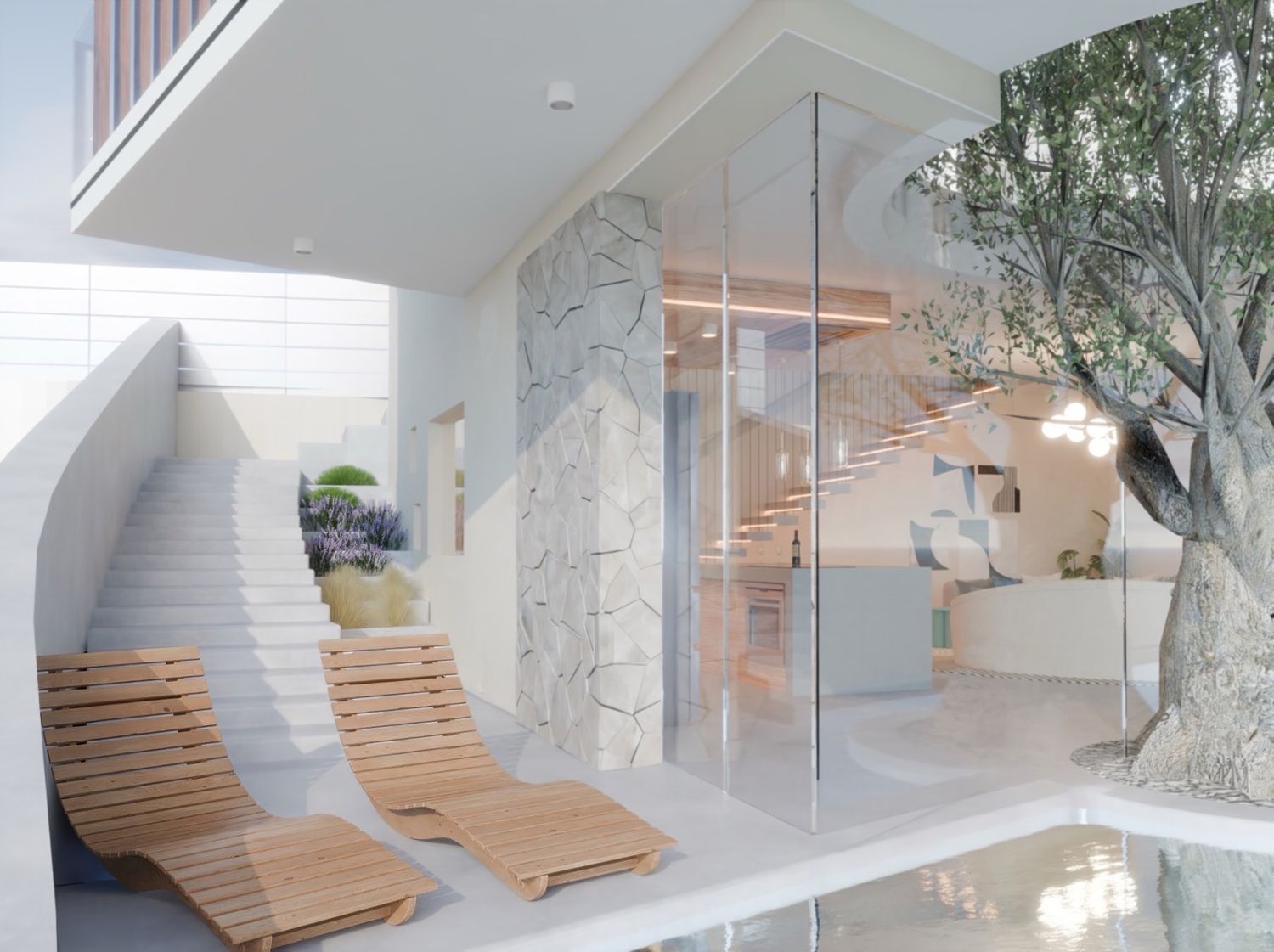
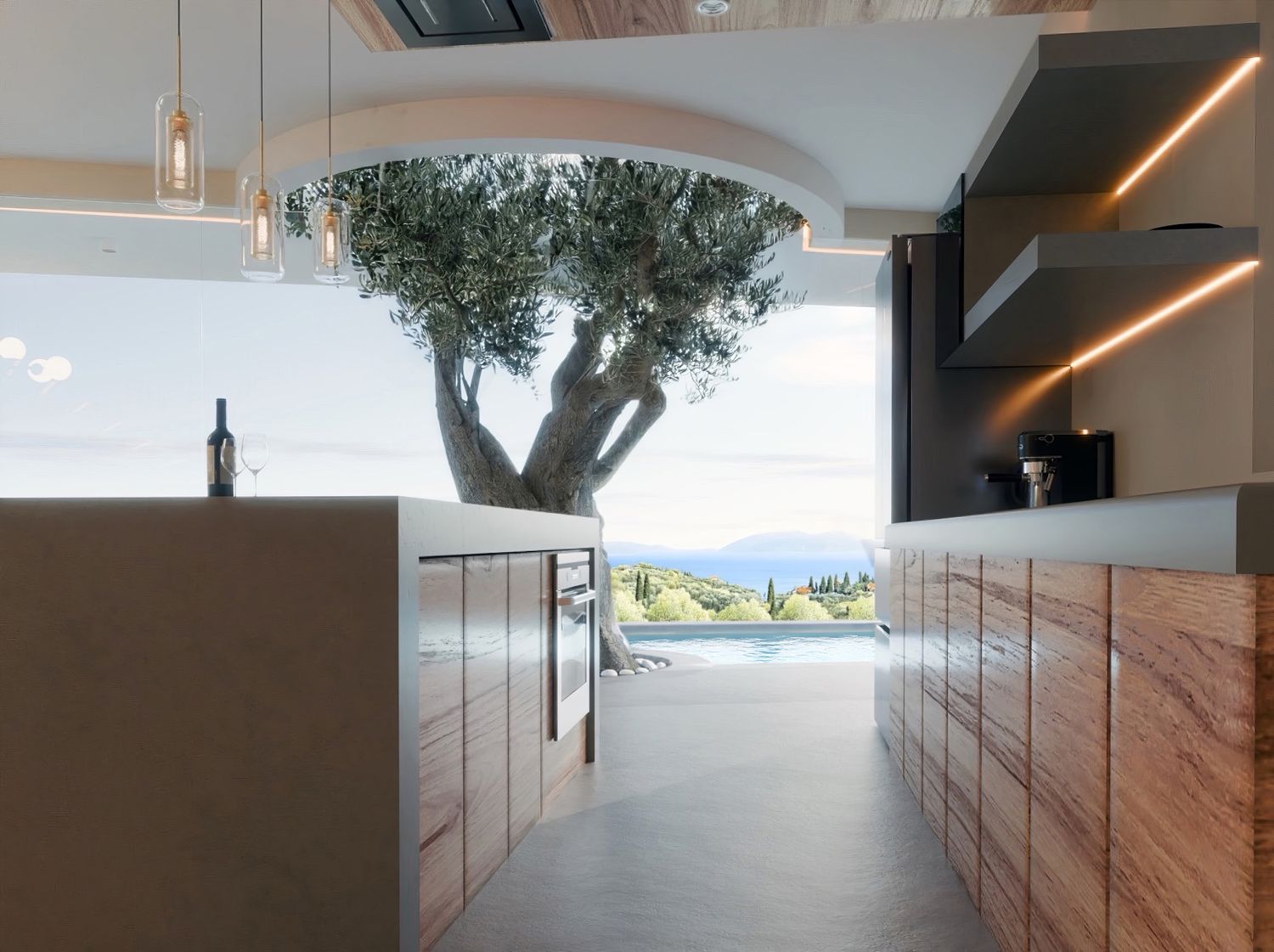
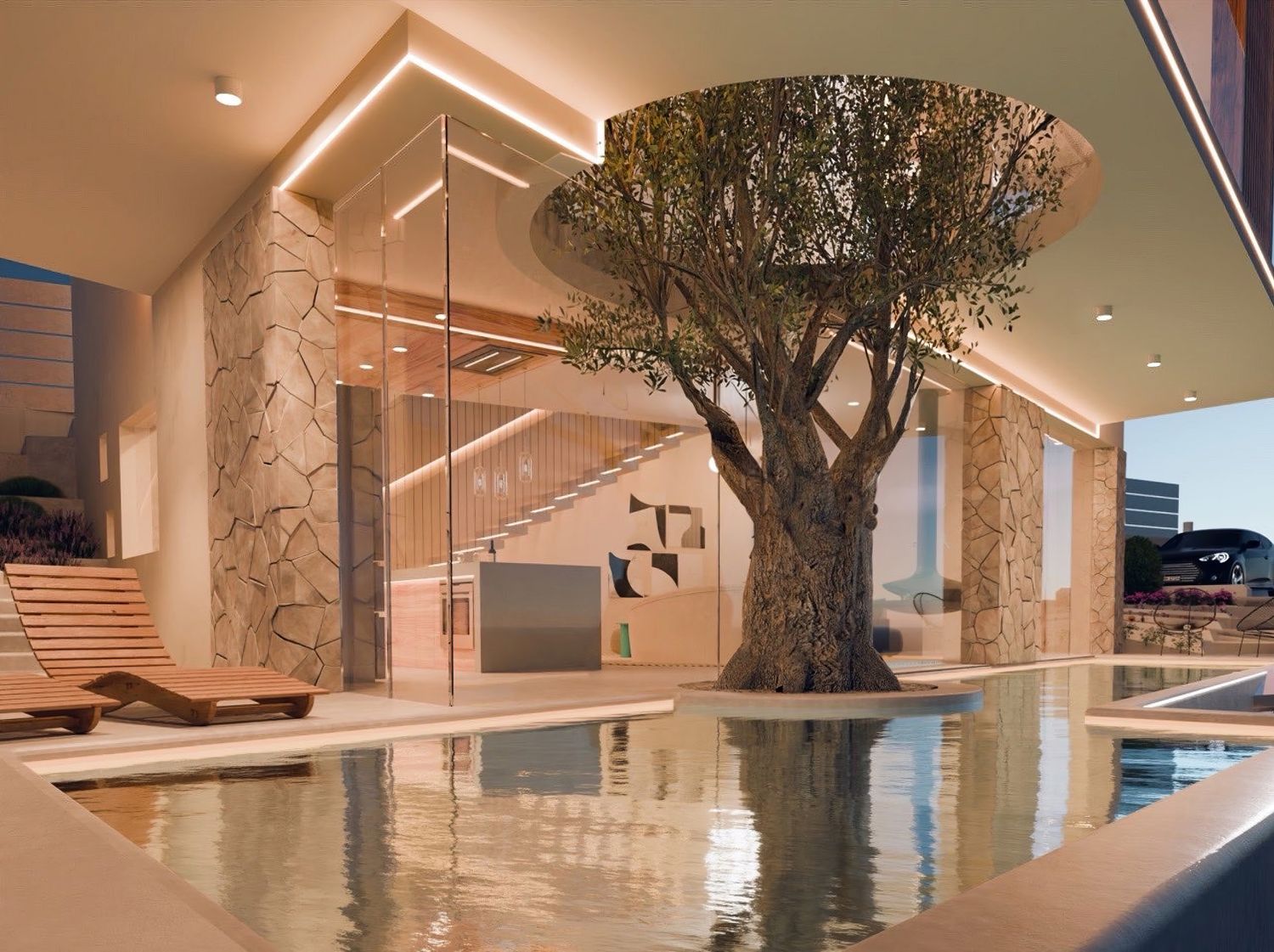
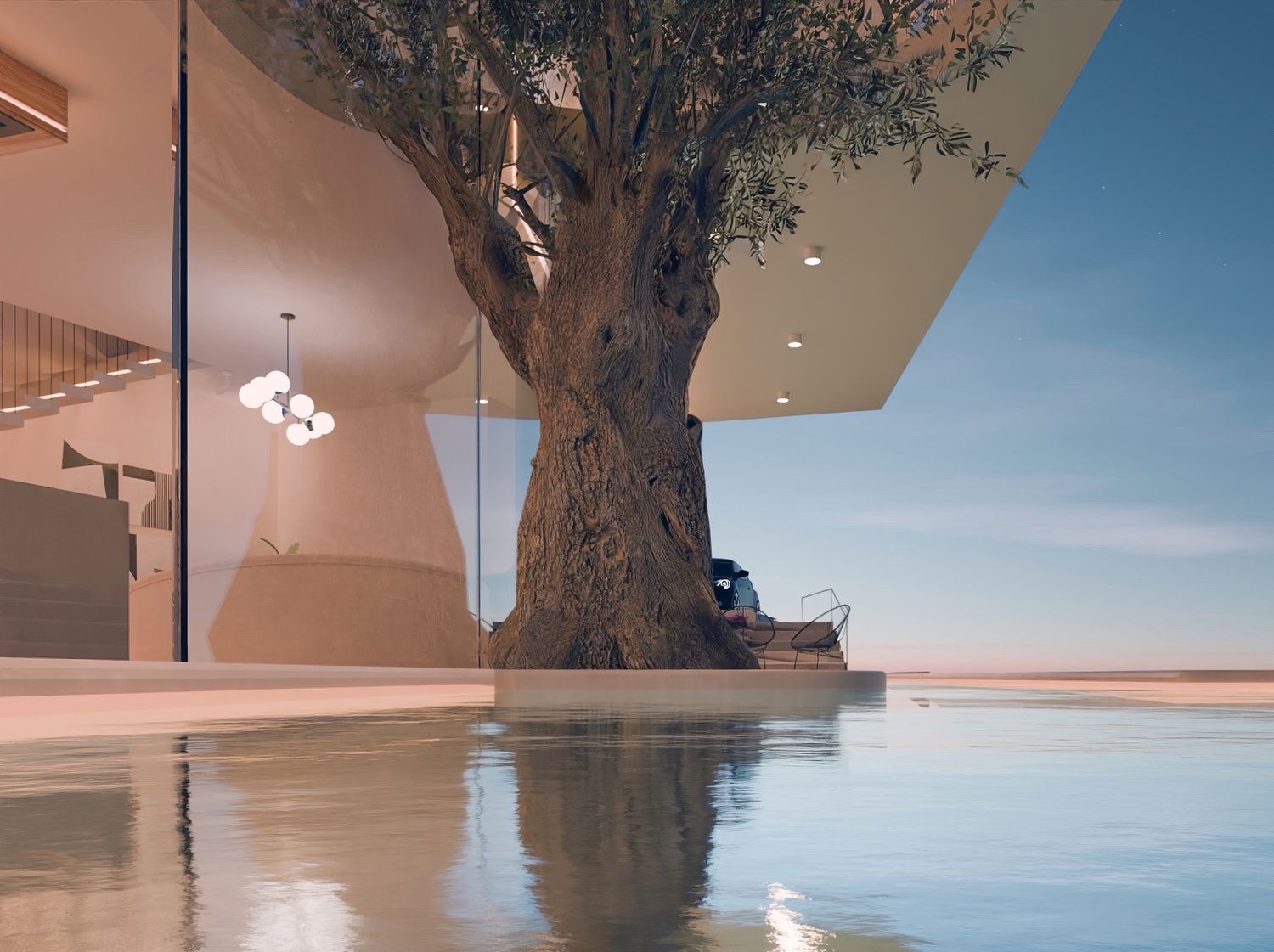
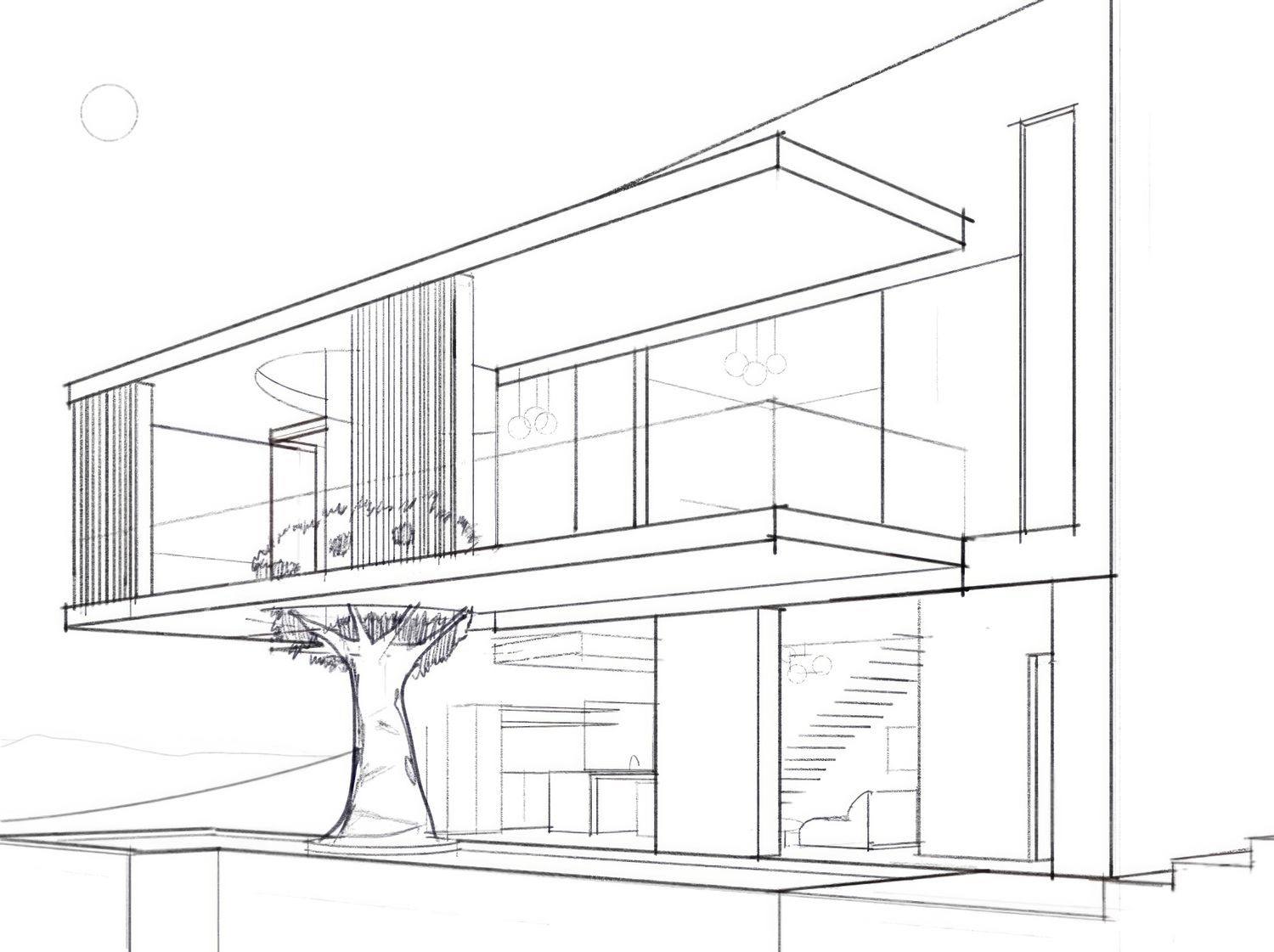
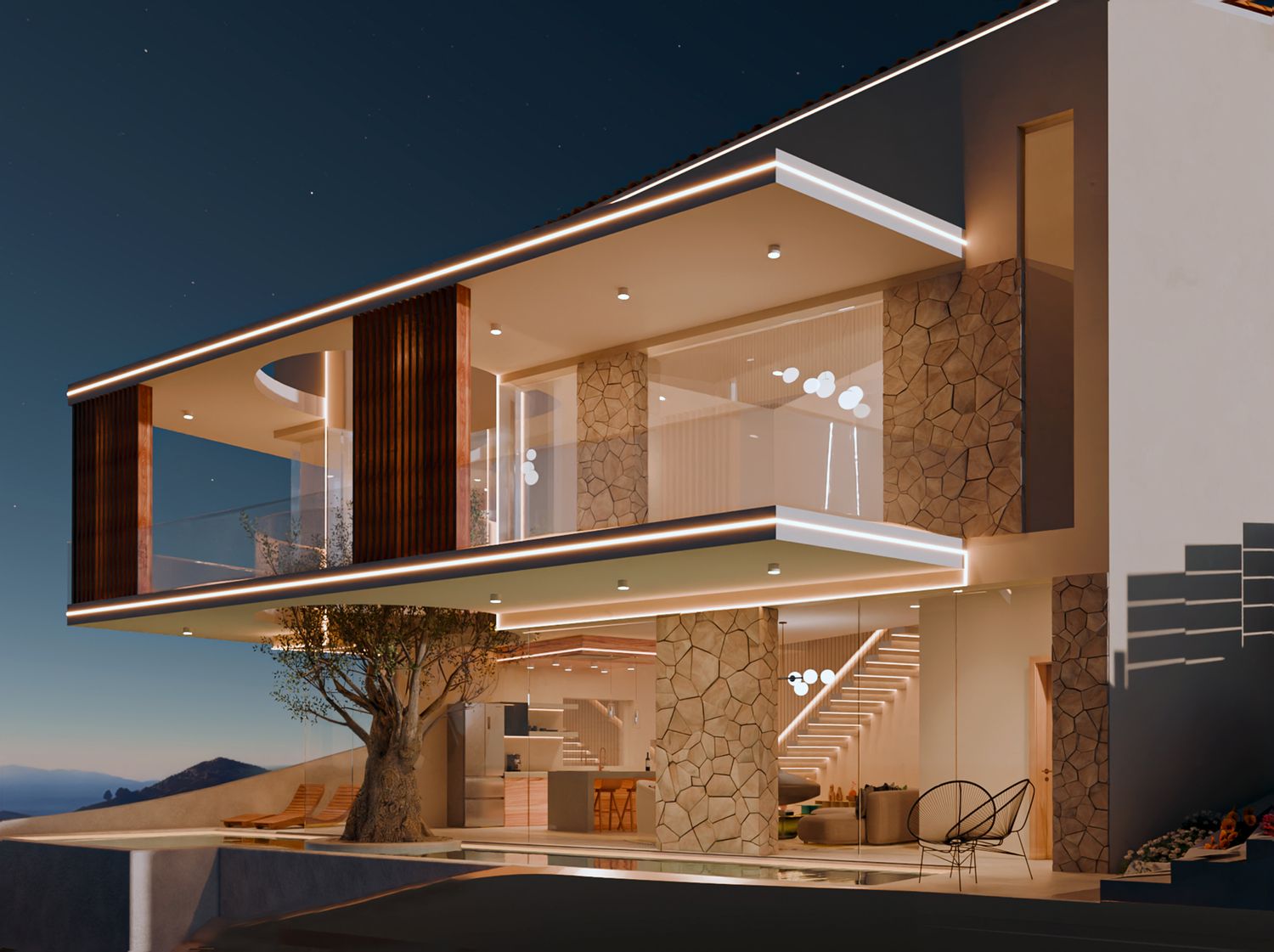
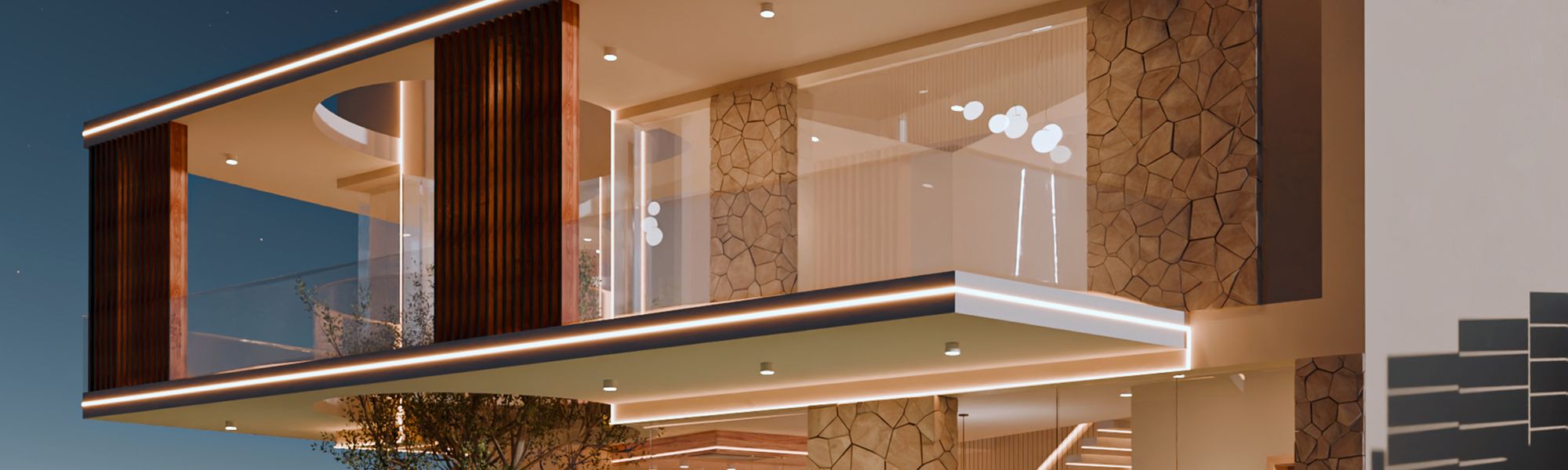
At the heart of Zathera stands an ancient, 300-year-old olive tree, its gnarled
trunk and silver-green canopy forming the symbolic and spatial nucleus of the
entire composition. This sacred olive was not only preserved in the design
process; it became the very genesis of the architectural narrative. Its presence
dictated the placement of the built volumes, the orientation of sightlines, and the
rhythm of outdoor spaces. Around this living monument, the villa gently unfolds
in a choreography of voids, solids, light, and shadow.
A Place Between the Mountain and the Sea
The site’s topography — sloping from the mountain to the northeast — allowed
the design to take full advantage of cascading levels. This descent toward the
view becomes an experiential gradient: each step, each terrace, each cut in the
massing reveals new glimpses of the sky, the olive groves, and the glimmering
water beyond.
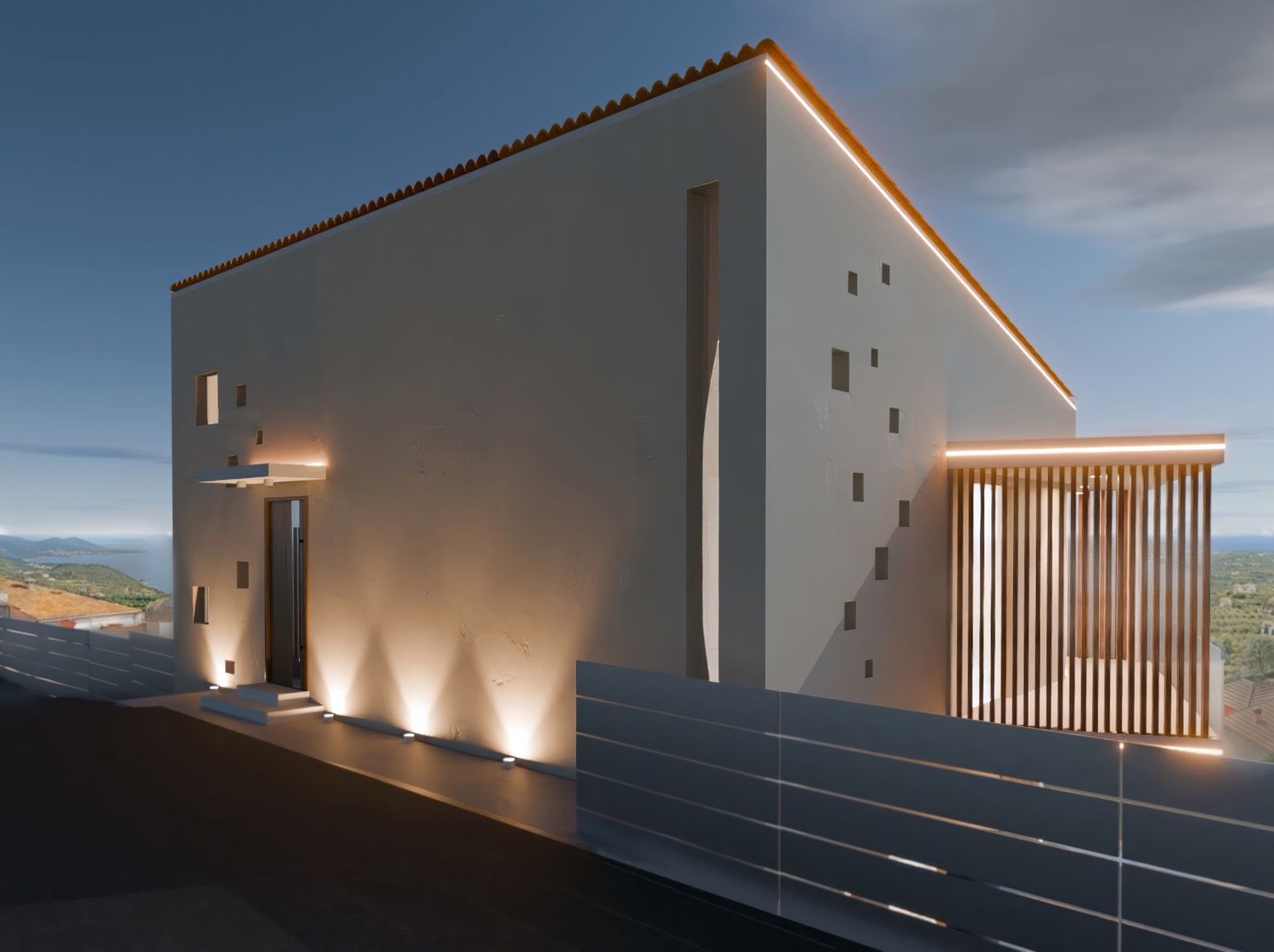
The building is conceived as a singular, sculpted volume — a monolithic form
carefully anchored into the terrain. Its geometry is both quiet and assertive,
defined by clean lines and subtle recesses that create depth and variation. This
unified mass is not static; it gently shifts and opens along its length, forming
sheltered outdoor spaces and framing views with precision. The architecture
reads as a continuous gesture — one that negotiates light, privacy, and the
landscape with restraint and clarity. This choreography of volume and interstitial
voids balances monumentality with intimacy, openness with privacy.
Material as Memory
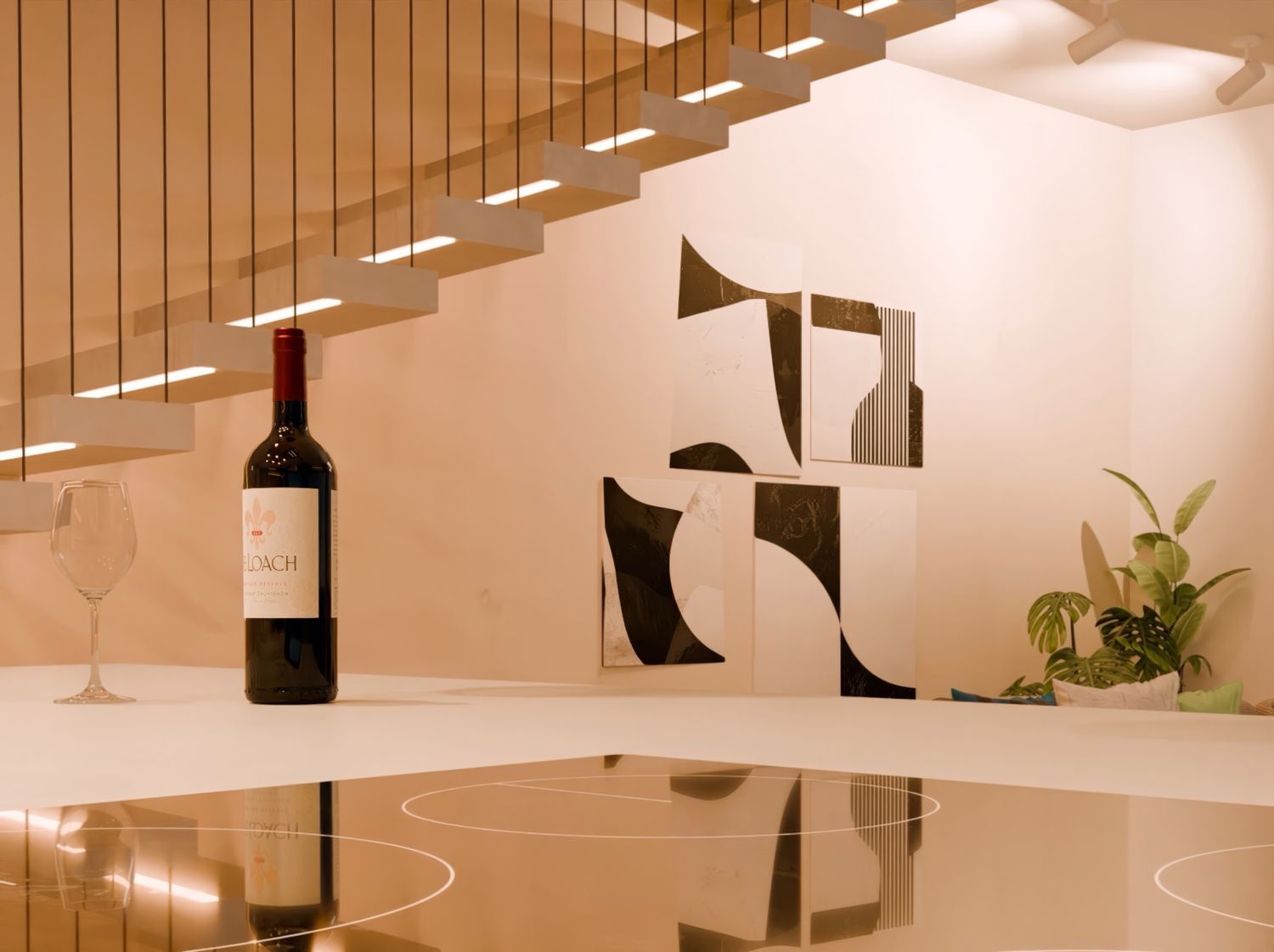
Materiality in Zathera plays an essential narrative role. The villa is shaped by the
tactile richness of tsimentokonia, pressed cement mortar, locally crafted with a
deep understanding of traditional techniques and contemporary expression.
Blended with fine sand sourced from the island itself, this continuous surface
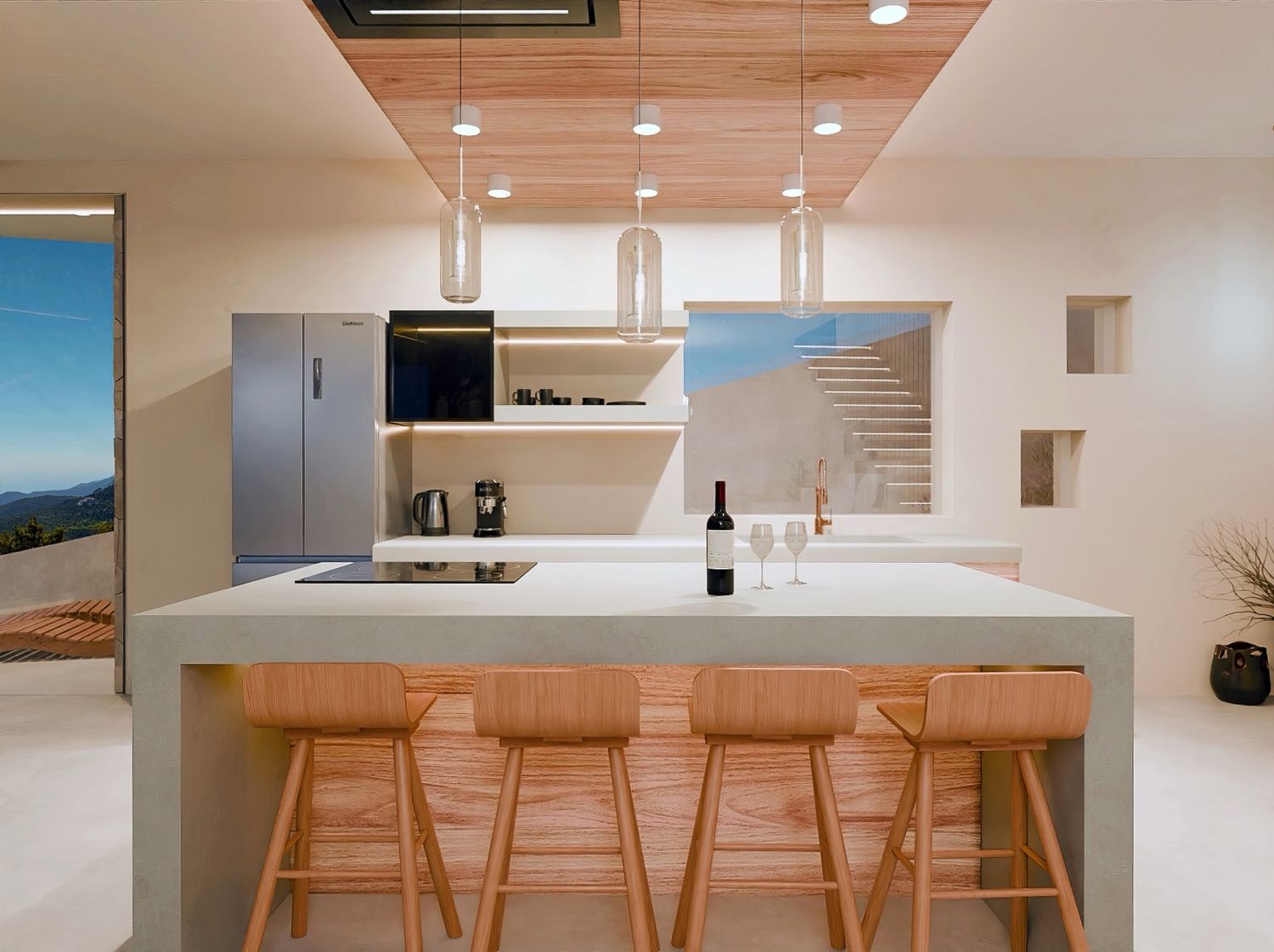
treatment, used for walls, floors, and built-in furniture such as the sculpted
kitchen island and bathroom vanities, deepens the material connection to place,
evoking a sense of calm permanence and monolithic purity, while enhancing the
continuity of fluidity throughout the architecture.
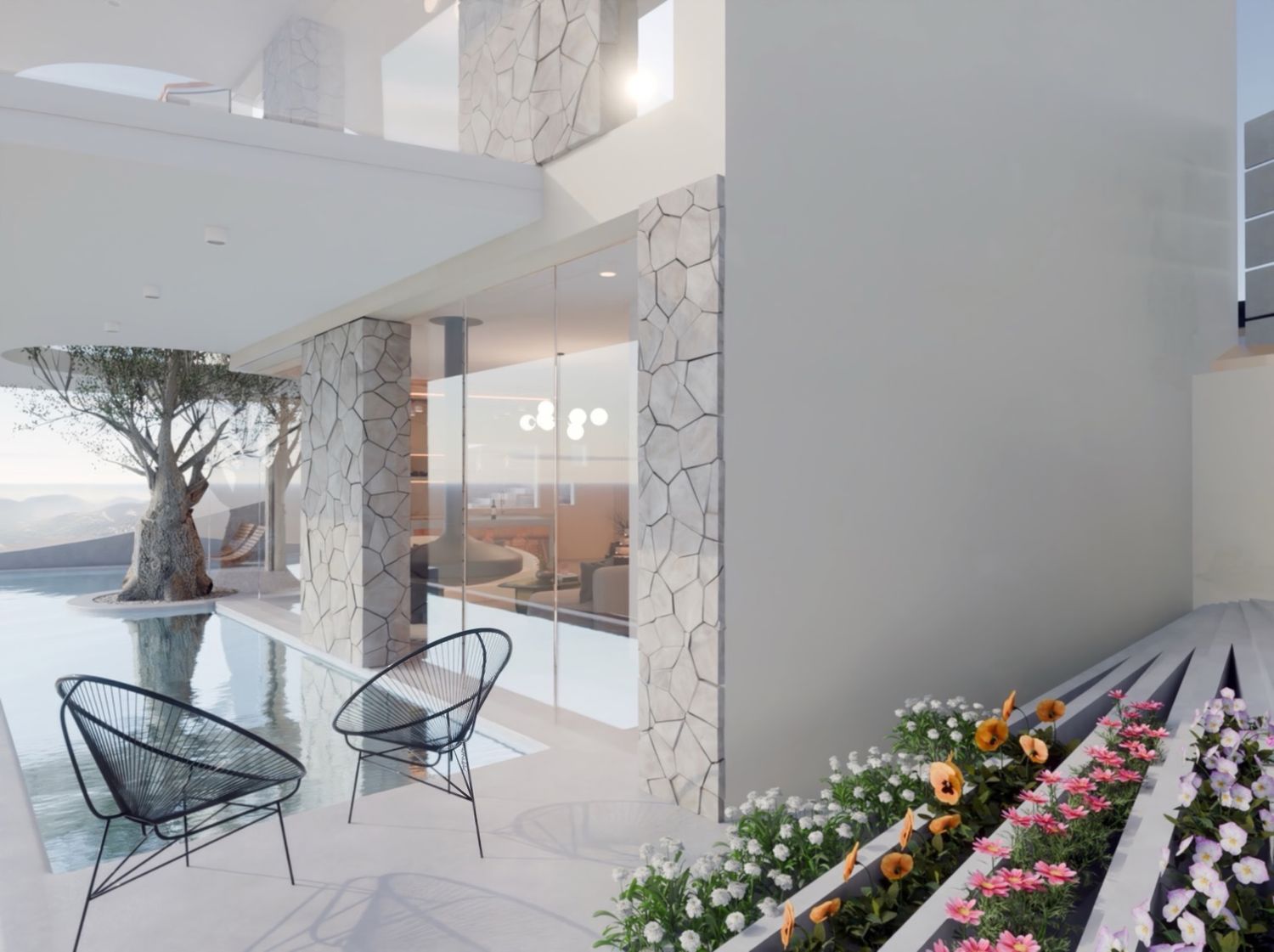
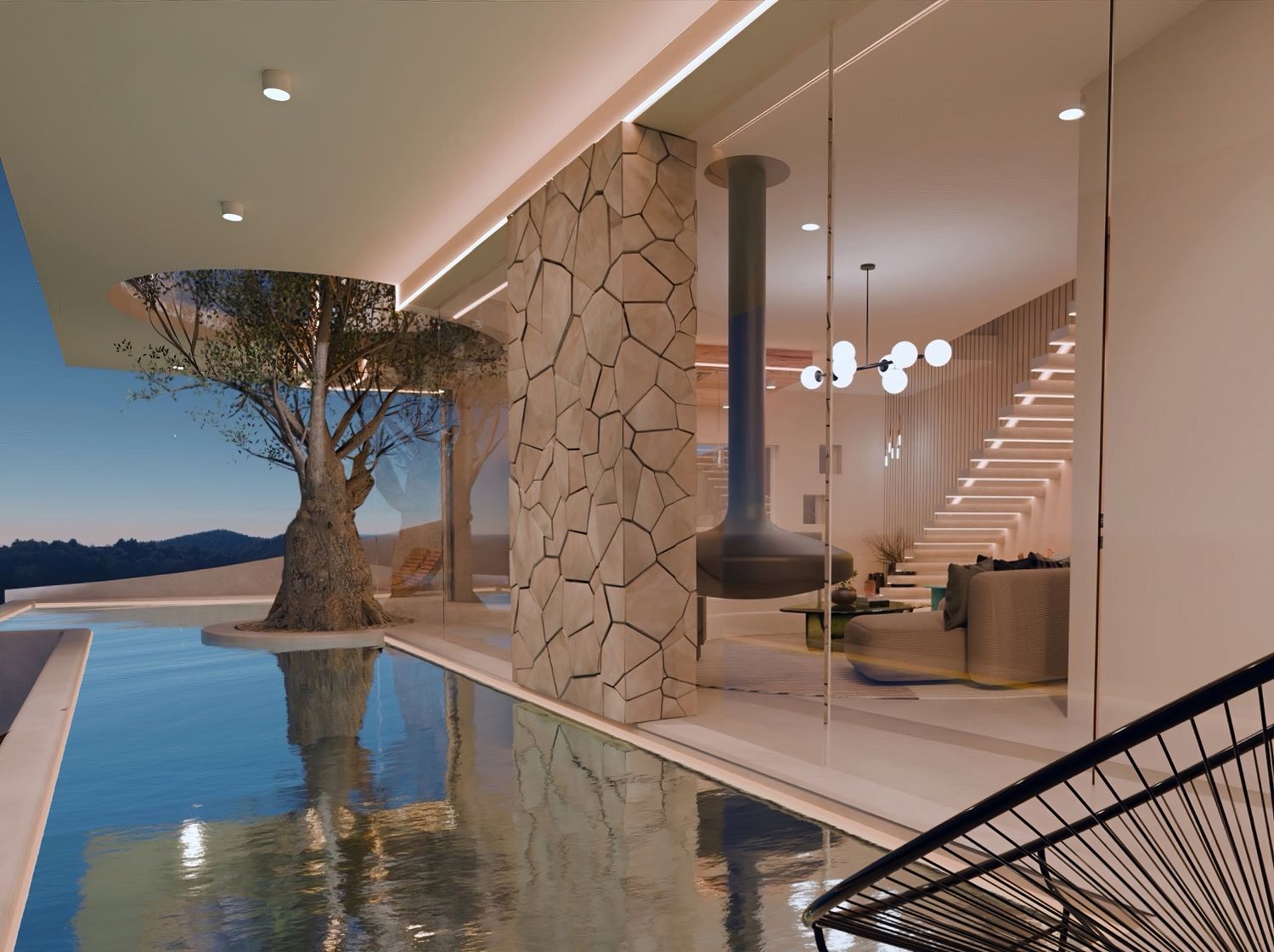
Natural stone from the region anchors the building to the earth, while warm
wooden details introduce a human softness to the otherwise austere material
palette. Glass, generously applied, serves not merely as a transparent
membrane, but as a means to dissolve the boundaries between interior and
landscape — making the view itself a material.
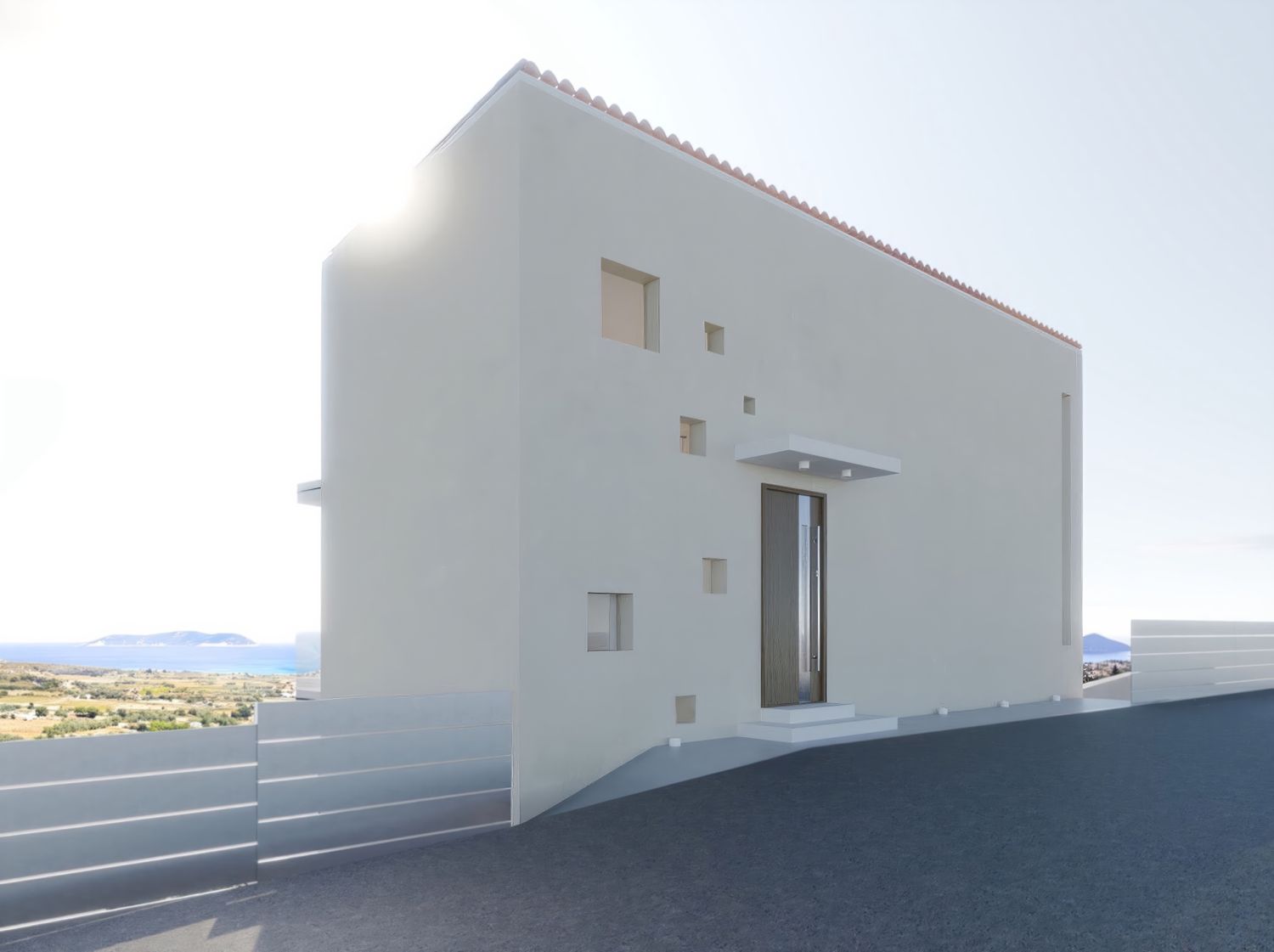
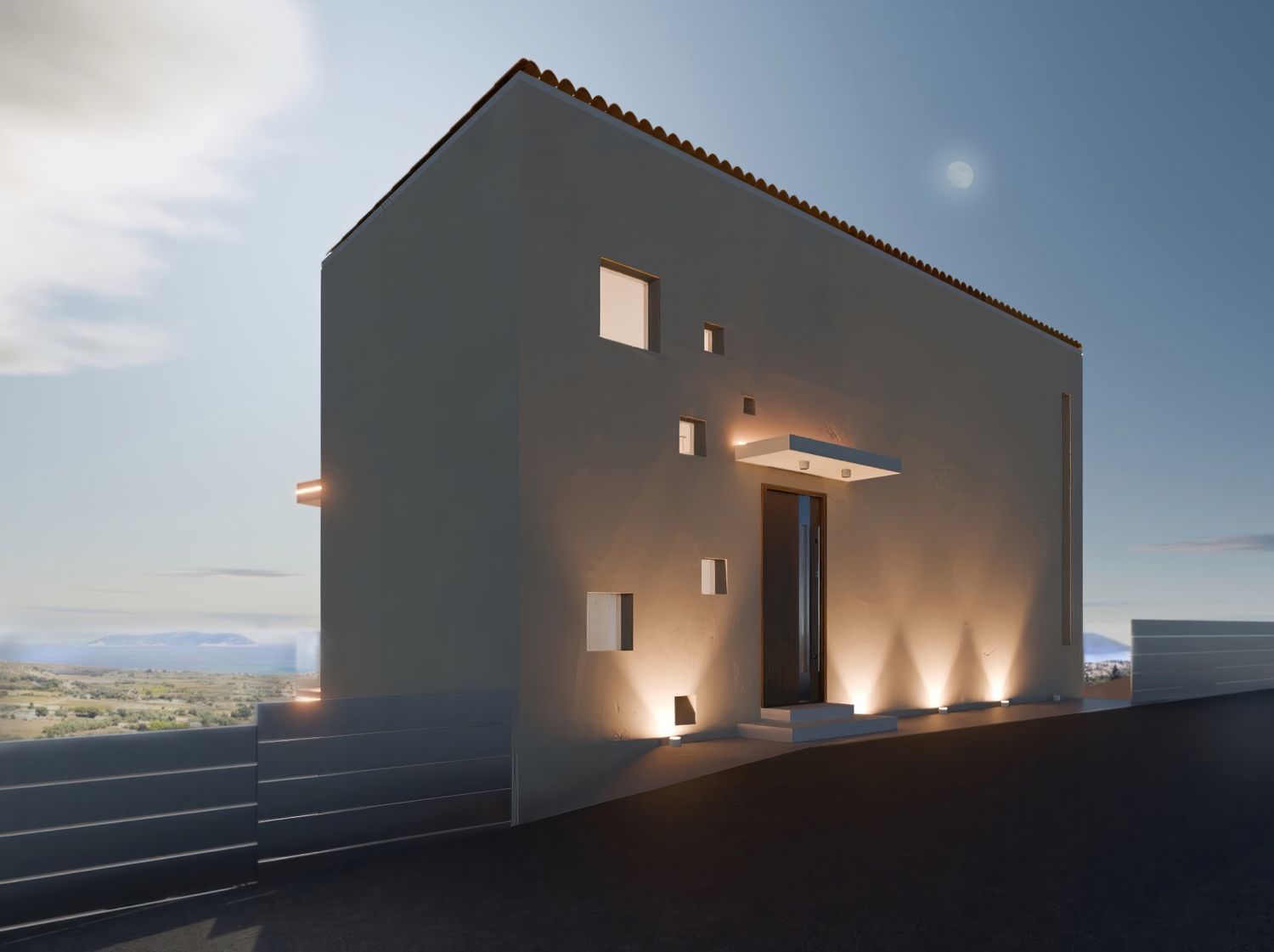
The western façade — the most exposed, facing the road — is treated as a veil
of privacy. A perforated concrete surface with small square openings filters the
intense Greek sunlight, casting shifting patterns across the interior and gently
revealing glimpses of life within. In contrast, the eastern façade opens boldly to
the Ionian horizon, with expansive windows that welcome morning light and
celebrate the panorama.
Architecture of Flow
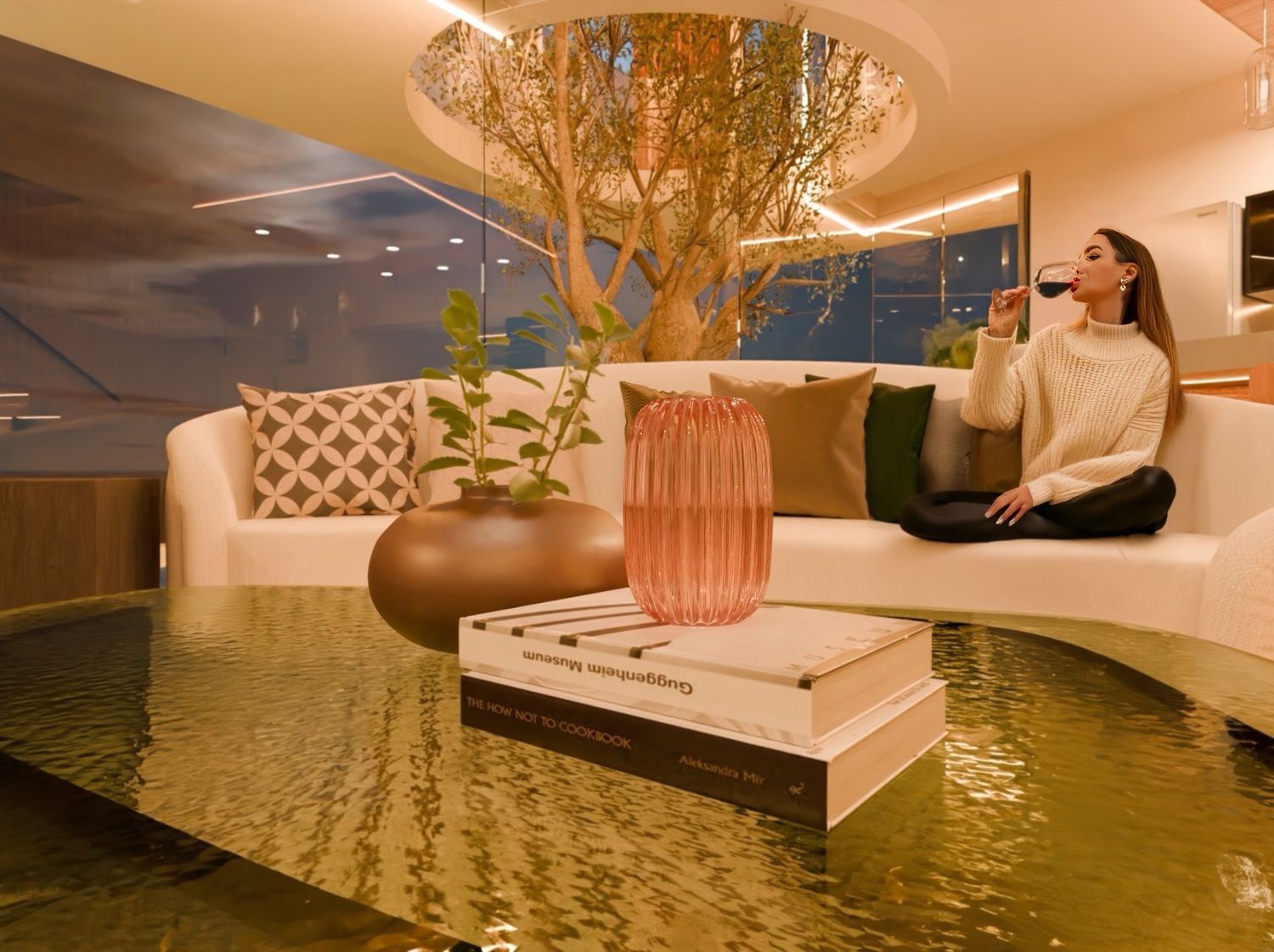
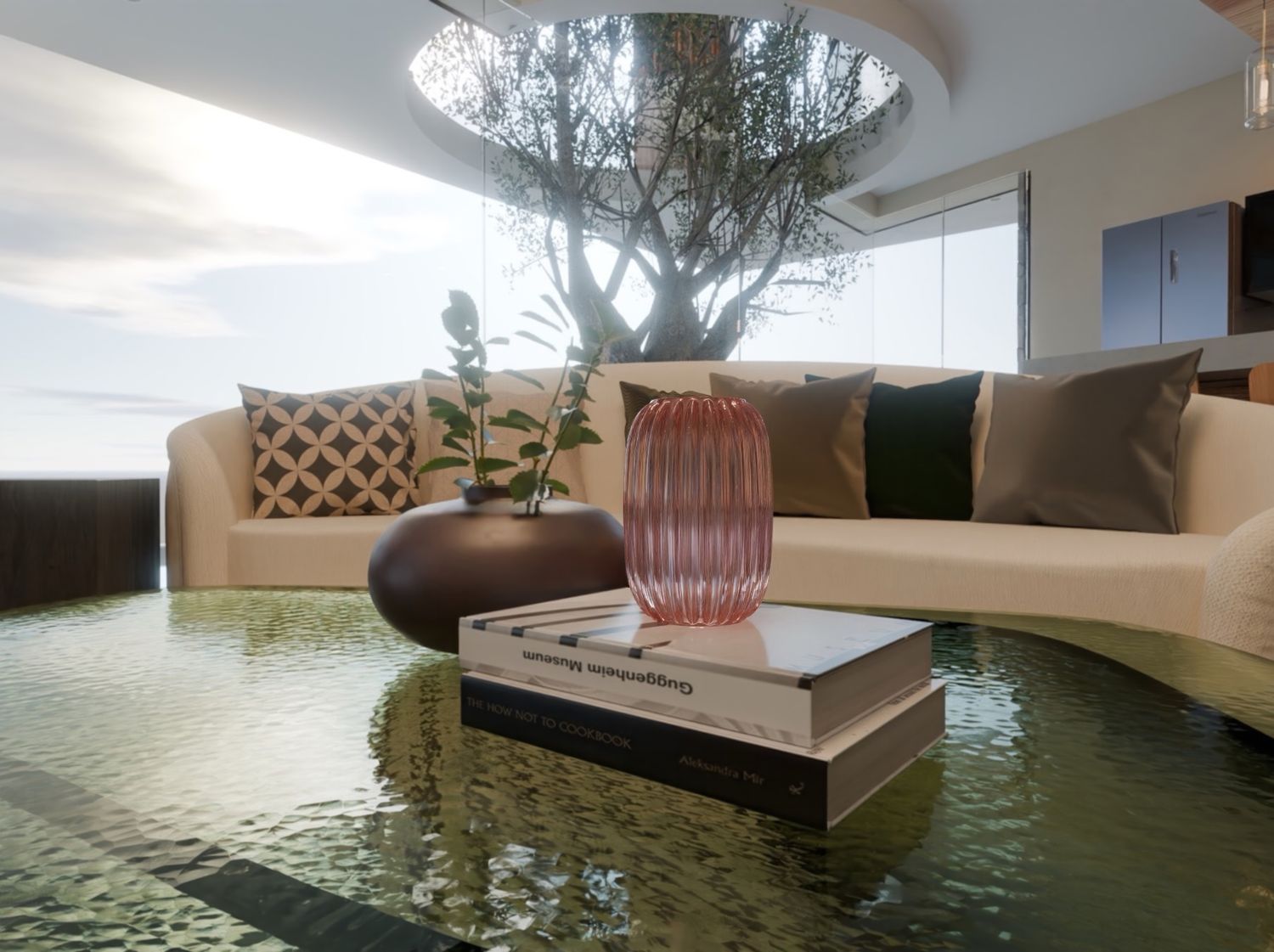
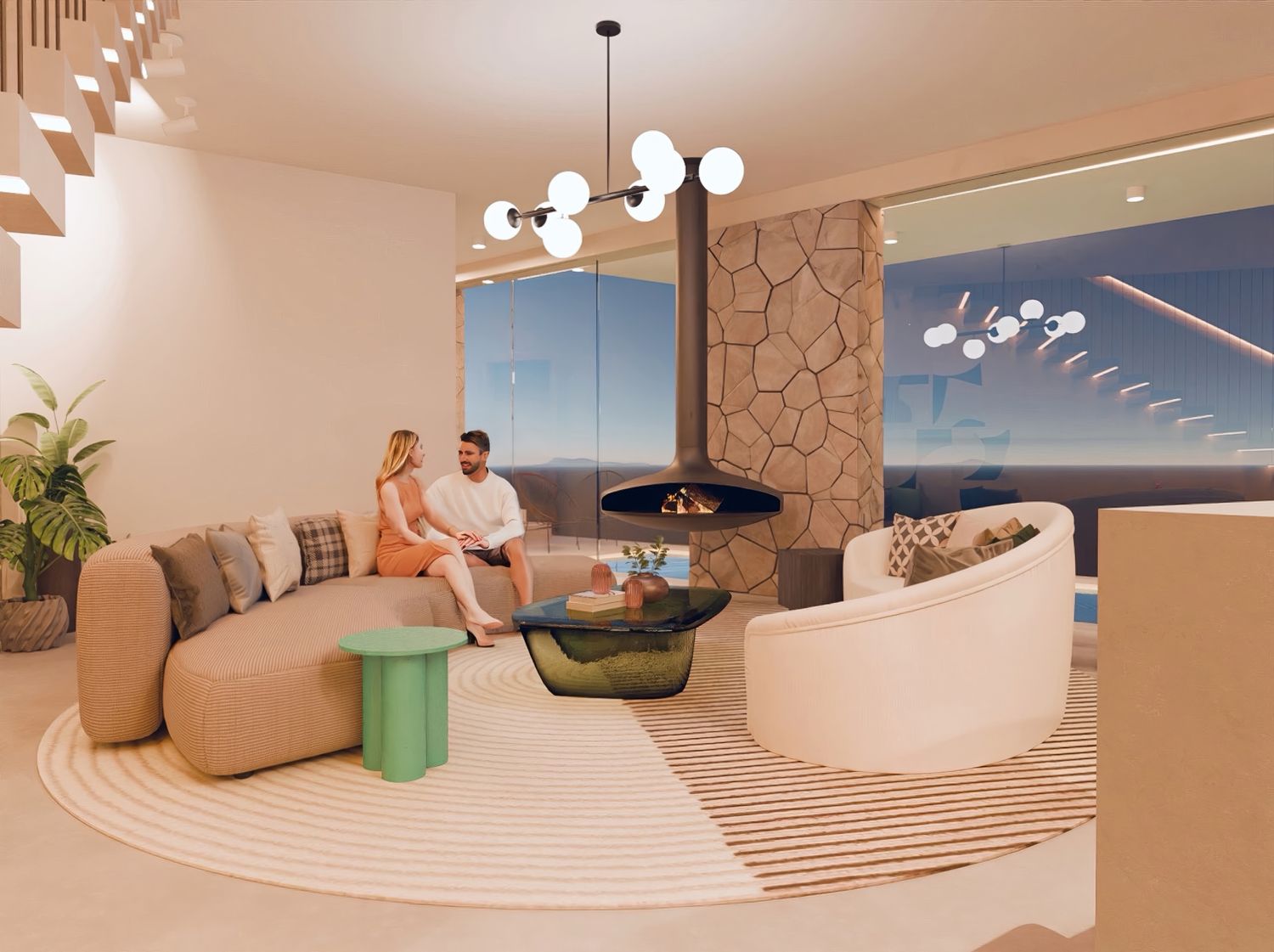
The architectural plan privileges fluid transitions over rigid circulation. On the
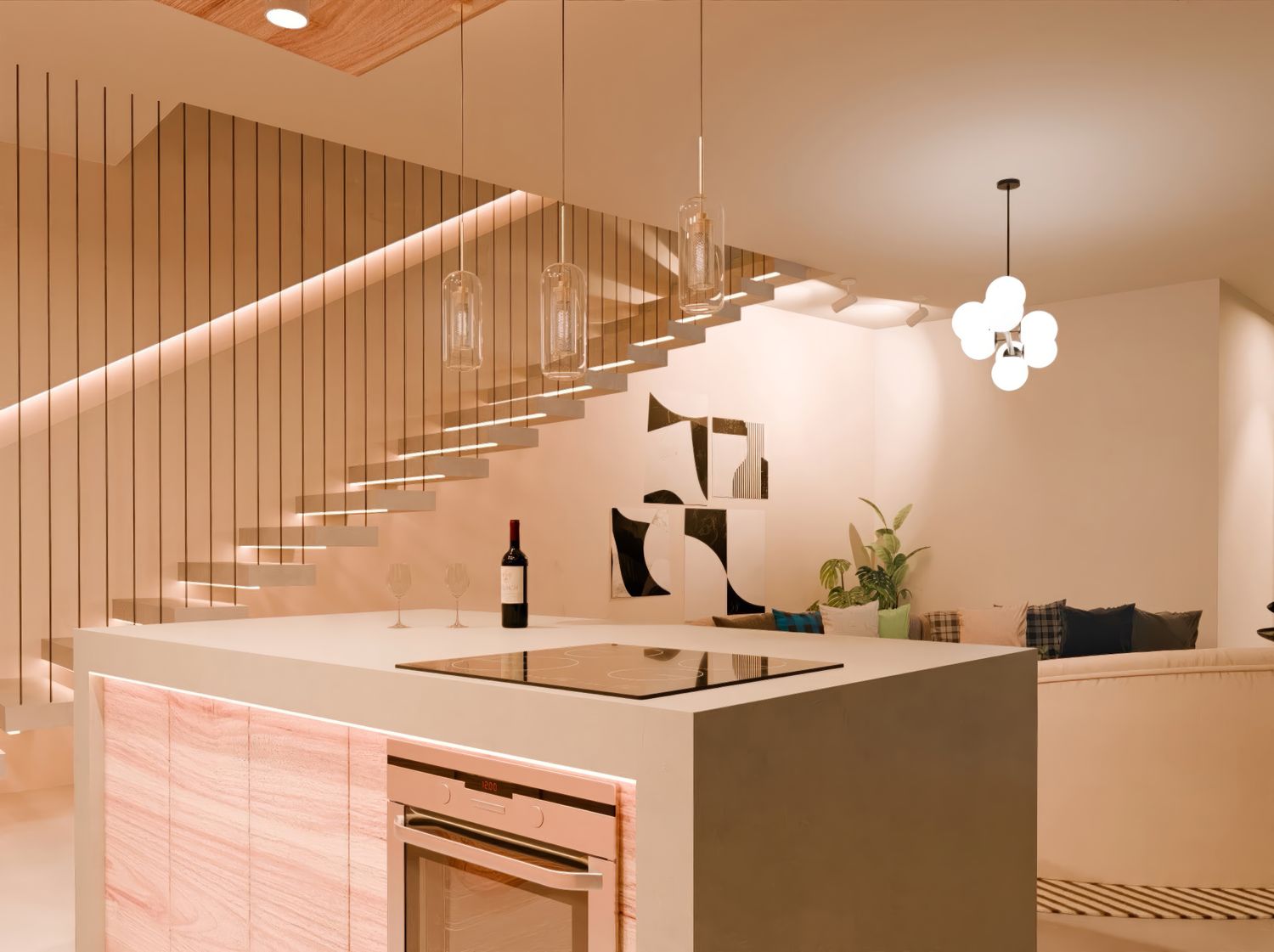
ground level, an open plan connects the kitchen, lounge, and outdoor living
areas, orchestrated around the olive tree and the pool that surrounds it. This
pool is not just a leisure feature but a meditative and passive cooling element —
it wraps delicately around the tree, allowing one to sit with feet immersed in
water, suspended between elements. It also acts as a thermal buffer, naturally
cooling the adjacent interior spaces during the warmer months.
The boundary between interior and exterior dissolves through careful detailing:
built-in benches flow seamlessly from inside to out; material thresholds are
blurred. Every spatial experience is designed to guide movement without
interruption, reinforcing a sense of unity and calm.
On the upper level, two bedrooms with en-suite bathrooms offer secluded
retreats with framed views. A minimal floating staircase connects the levels,
acting as both a functional link and a moment of architectural pause, a vertical
transition that maintains the overall quietness of the composition.
Timelessness and Landscape
Zathera is rooted in a desire to build with time, not against it. The architecture is
designed to age gracefully, as natural patinas settle on concrete and wood, and
as the olive tree continues its silent witness. The minimalism here is not sterile; it
is alive with texture, memory, and meaning. It is the kind of minimalism that
seeks substance over spectacle, where each detail is carefully considered, and
each absence is just as meaningful as each presence.
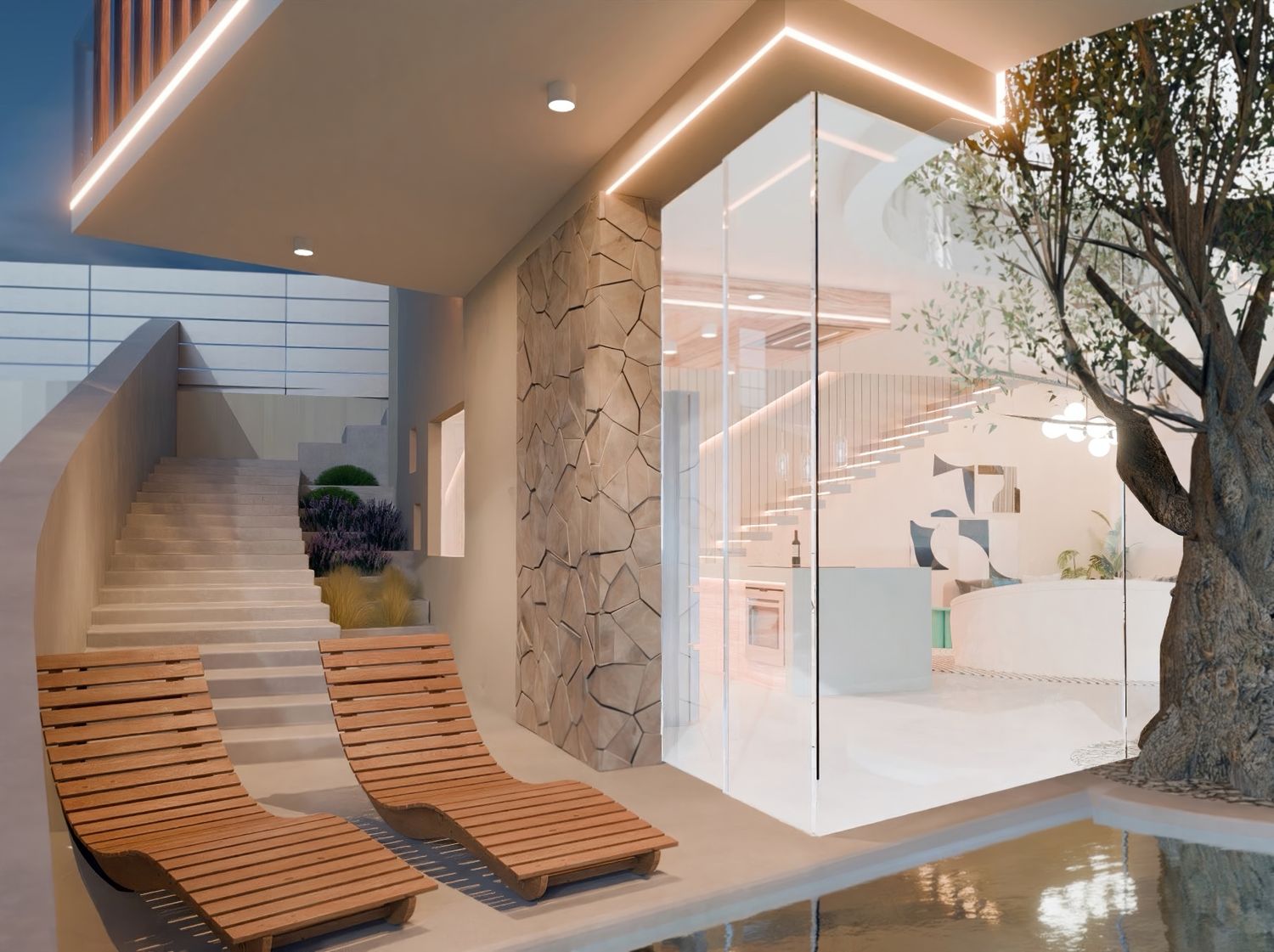
At night, discrete lighting further enhances the sculptural essence of the villa.
Shadows dance on walls, the tree becomes a softly illuminated guardian, and
the pool reflects the stars, completing a scene where architecture and nature are
no longer separate, but one.
A Sanctuary of Contemporary Mediterranean Living
Zathera Villa is more than a vacation home — it is a spatial manifesto for a
different kind of luxury: one that prioritizes slowness, connection to place, and
material truth. It honors the Mediterranean tradition not through imitation, but
through an evolved sensitivity to landscape, light, and life.
Its name, “Zathera”, captures this spirit of serene suspension. Floating between
earth and water, between past and future, between human intervention and
natural presence, Zathera offers a retreat not only from the world but into a
deeper sense of it.
Project: Zathera Villa | Studio: MI Architects | Location: Lefkas, Greece | Completion Year:
2026 | Gross Built Area:186m²
Lead Architect: Arvanitis Nikolaos | Engineering: Chrysovitsanos Antonios | Renderings: MI Architects, Nikolaos Arvanitis