🔥 CYBER MONDAY 24H: -60% su tutti i prezzi del sito! Solo fino a mezzanotte. Usa il codice CYBERMONDAY25 👉🏼


Castiglione della Pescaia, GR, Italia
Residenziale - Appartamento
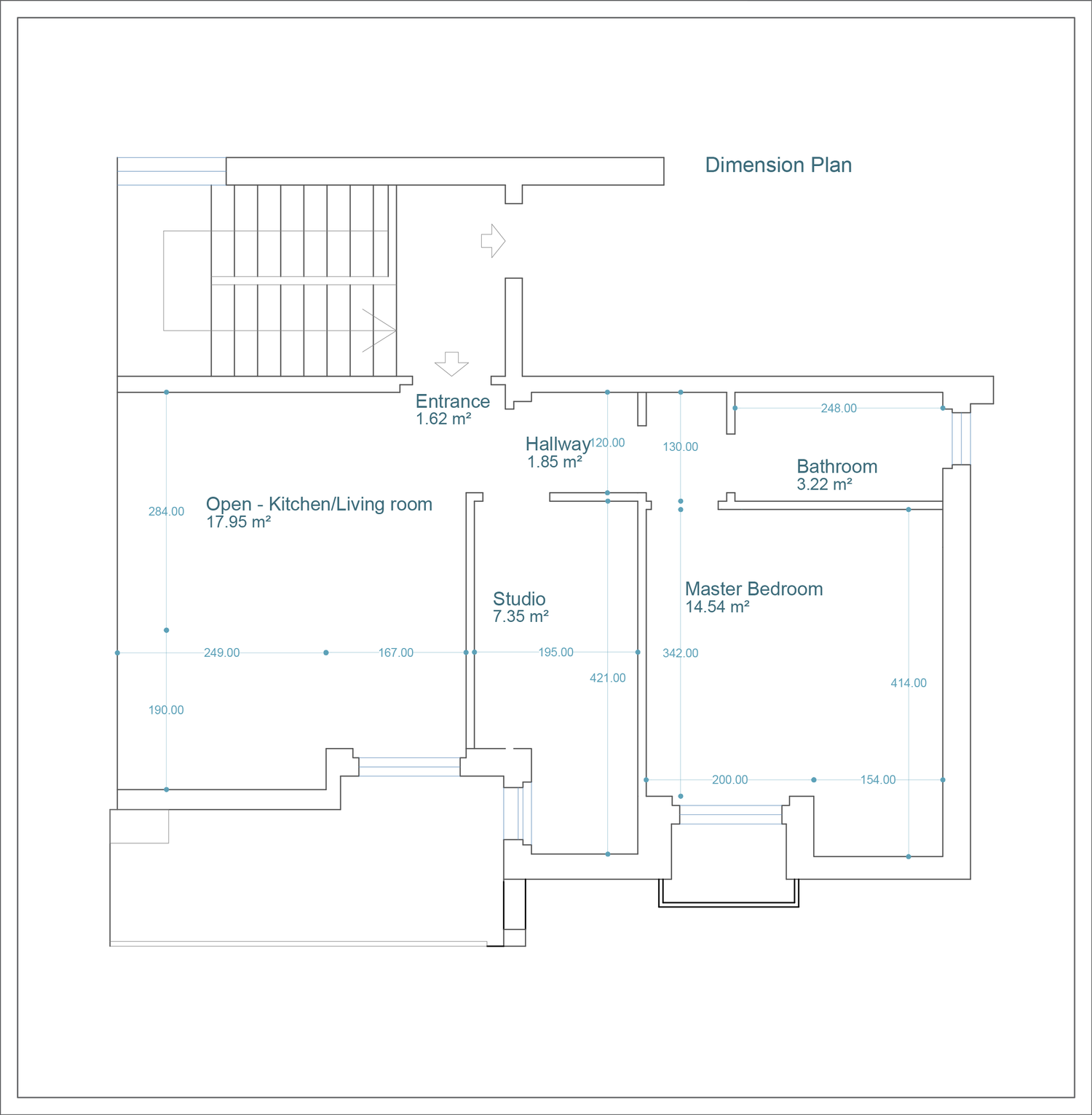
This design proposal has been developed with the aim of creating a spacious, functional, and welcoming home that reflects the requested bohemian-country style. Particular attention has been given to achieving compliant and comfortable dimensions for the master bedroom, living area, and bathroom in accordance with the project requirements and local regulations. The spatial organization focuses on maximizing the usability of the available floor area, enhancing the perception of openness, and meeting both the current and future functional needs of the apartment while ensuring that the primary living spaces maintain appropriate proportions and usability.
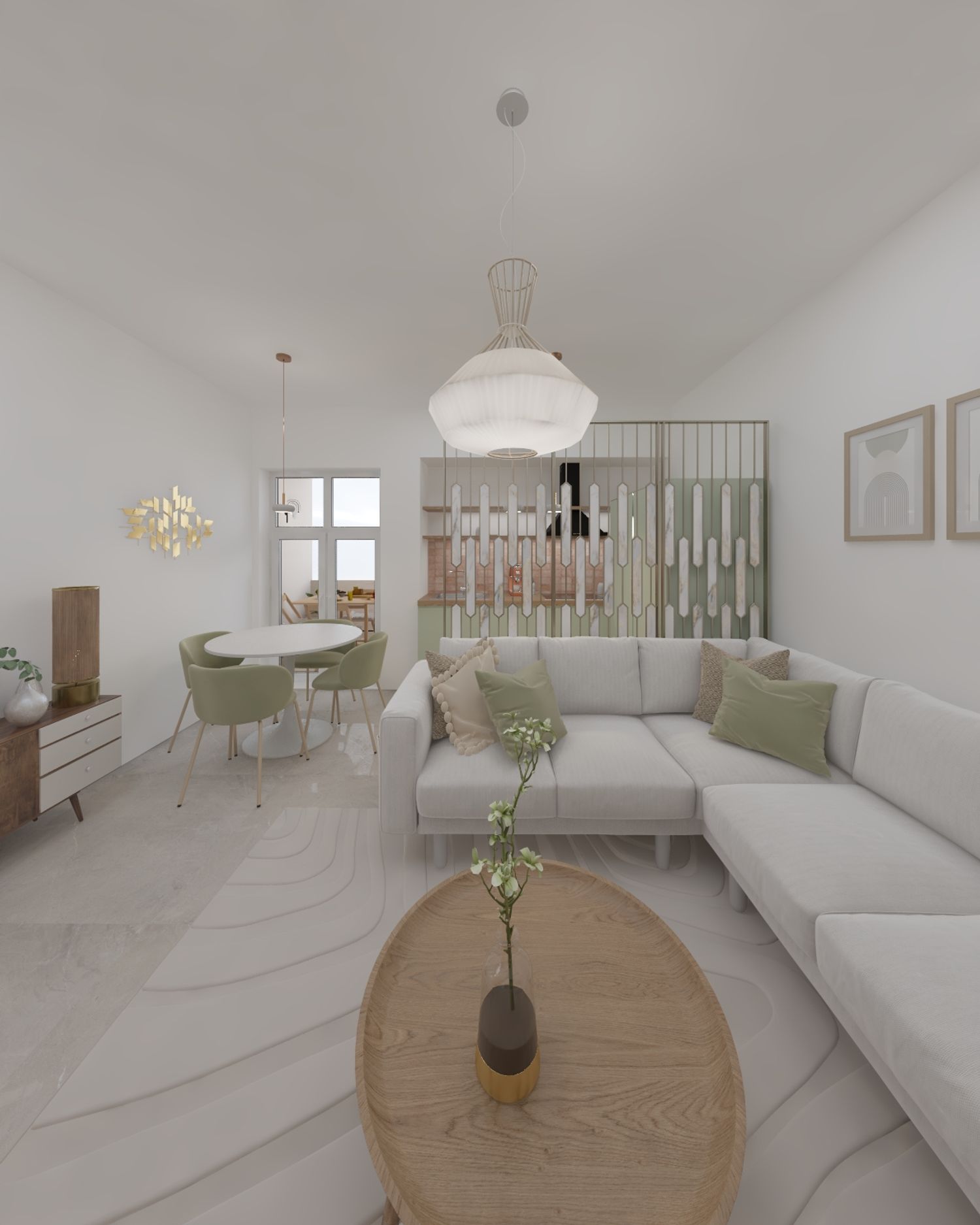
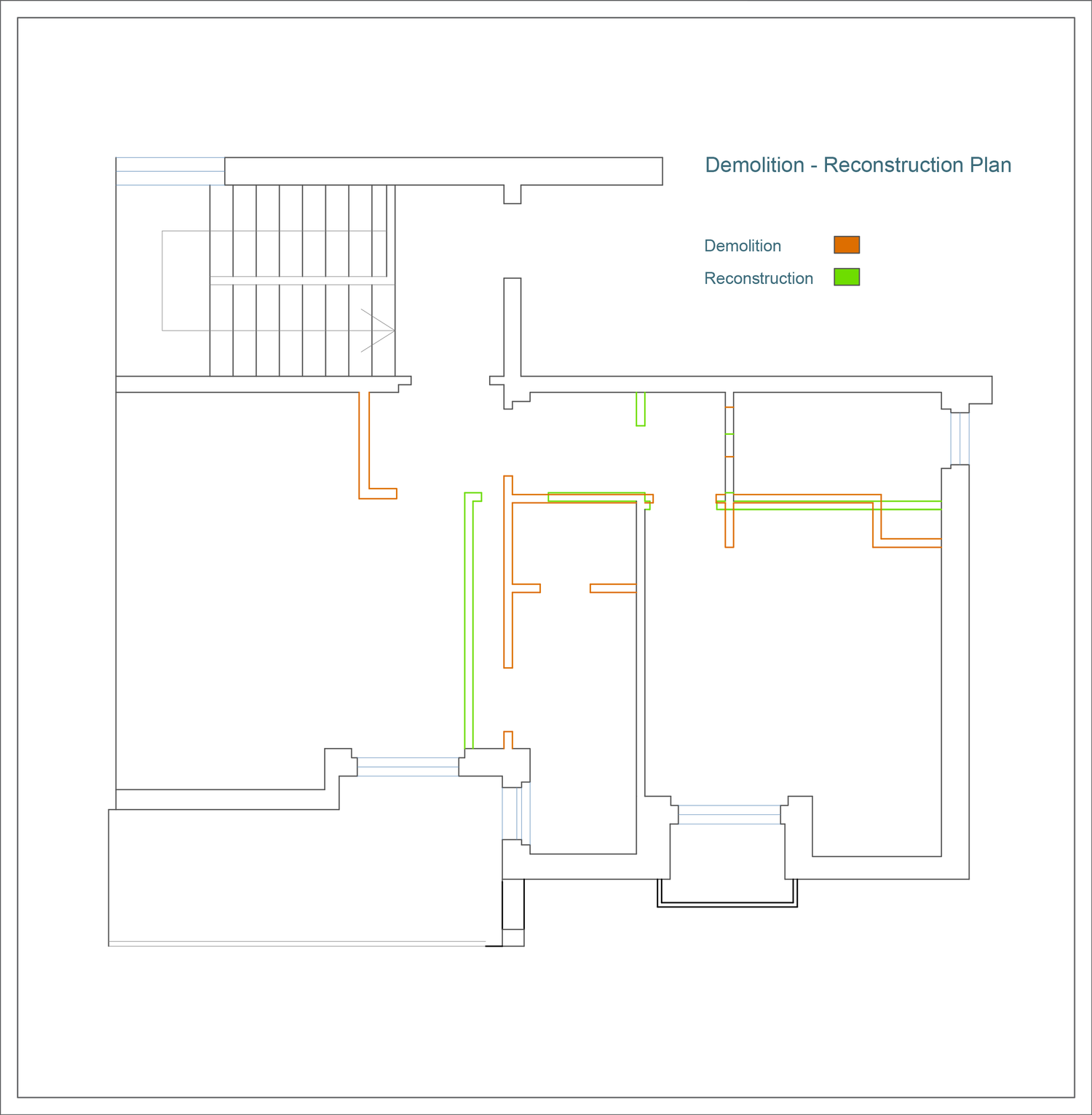
To create a brighter and more cohesive living environment, unnecessary internal partitions have been removed, transforming the living room and kitchen into an open-plan space. This approach improves visual continuity, allows natural light to spread more effectively throughout the apartment, and contributes to a greater sense of spaciousness within the main living area.
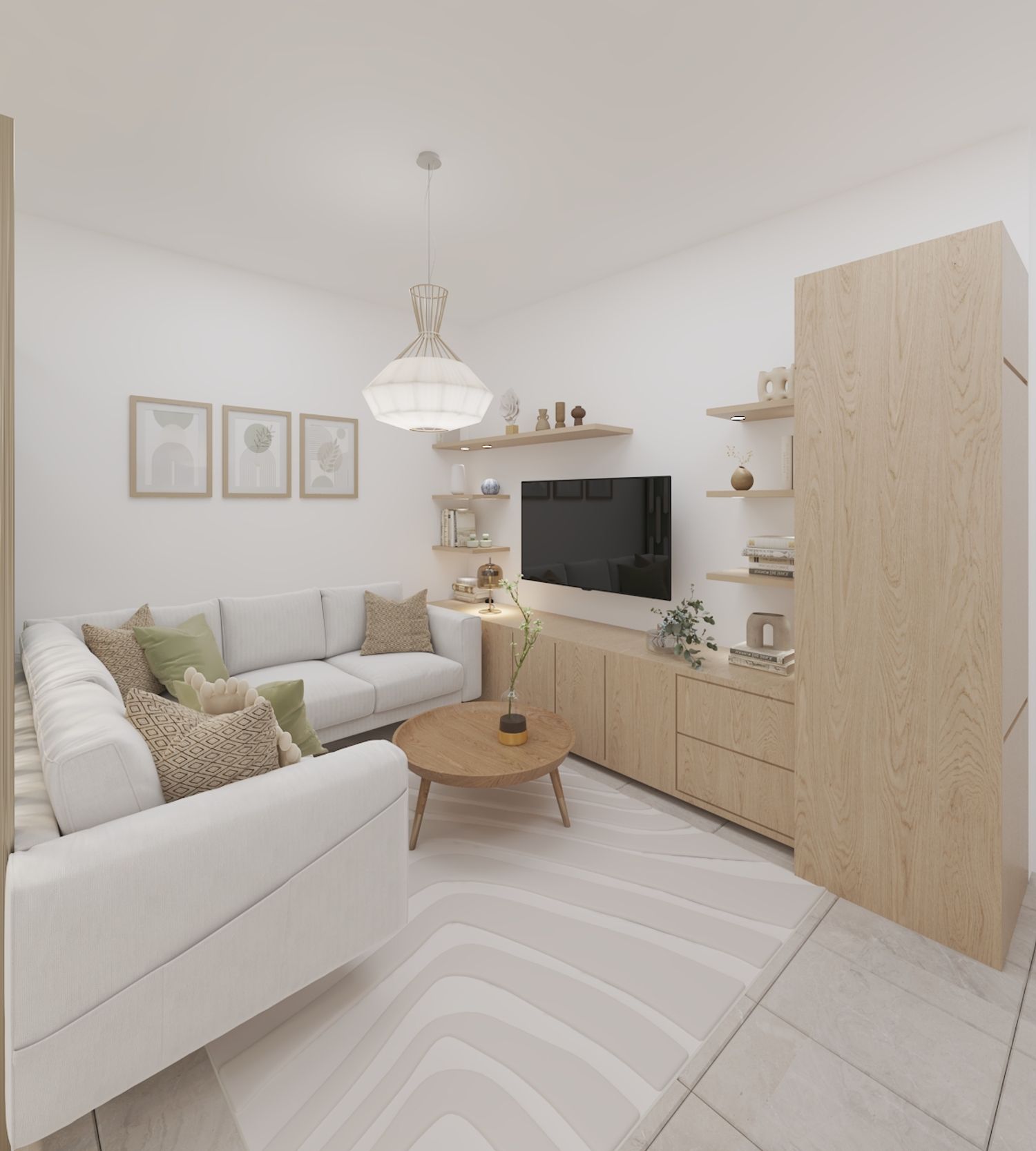
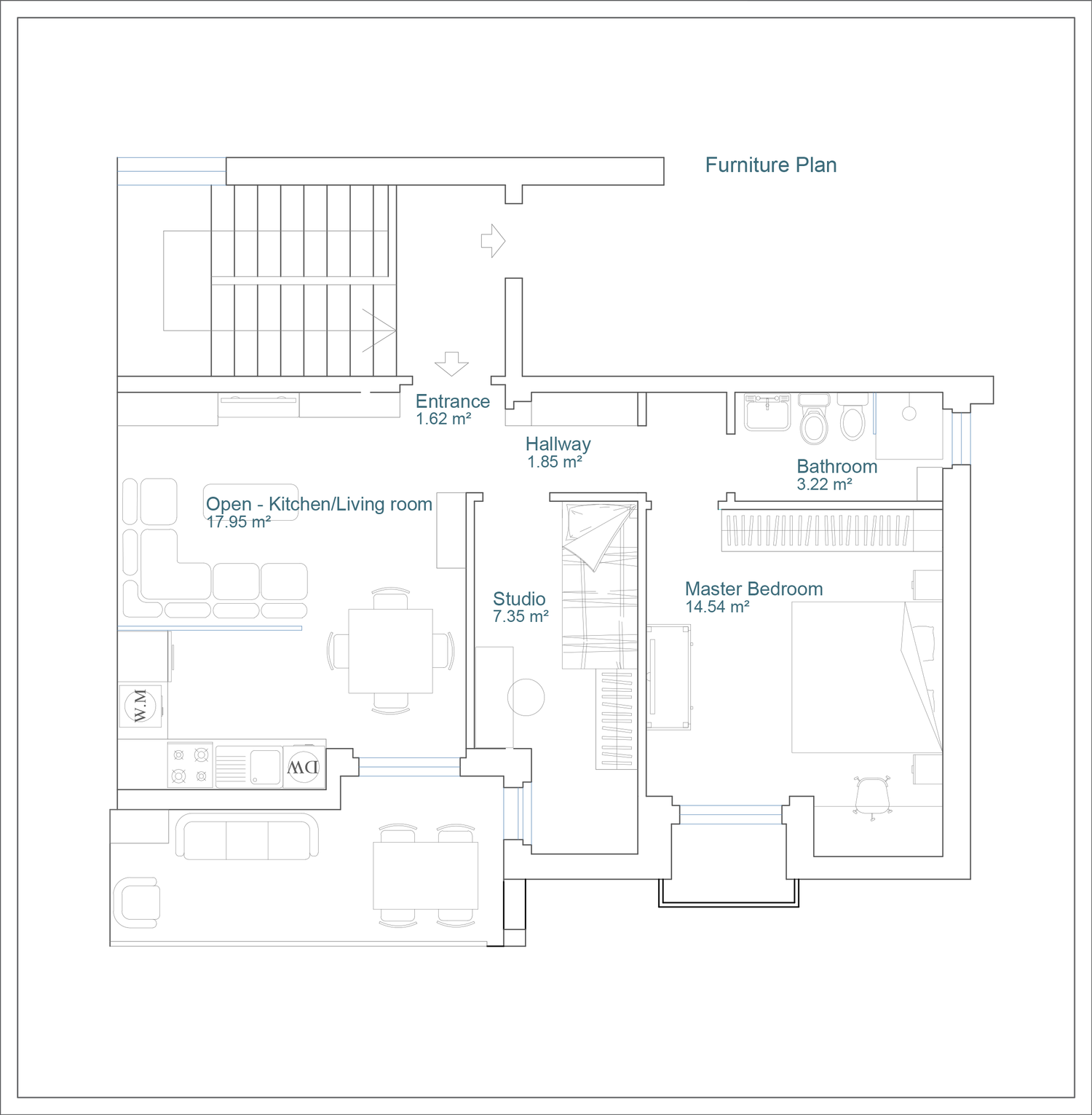
In the living room, the TV wall has been designed as a multifunctional feature incorporating storage units, bookshelves, and cabinets for household items, bed linens, towels, and other essentials. In addition, a dedicated entrance storage unit for shoes, coats, and everyday items has been integrated along the same wall. This element subtly defines the entrance area without creating visual barriers or reducing the perceived size of the space.
To maintain a degree of separation between the kitchen and living area while preserving the open-plan concept, a decorative partition consistent with the requested bohemian-country aesthetic has been introduced. This feature provides visual distinction between the two functions while maintaining a strong spatial connection and sense of openness.
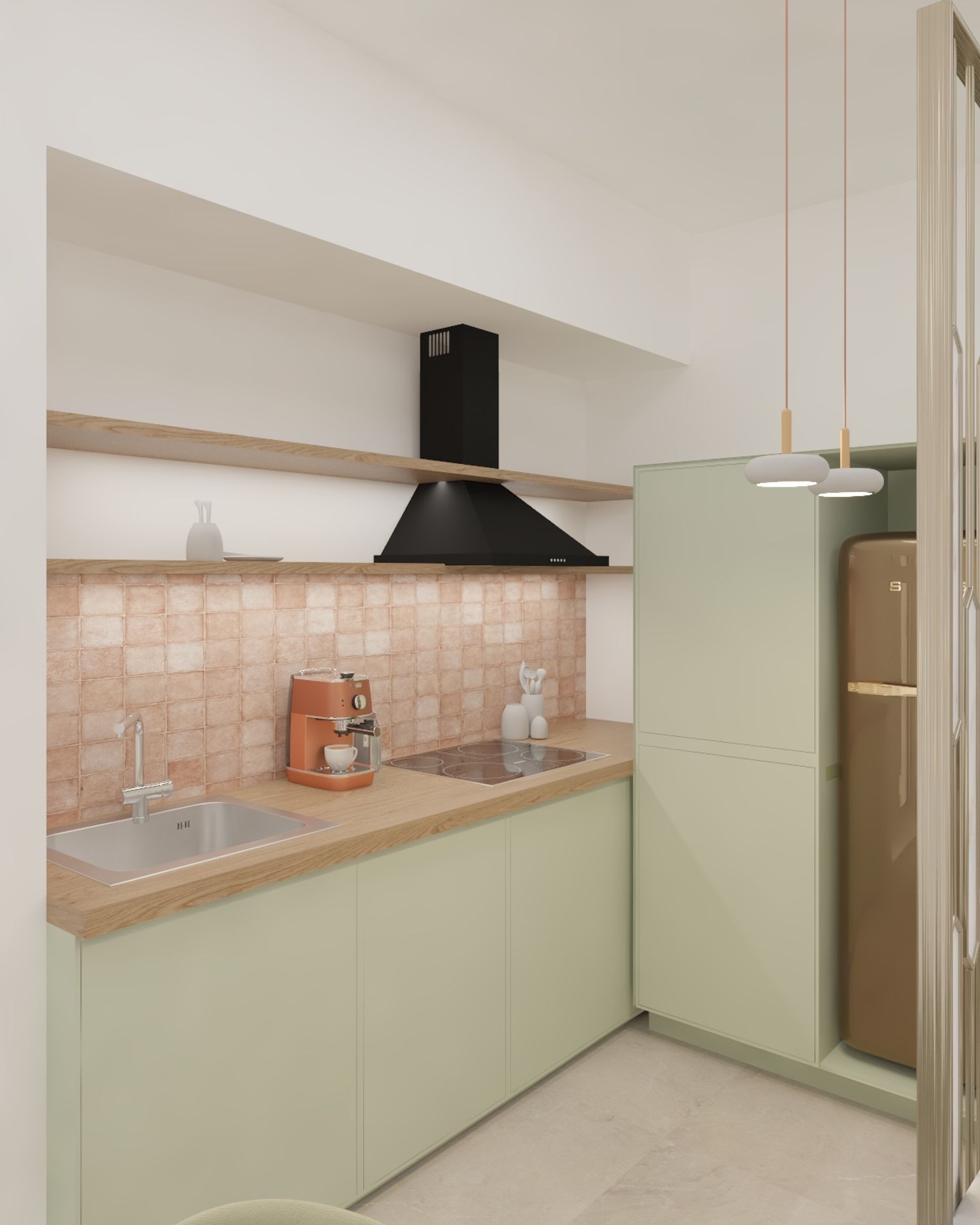
The kitchen layout has been designed with both everyday practicality and future long-term residential use in mind. The sink has been positioned close to the most suitable drainage route, with the dishwasher located adjacent to it for optimal functionality. The cooktop has been placed at an appropriate distance from the washing and preparation area to ensure a comfortable workflow. The refrigerator is complemented by a multifunctional cabinet unit that can accommodate a washing machine if required; alternatively, this space can be used as additional storage.
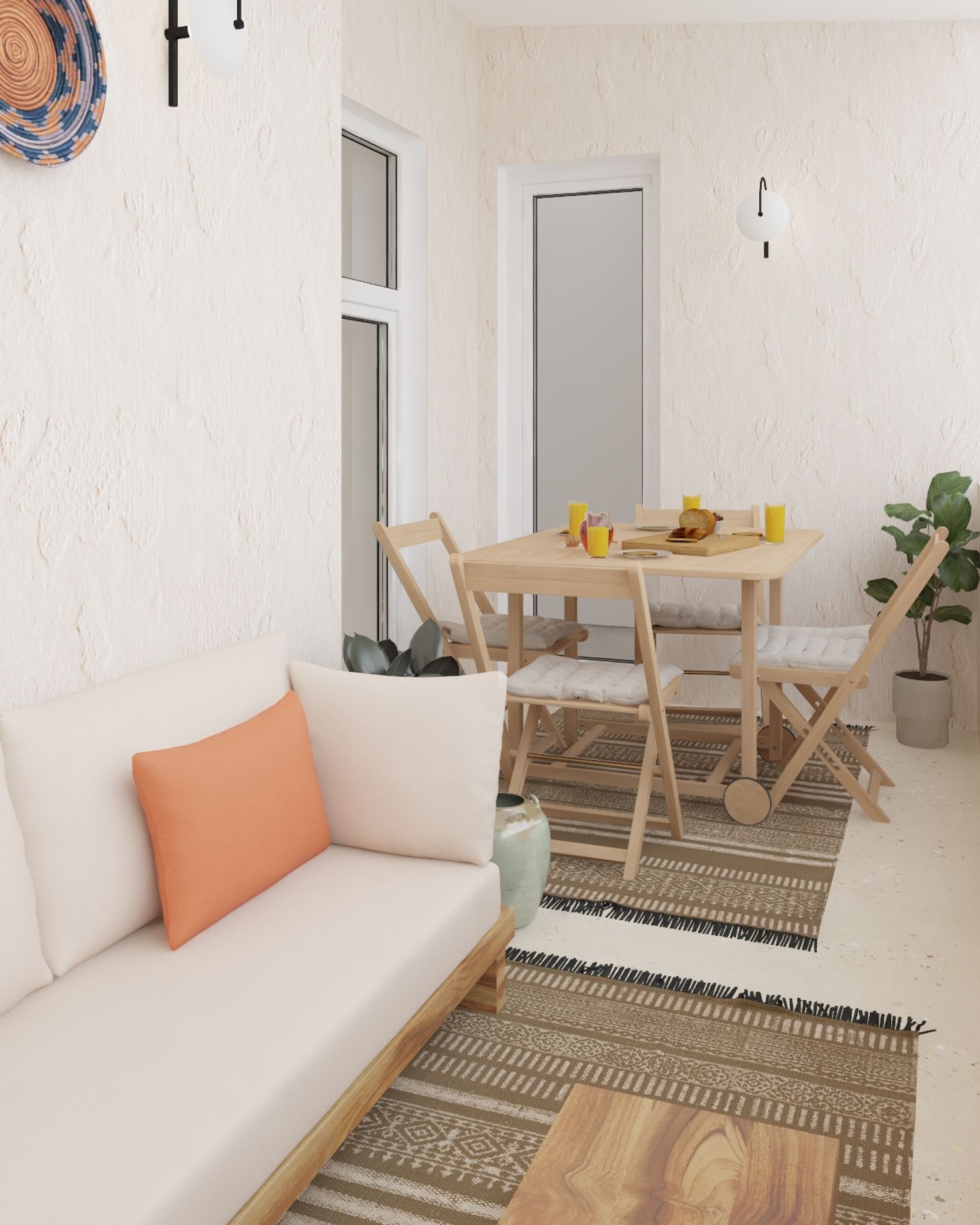
A four-person dining table has been positioned between the living area, kitchen, and terrace access. In addition to everyday dining, this table can also serve as a work surface, study area, or occasional home-office station, providing flexibility for different modes of use.
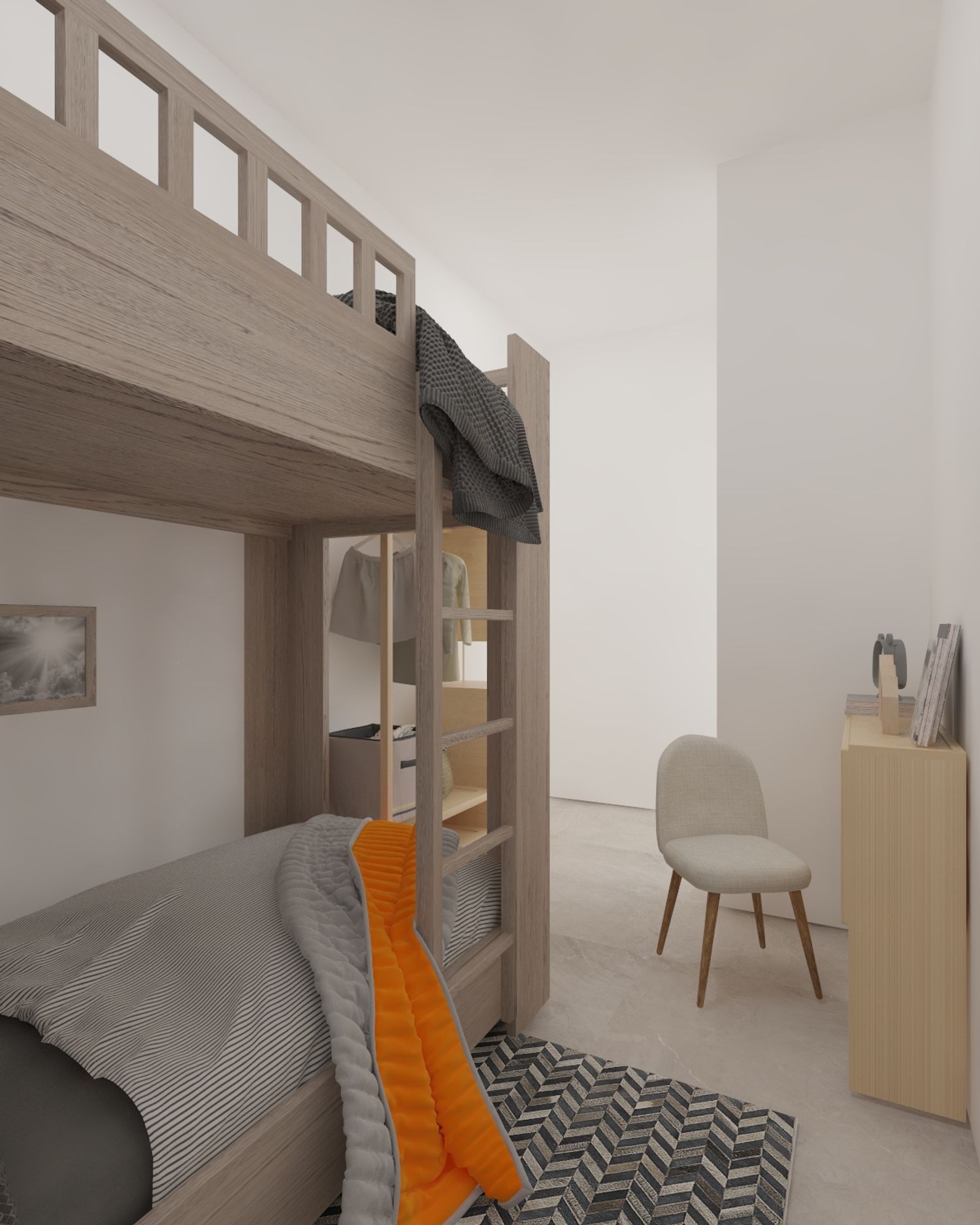
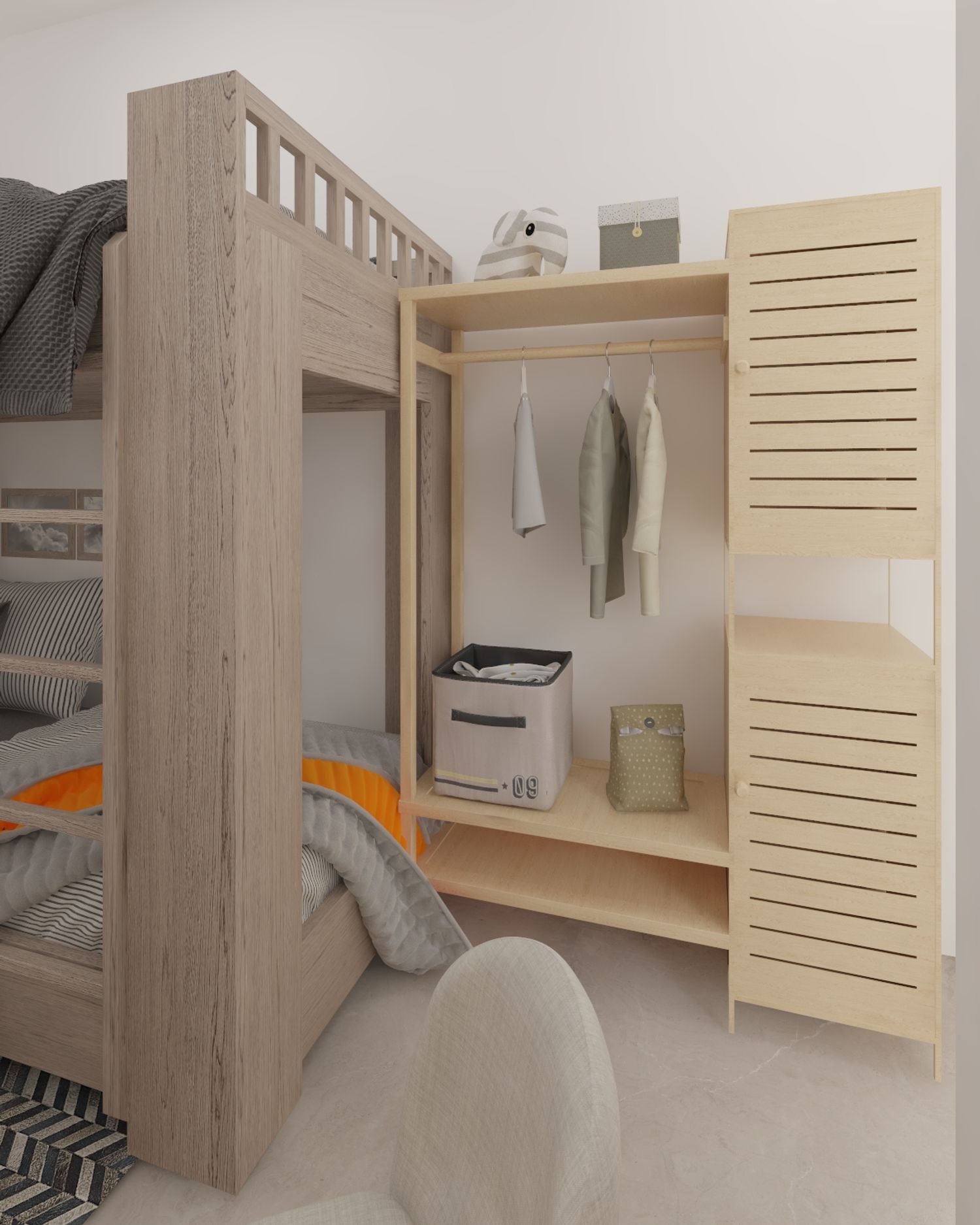
The children's room has been designed to achieve maximum functionality within a compact footprint. It includes a bunk bed, an open wardrobe, and a fold-down desk. When closed, the desk functions as a shelf or display surface and can be opened only when required for studying or occasional remote work.
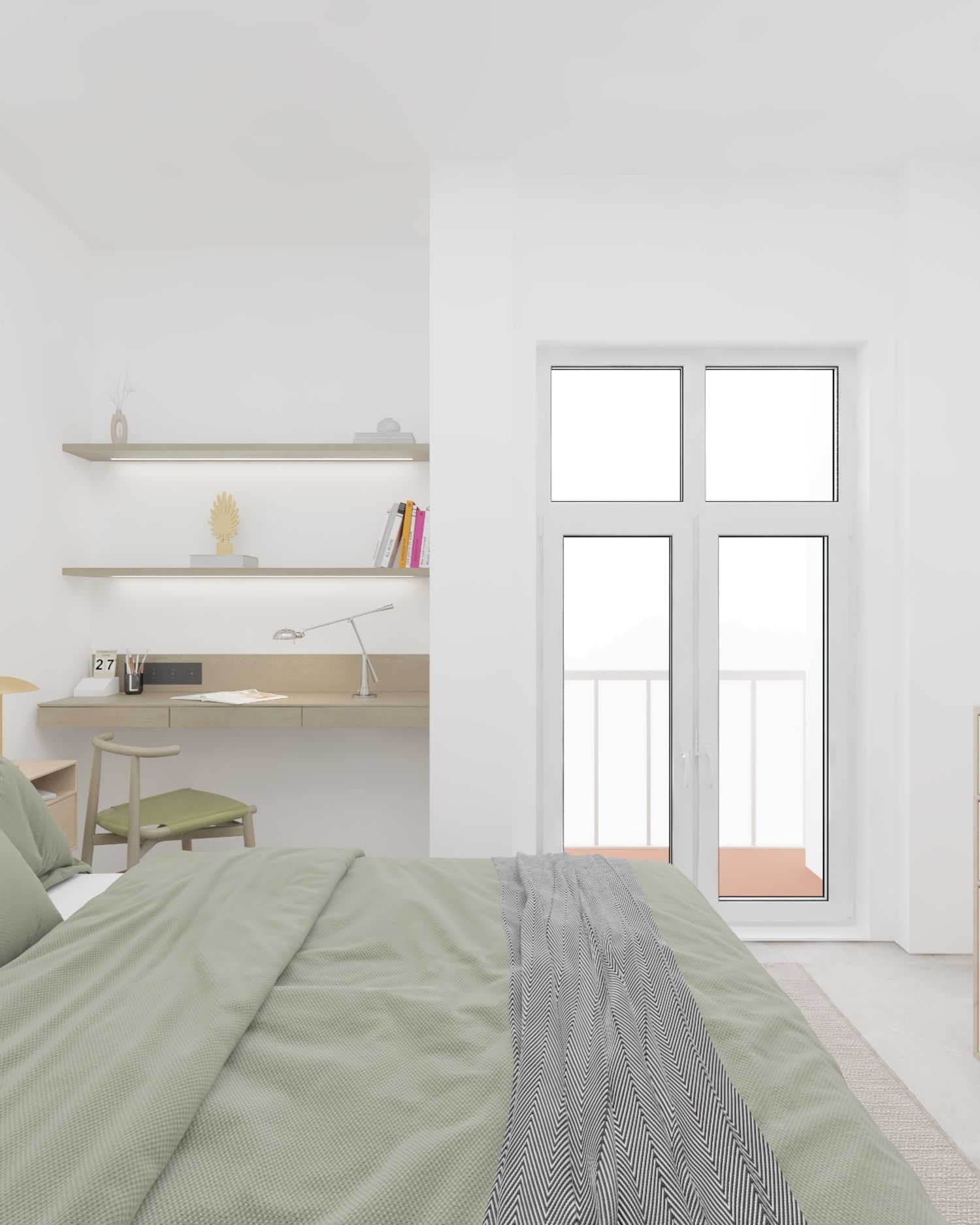
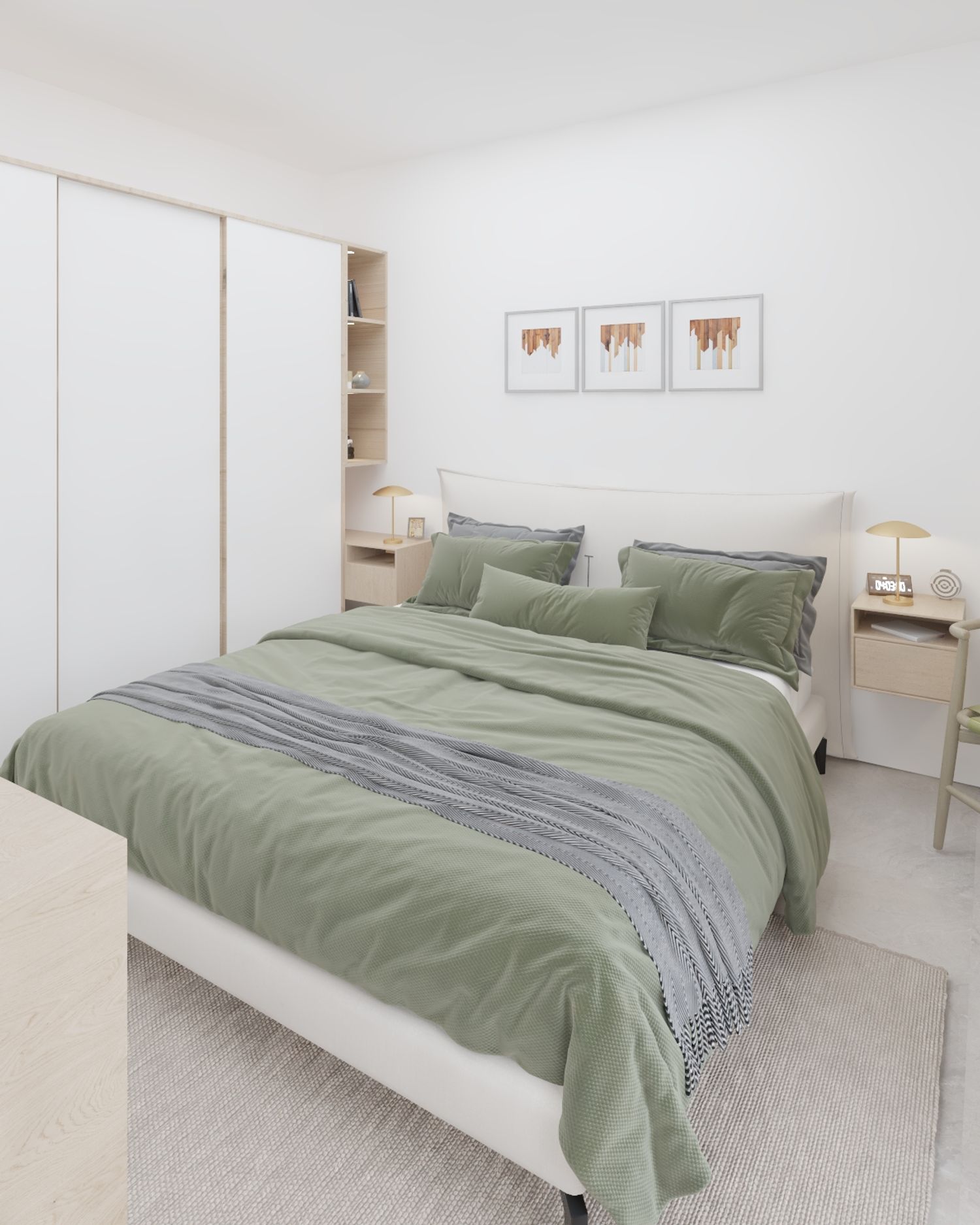
The master bedroom has been designed to accommodate both short-term holiday stays and future permanent occupancy. The room includes a double bed, wall-mounted bedside tables, a large sliding-door wardrobe, a chest of drawers, and a dedicated workspace. The wardrobe provides ample storage capacity while minimizing the space required for door clearance, making it particularly suitable for the apartment's compact layout. The chest of drawers can also accommodate a wall-mounted television above it if desired. The workspace may alternatively be fitted with a fold-down wall desk in the future. Access to the bathroom has been organized to preserve privacy within the master bedroom while allowing independent use of the bathroom by other family members. In addition, a storage cabinet has been integrated into the hallway immediately before the entrance to the master bedroom. This solution provides valuable additional storage space while reinforcing the separation between the private sleeping area and the circulation route used by children when accessing the bathroom, thereby enhancing both privacy and day-to-day functionality.
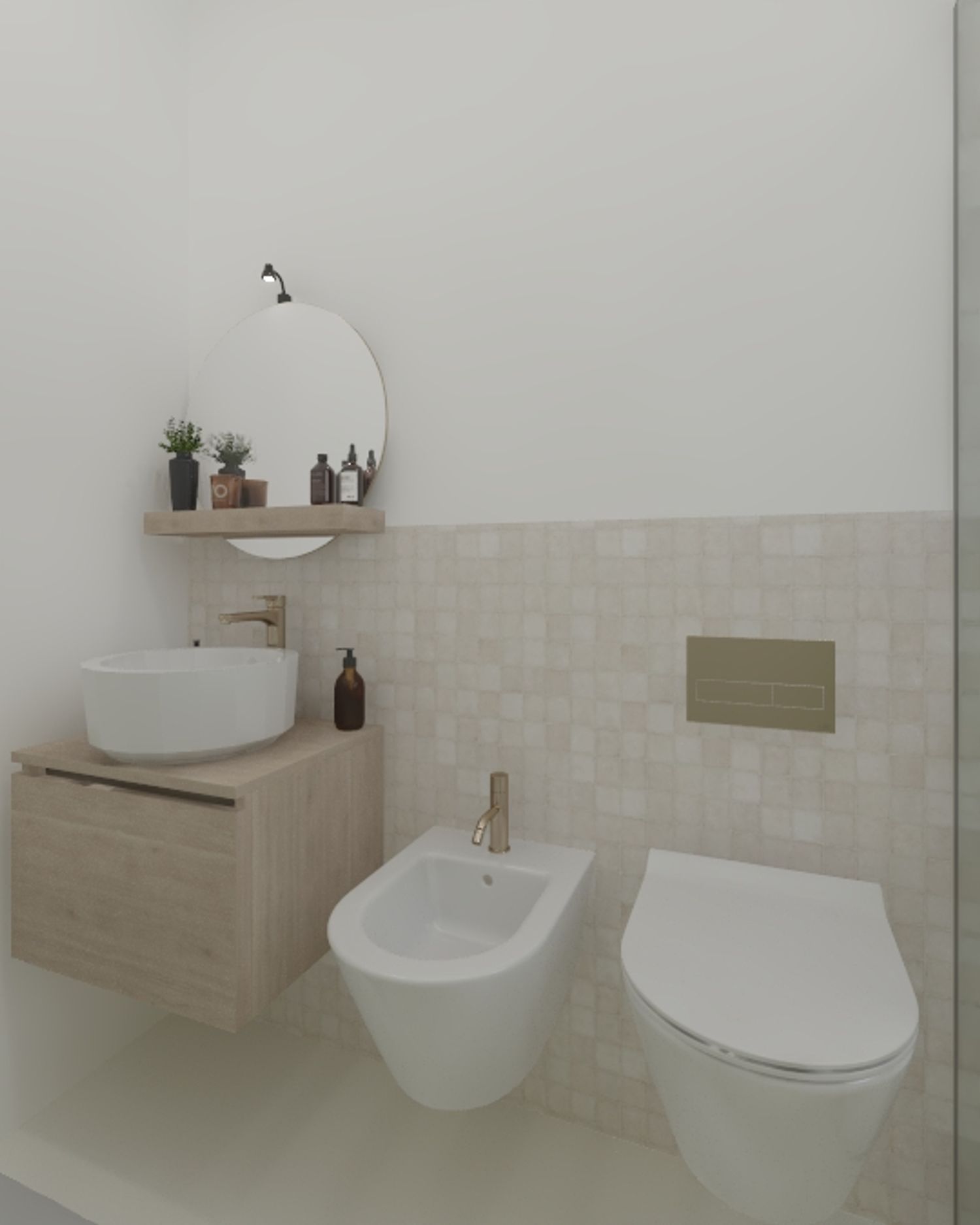
The bathroom has been designed in accordance with the project's dimensional and functional requirements and includes an 80 × 80 cm shower, toilet, bidet, and a vanity unit with integrated storage. The boiler has been concealed within a dedicated cabinet to maintain easy accessibility while keeping it out of direct sight. Additional shelving and storage solutions have been incorporated around this area to maximize functionality and efficient use of space.
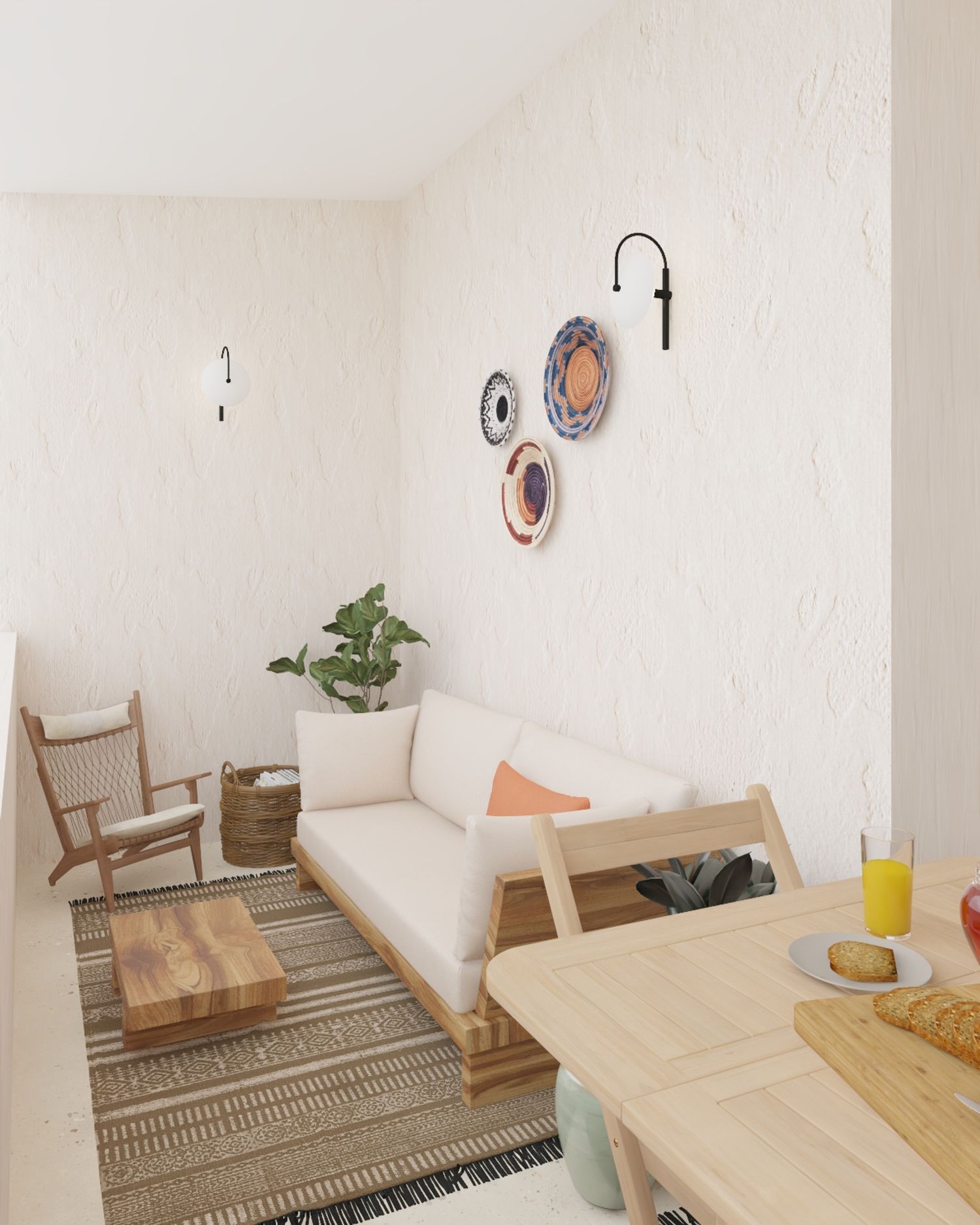
The terrace has been conceived as a flexible outdoor extension of the living area, particularly suited to use during the warmer months of the year. A foldable four-person dining table has been provided to accommodate outdoor dining, while a comfortable seating area inspired by the bohemian-country style creates a relaxing space for enjoying the surrounding views and atmosphere. The selected furnishings and layout allow the terrace to function as an inviting seasonal living space during summer, while remaining adaptable and easy to reconfigure during the colder months.
Overall, this proposal seeks to fully satisfy the apartment's current role as a holiday retreat while ensuring a smooth transition to permanent residential use in the future. Efficient storage solutions, thoughtful spatial organization, functional flexibility, and a strong connection to the requested bohemian-country aesthetic have been the key principles guiding the design process.