🔥 CYBER MONDAY 24H: -60% su tutti i prezzi del sito! Solo fino a mezzanotte. Usa il codice CYBERMONDAY25 👉🏼


Roma, RM, Italia
Residenziale - Appartamento
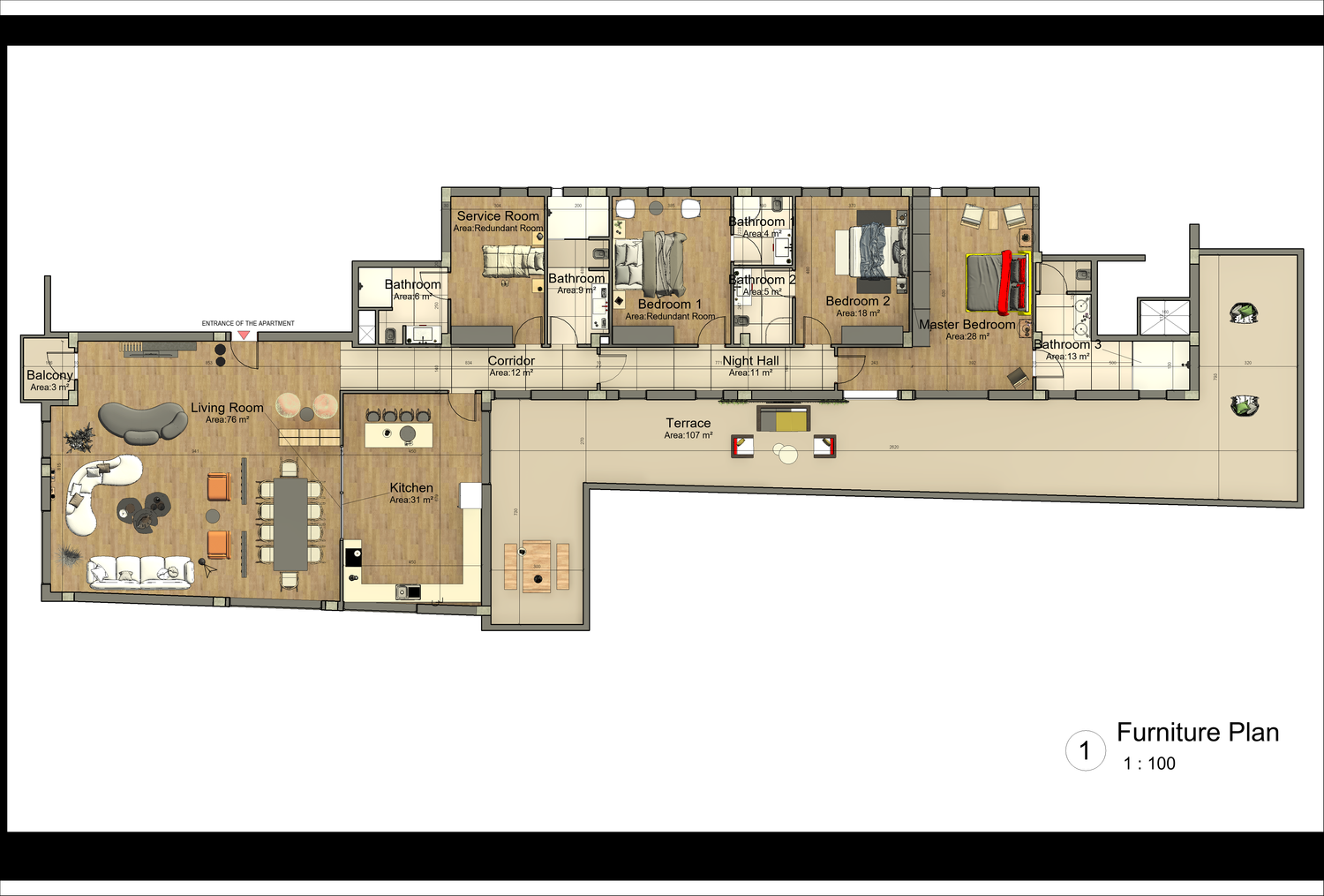
The entrance door of the apartment has been relocated to the requested position and now opens directly into the main living area. The 76 m² living space is divided into four distinct zones through the strategic arrangement of furnished elements. Upon entering, residents are greeted by a relaxation area featuring a double-sided bookshelf that defines the space while maintaining visual permeability. Behind the bookshelf, the dining area is positioned, and the unit can be accessed from both sides, providing a flexible and functional spatial connection between the two zones.
On the other side of the entrance, a comfortable TV area designed in a Japandi style features soft, amorphous furniture that evokes calmness and simplicity. Behind the TV area, a larger seating zone accommodates gatherings and social activities.
One of the apartment’s major architectural challenges — the “large and elongated corridor” — has been reinterpreted as a night hall serving the bedrooms. By locating the bedrooms at the rear side of the apartment, they are separated from the living zone, ensuring privacy and minimizing the dominance of the corridor within the plan. The service room is connected to the corridor that links the living areas.
Although the relocation of the kitchen was not initially requested, it was moved to the terrace-facing section to achieve an optimal and comfortable architectural typology. The 31 m² kitchen is separated from the indoor dining area by full-height sliding glass doors. These sliding panels allow the kitchen to transform into an extended dining space when opened, creating a flexible and adaptive environment. The kitchen features an island that accommodates four people for breakfast or casual meals, and it can also function as a preparation or service counter.
Adjacent to the kitchen, the terrace has been designed as a natural extension of the living space, divided into three functional zones. The area closest to the kitchen serves as an outdoor dining space; the central section provides a large seating area for social gatherings; and the far end includes a relaxing corner with a swing. Positioned between the indoor and outdoor dining areas, the kitchen serves as a spatial and functional core that maximizes usability and enhances the continuity between interior and exterior living.